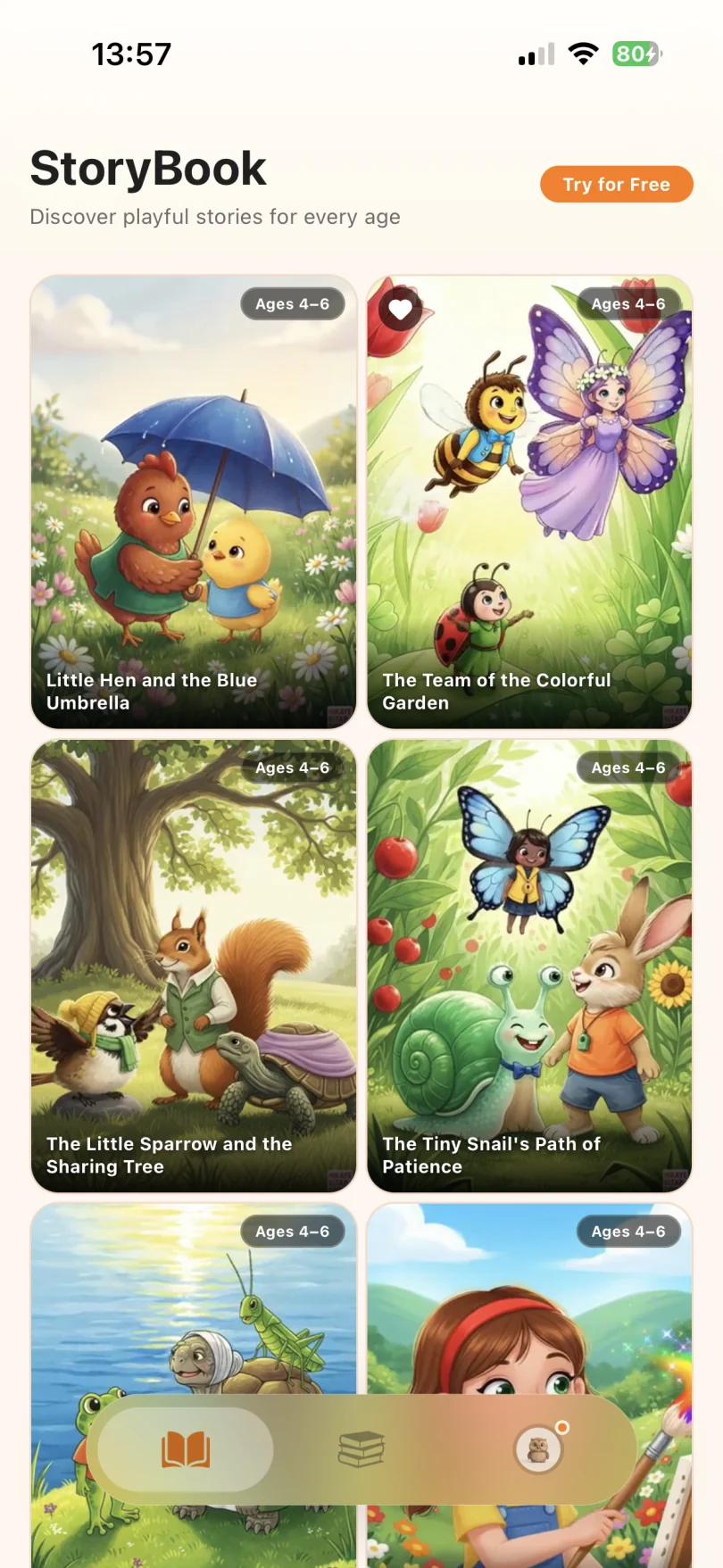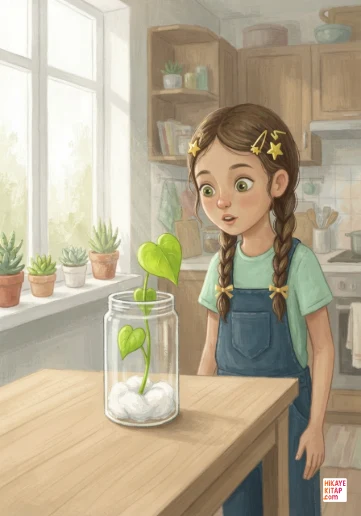
The best stories about patience for kids show what a character feels while waiting and what they gain at the end of the wait. The eight free books below feature a slow snail, beans that refuse to sprout, a cloudy observatory night and a boy who learns to sit still for birds, and every one has narration and a PDF download.
Why patience is hard to teach
Patience is invisible. When we say “be patient,” we’re asking a child to not do something, and for young kids that’s tough. Stories make patience visible: nothing happens in Maya’s jar for days; Lily runs to the garden every morning and finds only brown soil. Your child recognizes their own restlessness on the page, then gets to feel the moment the waiting pays off.
The stories on this list show four sides of patience: everyone moves at a different speed, putting in effort and waiting for growth, working toward a big goal step by step, and waiting quietly to observe.
8 books that teach patience
| Book | Age | Level | Pages | Time | Why this one |
|---|---|---|---|---|---|
| The Rabbit and the Tortoise | 4-6 | A2.1 | 12 | 2 min 0 sec | Steady effort beats speed |
| The Tiny Snail’s Path of Patience | 4-6 | A2.1 | 15 | 4 min 36 sec | A slow snail spots a dewdrop rainbow |
| Toby the Little Turtle and the Tiny Garden | 4-6 | A2.1 | 10 | 2 min 21 sec | Digging and planting until the harvest |
| The Little Tortoise’s Big Dream | 7-9 | A2.2 | 15 | 3 min 48 sec | A lucky stone and a patient climb |
| Maya and the Little Patience Experiment | 7-9 | A2.2 | 10 | 4 min 26 sec | Waiting two weeks for a bean to grow |
| Lily and the Forgotten Seeds | 7-9 | A2.2 | 10 | 4 min 7 sec | Heirloom seeds revived with Grandpa |
| Liam and the Secret Star Base | 7-9 | A2.2 | 10 | 4 min 6 sec | A cloudy opening night at the star base |
| Leo and the Forest Postman | 7-9 | A2.2 | 10 | 3 min 24 sec | Sitting still until the birds return |
Browse more in emotions and values, or find observation-themed stories in nature and discovery.
Four sides of patience
Everyone has their own pace
The Rabbit and the Tortoise is one of the simplest tellings of the classic fable; at the end the rabbit congratulates his friend and learns that being patient and steady brings success. The Tiny Snail’s Path of Patience takes the idea further. On the way to the Big Forest Picnic, Calm the snail can’t keep up with Dash the rabbit and Flora the squirrel, but moving slowly lets him see what they miss, like a tiny rainbow inside a single dewdrop. Slowness, it turns out, can be a gift.
Put in the work, wait for it to grow
In Toby the Little Turtle and the Tiny Garden, Toby digs slowly, plants his seeds, and doesn’t give up even when he’s tired; later he shares the vegetables with his friends. In Maya and the Little Patience Experiment, Maya’s class puts dry beans in jars of cotton. By day three she’s restless and writes “Still nothing” in her diary; by the end of the second week her bean has two broad green leaves. In Lily and the Forgotten Seeds, Lily plants heirloom seeds with Grandpa Silas, who calls the ripe tomatoes “the reward for all your hard work and patience.”
A big goal, one step at a time
In The Little Tortoise’s Big Dream, Toby dreams of climbing Sun Mountain. His grandpa gives him a smooth gray lucky stone and reminds him that every great journey starts with a single, patient step. In Liam and the Secret Star Base, Liam and his friends turn an old shed into an observatory, only to have heavy clouds swallow every star on opening night. The story shows how waiting through a setback makes the view that finally comes even more special.
Wait quietly and watch
In Leo and the Forest Postman, Leo is given a bird-watching job. On the first day he crashes through the bushes shouting, “Birds! Where are you?” and comes home with an empty notebook. The next morning he sits on soft moss without moving, and the birds forget he’s there. Sometimes patience is just being still and paying attention.
Activities after stories about patience for kids
Turning the story into a small real wait is what makes it stick:
- Bean jar: Like Maya, put damp cotton and a few dry beans in a clear jar. Your child draws it every day. Counting the days until a sprout appears makes the wait visible.
- Quiet minute: After Leo’s story, sit outside for one silent minute, then count the sounds you heard. Stretch the time a little each week.
- Snail walk: After Calm’s story, take a five-minute “snail walk” and look for three tiny things you’d normally miss.
- Step-by-step waiting: In line at the store or while dinner cooks, say “one step at a time, like Toby” to turn waiting into a game.
Responding to impatience
Instead of “Why are you so impatient?”, try naming the feeling: “Waiting is hard. Maya felt that way on day three, too.” Breaking waits into short, predictable chunks also helps. For a young child, “when this song ends” is more concrete than “five minutes.”
A 4-week patience plan
- Week 1: The Rabbit and the Tortoise and The Tiny Snail’s Path of Patience, with a weekend snail walk.
- Week 2: Maya and the Little Patience Experiment. Set up the bean jar and draw it daily.
- Week 3: Toby the Little Turtle and the Tiny Garden and Lily and the Forgotten Seeds. Move the sprouts into a pot.
- Week 4: The Little Tortoise’s Big Dream, Liam and the Secret Star Base and Leo and the Forest Postman. Try the quiet minute.
Mark each book and each day of bean growth side by side on the reading log so your child sees two kinds of patience pay off.
Discussion questions
- What did Calm notice because he moved slowly? Why did Dash miss it?
- How did Maya feel when nothing happened on day three? What would you have done?
- What did Grandpa Silas say when the tomatoes were finally ripe?
- Why do you think Toby’s grandpa gave him a stone? How might it have helped on the climb?
- Why didn’t Leo see any birds on the first day? What did he do differently the next morning?
For other values like sharing, empathy and kindness, see preschool values stories.