Friendship stories for kids work best when they show one concrete skill in action: saying hello, inviting someone in, noticing a friend is sad, or turning an argument into a game. Each of the eight free books below focuses on a different friendship skill, and all of them come with narration and a PDF download.
Can friendship be taught?
Some kids make friends effortlessly; for others it’s hard work. The good news is that friendship is built from small, learnable moves: making eye contact, asking a name, saying “Can I play too?”, waiting for a turn, pausing to listen when you’re upset. Stories make those moves visible. “What do you say when you meet someone new?” is abstract. “What did Lily say when she walked over to Leo?” has an answer right on the page.
8 friendship stories, one skill each
| Book | Age | Level | Pages | Time | Why this one |
|---|---|---|---|---|---|
| Lily and the Little Bridge of Friendship | 7-9 | A2.2 | 12 | 4 min 17 sec | One hello for a shy new classmate |
| The Dragon and the Brave Boy | 7-9 | A2.2 | 10 | 2 min 33 sec | Befriending a dragon everyone fears |
| Ela the Swallow and Minik the Ant | 4-6 | A2.1 | 12 | 1 min 40 sec | A swallow helps ants move a leaf |
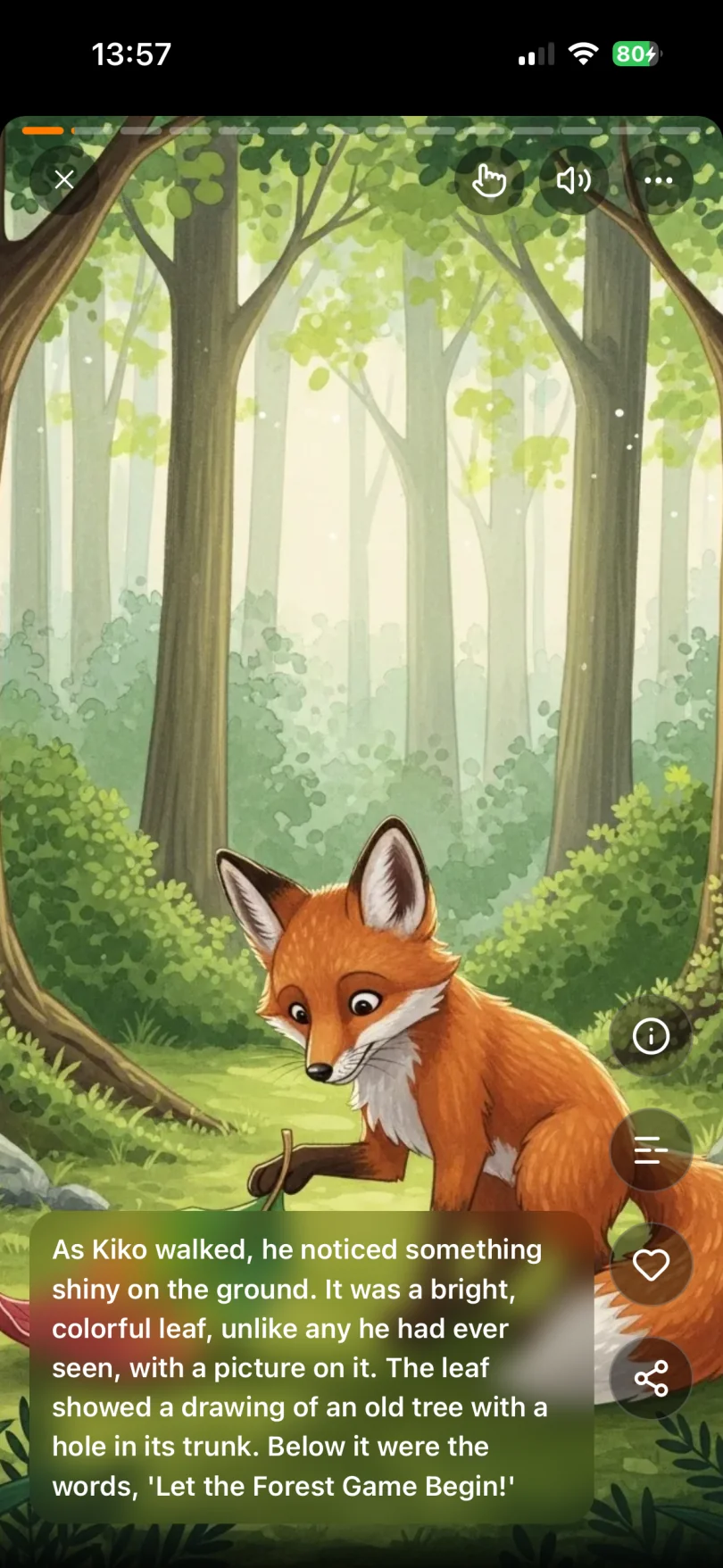
| The Curious Fox and the Forest Game | 4-6 | A2.1 | 14 | 3 min 12 sec | A clue hunt solved with new friends |
| The Kites’ Song | 4-6 | A2.1 | 12 | 2 min 6 sec | Noticing a sad friend and sharing |
| The Dream Sphere and the Flying Friends | 7-9 | A2.2 | 12 | 3 min 22 sec | A grabby captain gets invited to play |
| Lily and the Little Fox Chasing Moonlight | 7-9 | A2.2 | 10 | 3 min 12 sec | A friendship built on respect and space |
| The Secret of the Lost Map | 10-12 | B1 | 15 | 5 min 52 sec | Three friends crack a half map |
There are more than 90 friendship titles on the site; see them all on the friendship stories shelf.
The skill map: what each story teaches
Taking the first step
In Lily and the Little Bridge of Friendship, a quiet new boy named Leo spends recess alone on a bench. Lily thinks, “Maybe he’s just waiting for someone to say hello,” walks over, and offers to show him her favorite place at school. In the library, Leo turns out to be a huge book lover. It shows how small an invitation can be.
Looking past fear
In The Dragon and the Brave Boy, the villagers tell scary stories about the dragon on the mountain, but Arda suspects it might just be lonely. He shares his apple, reads from his storybook, and becomes friends with Emerald. When the villagers don’t believe him, he comes up with a plan involving the kite festival. It’s a natural way to talk about not judging someone before you know them.
Helping out
In Ela the Swallow and Minik the Ant, a giant leaf blocks the ants’ path and Ela swoops in to help. In The Curious Fox and the Forest Game, Kiko solves a clue hunt with help from Wise Owl, a squirrel named Nutmeg and a bear named Pati. Both are short and clear for ages 4-6: the helper and the helped both win.
Noticing a friend’s feelings
In The Kites’ Song, the wind shifts and Ada’s butterfly kite starts to drop. Can notices she’s upset and offers to fly his rainbow kite together. That tiny moment shows that empathy starts with simply noticing.
Turning conflict into play
In The Dream Sphere and the Flying Friends, Captain Curve is bored, not angry, and snatches the friends’ Dream Sphere. But the sphere only works with happy, sharing thoughts, and the story ends with everyone playing together on his ship. It’s a great way to talk about how “I want to play too” often hides behind a grab.
Friendship built on respect
In Lily and the Little Fox Chasing Moonlight, Lily watches a fox named Alaz visit her garden every night at ten. Their bond grows without touching, by respecting each other’s space and freedom. Older kids can chew on the question, “Does every friendship have to look the same?”
Becoming a team
In The Secret of the Lost Map, Aras, İdil and Mete find half of a map tucked in a library book and solve its puzzle together, each bringing a different strength.
Reading friendship stories as rehearsal
The goal with these books isn’t a lecture; it’s practice. After reading, act out a scene: you play Leo, your child plays Lily, then switch. Ask “What will you say?” and wait for your child to find the words. That rehearsal gives them a ready-made line for the next real moment at school.
If your child is going through a friendship problem, simply choose the matching story and ask, “Did this remind you of anything?” If they don’t want to talk, let it go. The story stays with them, and many kids bring it up on their own days later.
A 7-day friendship plan
- Day 1: Ela the Swallow and Minik the Ant. Do one small helpful thing for someone at home.
- Day 2: The Curious Fox and the Forest Game. Set up a three-clue hunt around the house.
- Day 3: The Kites’ Song. Who did you notice feeling sad today?
- Day 4: Lily and the Little Bridge of Friendship. Practice “Hi, I’m …” together.
- Day 5: The Dragon and the Brave Boy.
- Day 6: The Dream Sphere and the Flying Friends. Think back to your last argument: how could it have gone?
- Day 7: For older kids, The Secret of the Lost Map or Lily and the Little Fox Chasing Moonlight.
Discussion questions
- What did Lily think when she saw Leo sitting alone? What would you say to take the first step?
- Why were the villagers afraid of Emerald? How did Arda change their minds?
- How did Can know Ada was upset? How can you tell when a friend is sad?
- Why did Captain Curve grab the sphere? What did the friends do instead of getting mad?
- Why didn’t Lily try to pet Alaz? Is that still a friendship?
For a preschool-focused set on sharing and empathy, see preschool values stories: empathy, sharing and kindness.