Longer stories for 4th graders are illustrated reads with several scenes, a supporting cast and narration of about 4 to 7 minutes. The eight free books below are among the longest on the site, each readable online with narration or printable as a PDF, and they make a practical bridge between picture books and full chapter books.
Why stamina matters in fourth grade
Fourth grade is when school texts get longer and questions start spanning pages instead of paragraphs. A child who’s comfortable with two-minute stories can lose focus halfway through something longer. That ability to stay with a text is often called reading stamina, and like running distance, it grows best in small steps.
To be clear about what these are: they are not novels. Even the longest story on the site is a 12-15 page picture book. What sets them apart from shorter reads is structure. There’s a journey or a project, a team of characters, a setback in the middle and a second attempt. That’s the shape of a chapter book in miniature.
8 longer stories for 4th graders
| Book | Age | Level | Pages | Time | Why this one |
|---|---|---|---|---|---|
| Lily and the Library’s Night Watch | 7-9 | A2.2 | 12 | 5 min 16 sec | A 1994 note found at a library sleepover |
| Skye the Sky-Blue Ladybug | 7-9 | A2.2 | 15 | 4 min 28 sec | A blue ladybug learns her difference matters |
| Lily and the Garden that Lost Its Colors | 7-9 | A2.2 | 12 | 4 min 40 sec | Saving a dry garden with the right amount |
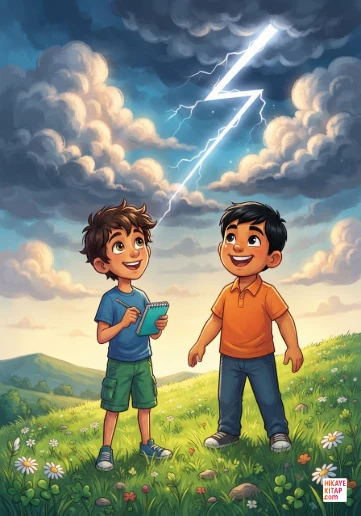
| Leo and the Little Lightning Investigation | 7-9 | A2.2 | 12 | 5 min 23 sec | Counting seconds between flash and thunder |
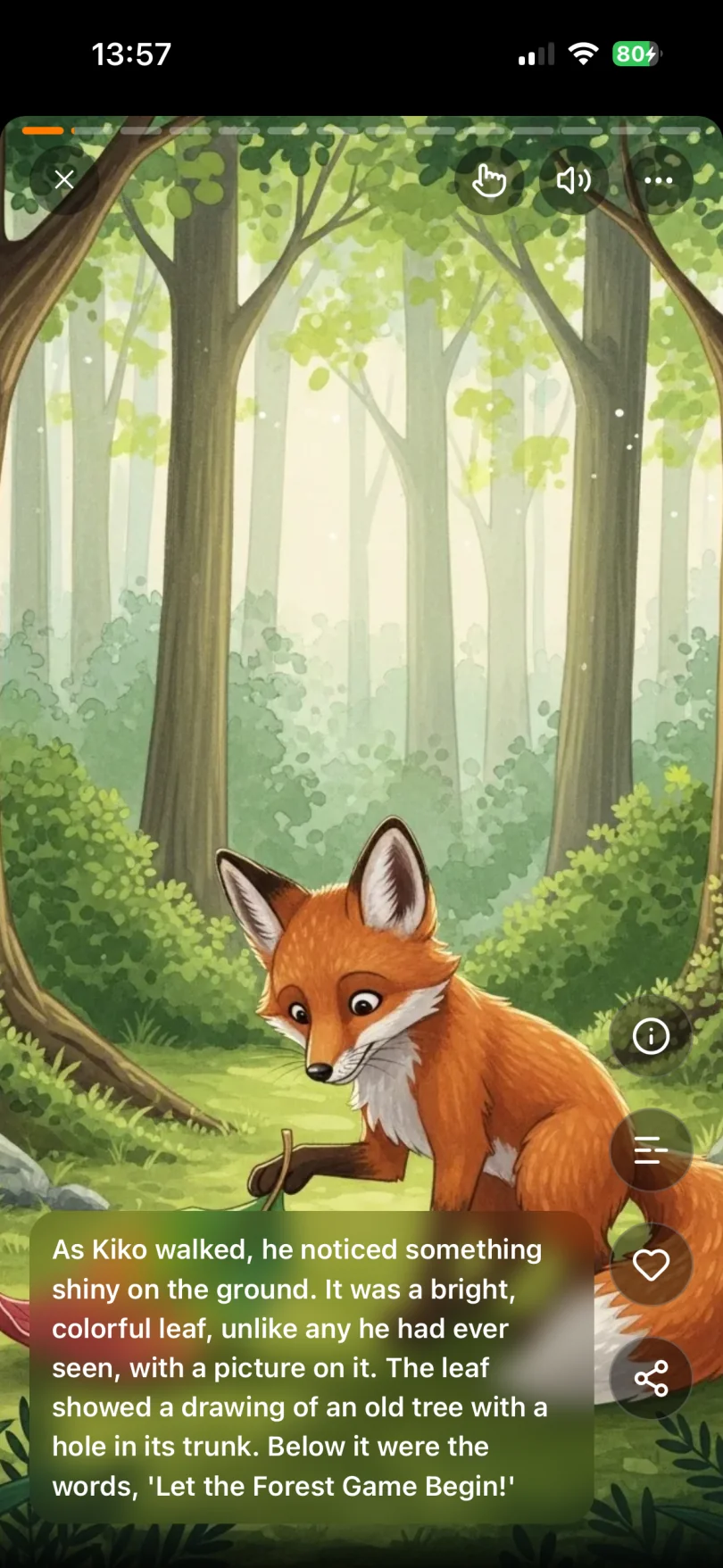
| The Fox and the Lost Forest | 7-9 | A2.2 | 15 | 3 min 41 sec | A gentle fox guides a lost boy home |
| The Far Bank of the Silver River | 10-12 | B1 | 12 | 6 min 45 sec | A cedar raft crosses a misty river |
| The Wind Workshop on the Northern Slopes | 10-12 | B1 | 12 | 7 min 19 sec | Reviving an old workshop with a master |
| The Curious Doctor’s Wonderful Travels | 10-12 | B1 | 15 | 4 min 43 sec | A Gulliver-style voyage among tiny people |
These come from the ages 7-9 and ages 10-12 shelves. For grade-level picks of every length, see free reading books for 4th graders.
A closer look at the list
Lily and the Library’s Night Watch takes place during a “Great Library Sleepover” at school. A navy-blue book slides off a top shelf, and inside Lily finds a note left by students in 1994: the library “is a home for dreams.” It’s a lovely opener because it connects the reader to kids who sat in the same room decades ago.
Leo and the Little Lightning Investigation pairs curiosity with safety. Leo watches a storm from behind the glass, learns that light travels faster than sound, and counts the seconds between the flash and the rumble. By the end, thunder isn’t scary anymore.
Lily and the Garden that Lost Its Colors shows why “just add more water” isn’t the answer. Lily, Oliver and Willow inspect cracked soil with a magnifying glass, and Willow wonders whether too much water could hurt the plants. It’s a natural lead-in to making a watering chart for your houseplants.
The Far Bank of the Silver River and The Wind Workshop on the Northern Slopes are the two longest reads on the list, each over six minutes of narration. In the first, Emily and her friends build a cedar raft to cross a misty river; in the second, Adrian reopens a long-closed workshop with help from Master Arthur. Both are B1 level and best for confident readers.
The Curious Doctor’s Wonderful Travels borrows from Gulliver’s Travels: after a storm, Levent wakes on a beach tied down by hundreds of tiny threads, surrounded by finger-sized people. Meeting a classic in a short retelling makes the full novel feel less intimidating later.
How to read a longer story: the three-part method
Rather than tackling a long text in one go, split it into three parts:
- Beginning (pages 1-4). Characters and problem are introduced. Pause and ask, “What does the hero want?”
- Middle (pages 5-8). An attempt, a journey or an obstacle. Ask for a prediction: “Do you think this will work?”
- End (pages 9-12 or 15). The resolution and the message. Close the book and have your child summarize the whole story in five sentences.
In week one, spread the three parts across different days. As your child gets comfortable, combine two parts, then all three. Narration helps a tired reader: let them listen to part one and read parts two and three on their own.
Signs your child is ready
If your child finishes three-minute stories easily, retells events in order, and asks for “one more,” they’re ready for longer reads. If they keep checking how many pages are left, skip lines, or can’t recall the ending, stay with the three-part method a little longer. The reading speed test gives a rough sense of pace, but speed shifts with the text and the day, so don’t decide anything from a single result.
A 4-week stamina plan
- Week 1: The Fox and the Lost Forest and Skye the Sky-Blue Ladybug, each split over three days.
- Week 2: Lily and the Garden that Lost Its Colors and Leo and the Little Lightning Investigation, combining two parts per sitting.
- Week 3: Lily and the Library’s Night Watch and The Curious Doctor’s Wonderful Travels, each in one sitting.
- Week 4: The Far Bank of the Silver River and The Wind Workshop on the Northern Slopes. First read with narration, second read from the printed PDF.
Track each title on the reading log and add up the total minutes at the end of the month. Kids love seeing that number.
Discussion questions
- What do you think the students who wrote the 1994 note did that night? What would you write to a future student?
- Why did Leo count after each flash of lightning? What did the number tell him?
- Why did Willow hesitate before turning on the tap?
- What made Skye different from the other ladybugs, and how did the others feel about it by the end?
- How did Levent earn the trust of the tiny people? Have you ever felt like a giant somewhere new?
For an after-reading drawing activity, browse the coloring books, and for more printable stories visit free PDF children’s books.