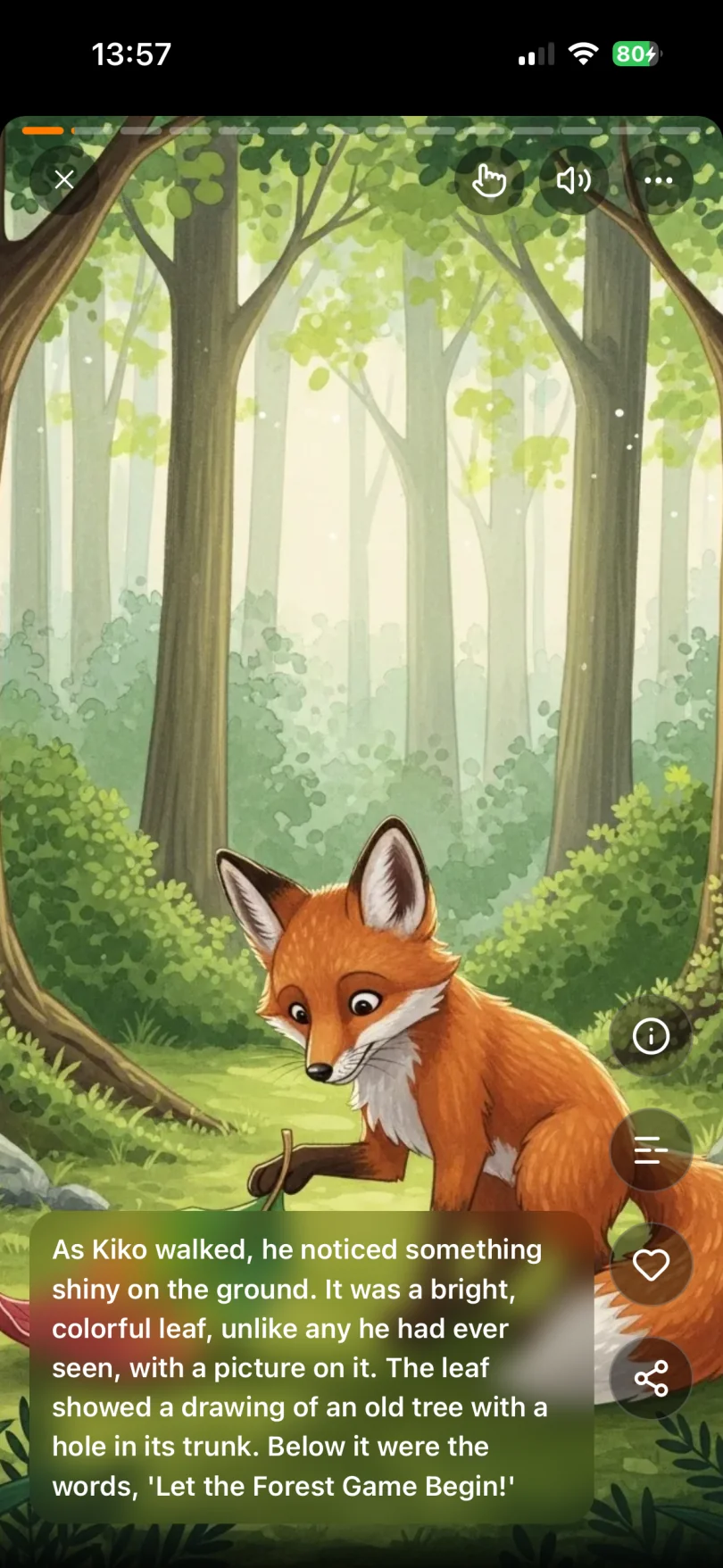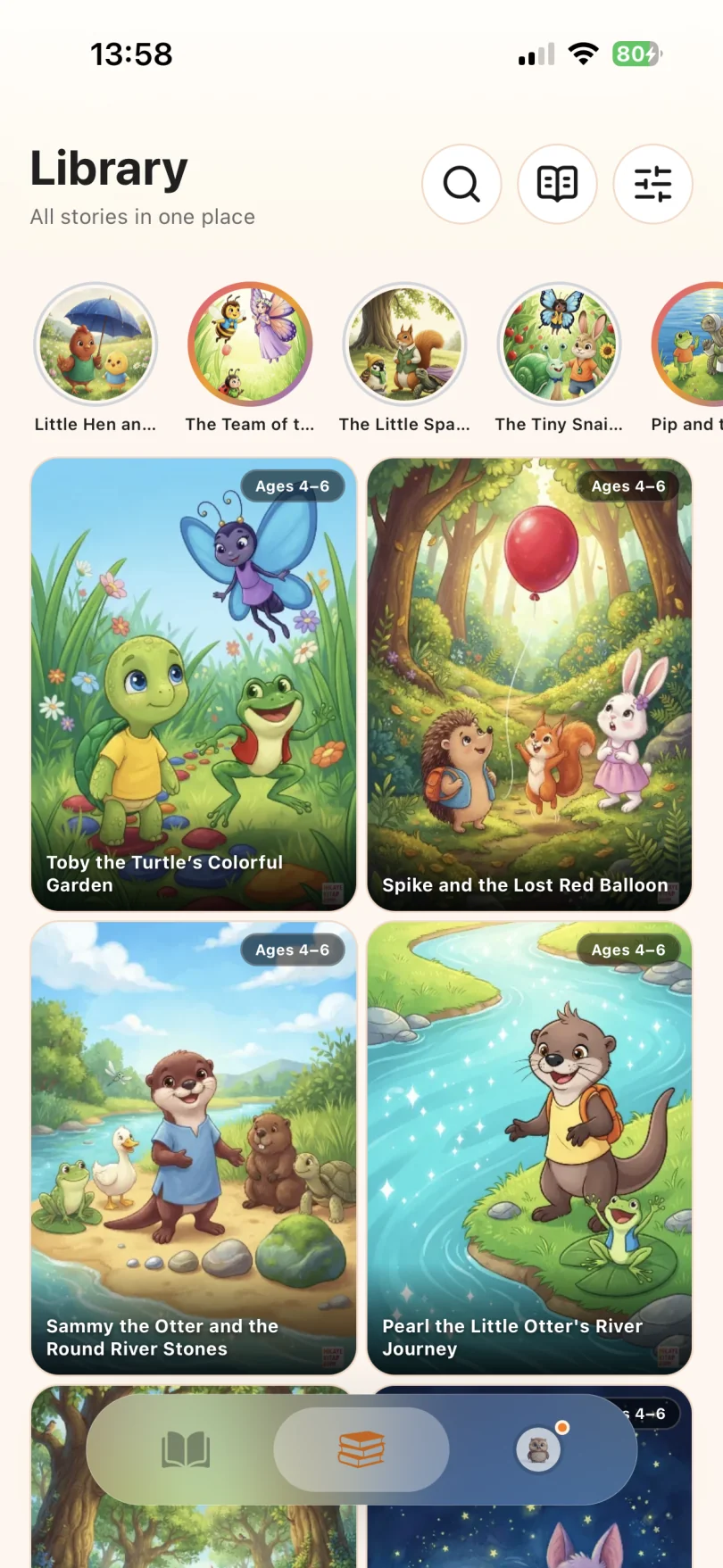
Free reading books for 4th graders are easy to start with on StoryBook: illustrated stories at A2.2 and B1 level, 12-15 pages each, that take 3-6 minutes with narration. Every book can be read online, listened to with built-in audio narration, or downloaded as a PDF to print at home or in class.
Fourth grade is the year many kids move from short picture books to longer chapter books. This guide focuses on that bridge: short stories to build fluency and confidence, a clear way to check the level, and a 4-week plan that pairs our books with a library chapter book.
10 Free Books for 4th Graders
The first five build fluency at a comfortable level. The last five are a step up for stronger readers or for read-alouds.
| Book | Age | Level | Pages | Time |
|---|---|---|---|---|
| The Mysterious Village by Bicycle | 7-9 | A2.2 | 15 | 3 min 6 sec |
| The Forest Guardian and the Brave Mouse | 7-9 | A2.2 | 14 | 3 min 15 sec |
| Prince Atlas and the Villager Can | 7-9 | A2.2 | 15 | 3 min 18 sec |
| Wooden Boy’s Adventure | 7-9 | A2.2 | 15 | 3 min 34 sec |
| The Fox and the Lost Forest | 7-9 | A2.2 | 15 | 3 min 41 sec |
| The Curious Squirrel and the Lost Acorn | 10-12 | B1 | 15 | 2 min 57 sec |
| The Water Cycle Watchers | 10-12 | B1 | 12 | 2 min 58 sec |
| The Slow Turtle and the Fast Bird | 10-12 | B1 | 12 | 3 min 48 sec |
| Midnight Mane | 10-12 | B1 | 15 | 4 min 20 sec |
| The Energy Detectives Club | 10-12 | B1 | 12 | 5 min 25 sec |
What Matters in 4th Grade Reading
In the early grades, kids learn to decode words. By fourth grade, schoolwork increasingly expects them to read to learn: science passages, social studies texts, and longer stories with several characters. Three skills make the biggest difference:
- Fluency: Reading smoothly, with expression, at a steady pace. A child who reads word by word uses all their energy on decoding and has little left for meaning.
- Inference: Understanding what the text suggests but doesn’t say outright, such as why a character made a choice.
- Stamina: Staying with one text for 20 minutes or more, which chapter books demand.
Short illustrated books are a good tool for the first two. Stamina comes from longer books, which is why the plan below pairs both.
Checking the Level
- Five-finger rule: Have your child read one page aloud. Each unknown word is one finger. Zero to one: easy. Two to three: right level. Four to five: use the narration first.
- Reading speed: The free reading speed test gives you a words-per-minute number to track over the school year.
- Retell test: After reading, ask for the story in three sentences: beginning, middle, end. If your child can’t, the book may be too hard, or they read too fast.
Using Audio Narration and the PDF Together
Many parents search for free “audible” books for 4th graders. The built-in narration on each book page does a similar job for short stories, and works best as part of a routine rather than as passive listening:
- Listen and follow: Play the narration while your child follows the words on screen.
- Read alone: The next day, your child reads the same book aloud without audio. Familiar words make this read noticeably smoother.
- Read on paper: Print the PDF. Your child underlines new words and circles one sentence that shows how a character feels.
For teachers, the PDF works as a printed guided-reading text, and the online flipbook can be projected for a whole-class read-aloud.
Pairing With a Chapter Book
Our stories are not chapter books. For stamina, add a library book alongside them. Titles widely read in fourth grade include Because of Winn-Dixie by Kate DiCamillo, Frindle by Andrew Clements, Charlotte’s Web by E. B. White, and the Ramona books by Beverly Cleary. A short story from the table makes a good warm-up before a chapter.
A 4-Week Reading Plan
Aim for about 25 minutes a day: 5-10 minutes on a story from the table, the rest on a chapter book.
| Week | Short stories | Focus |
|---|---|---|
| Week 1 | The Mysterious Village by Bicycle, The Forest Guardian and the Brave Mouse | Fluency: listen first, then read aloud |
| Week 2 | Prince Atlas and the Villager Can, Wooden Boy’s Adventure | Inference: why did a character make that choice? |
| Week 3 | The Fox and the Lost Forest, The Water Cycle Watchers | Reading to learn: list three facts or clues from each book |
| Week 4 | The Slow Turtle and the Fast Bird, Midnight Mane, The Energy Detectives Club | Stamina: read two stories back to back, then a chapter |
Log each finished book on the printable reading log; at the end of the month you can print a reading certificate. With an account, your child can also see their reading history and earn badges.
How to Download the PDF
- Click a title in the table to open the book page.
- Press “Download PDF”.
- Print on A4 or US Letter with “fit to page” selected.
Our coloring pages are free PDFs as well, and every downloadable title is gathered in the free PDF children’s books library.
Questions to Ask After Reading
- Wooden Boy’s Adventure: The wooden boy learns about honesty, courage, and belonging. Which of the three was hardest for him to learn, and why do you think so?
- The Forest Guardian and the Brave Mouse: How can someone small, like Squeaky, help someone big and strong? Can you think of a real example?
- The Fox and the Lost Forest: Leo follows a blue butterfly deep into the forest. What did Red the fox help him discover, and would you have followed the butterfly?
- The Energy Detectives Club: The kids use real data to find energy waste at school. What could you measure at home to save energy?
- The Slow Turtle and the Fast Bird: Shelly and Dash have very different strengths. How did combining them help them find the Sun Fruits?
Keep Exploring
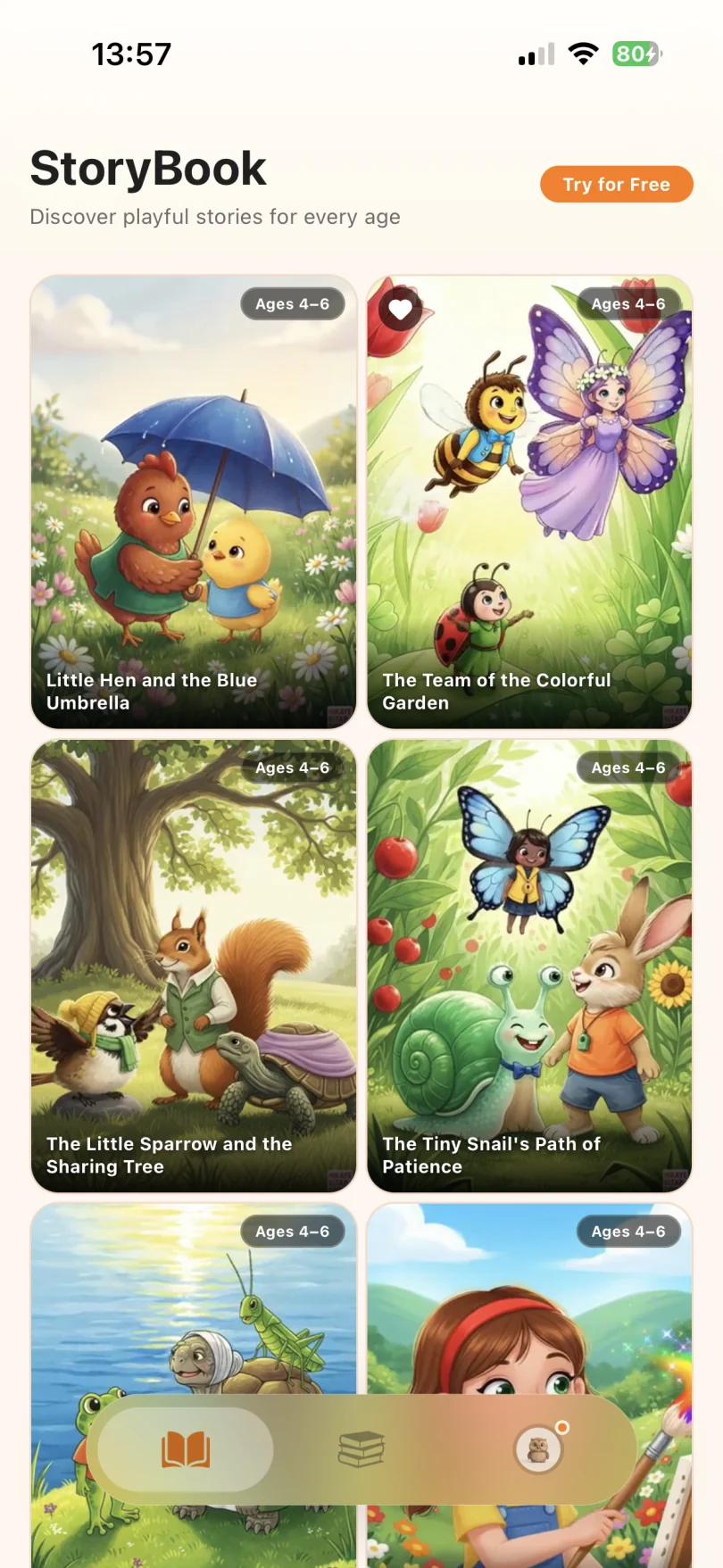
Browse more books on the ages 7-9 and ages 10-12 pages. For the grades on either side, see free story books for 3rd graders and free story books for 5th graders. Reading on a tablet? The StoryBook app is available for iOS and Android.