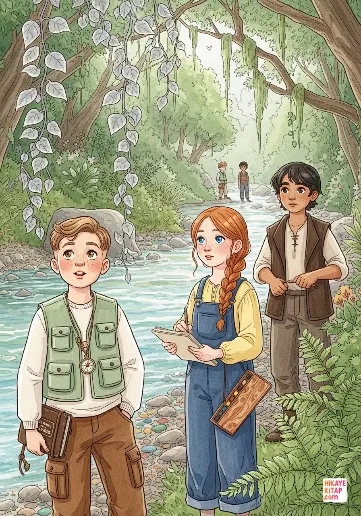
The Traveling Botanist of Glass Valley
Arthur finds his grandfather's journal, The Hidden Flora of Glass Valley, in the attic. With Sophie the artist, sturd...
12 pages · 6 min
Type into the box above to start searching
Features and shortcuts to enhance your reading experience
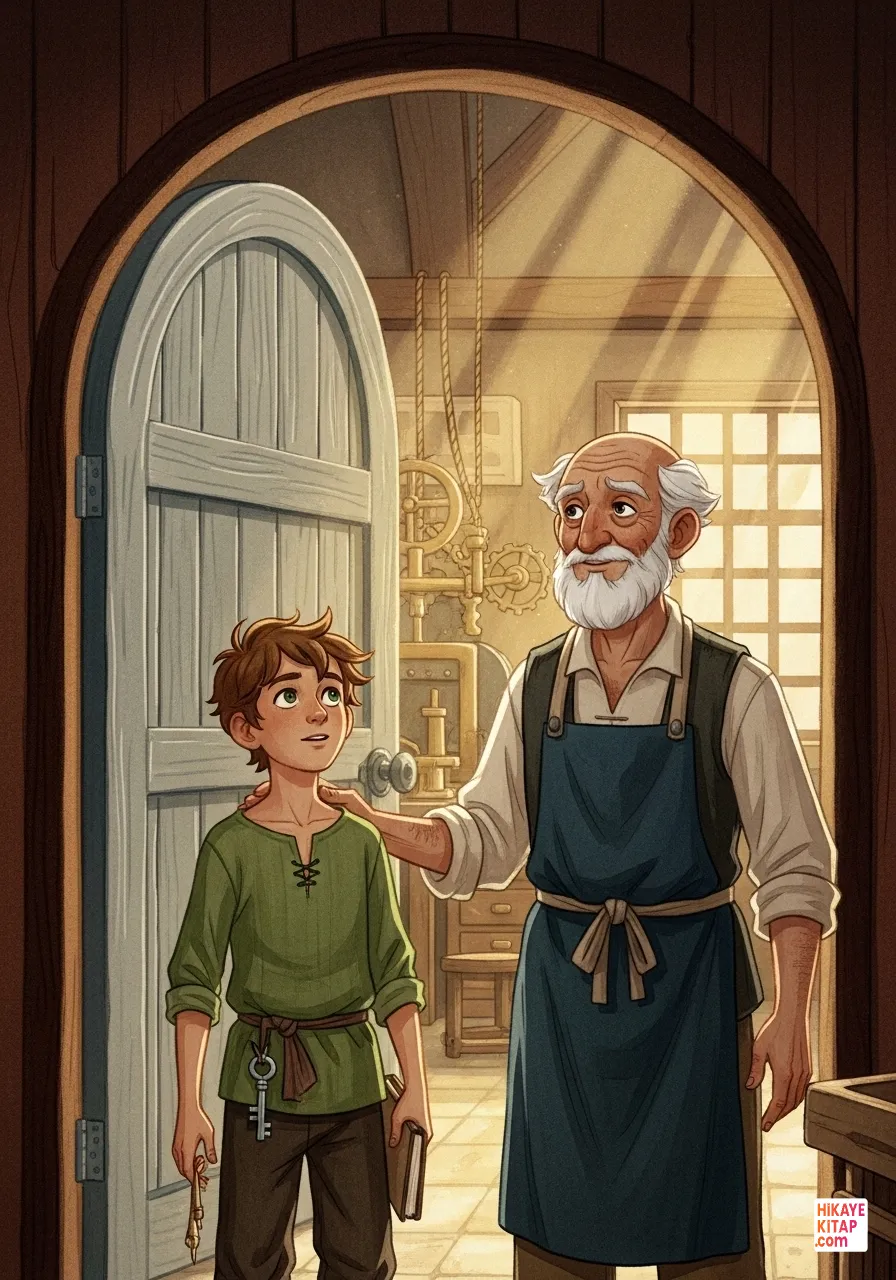
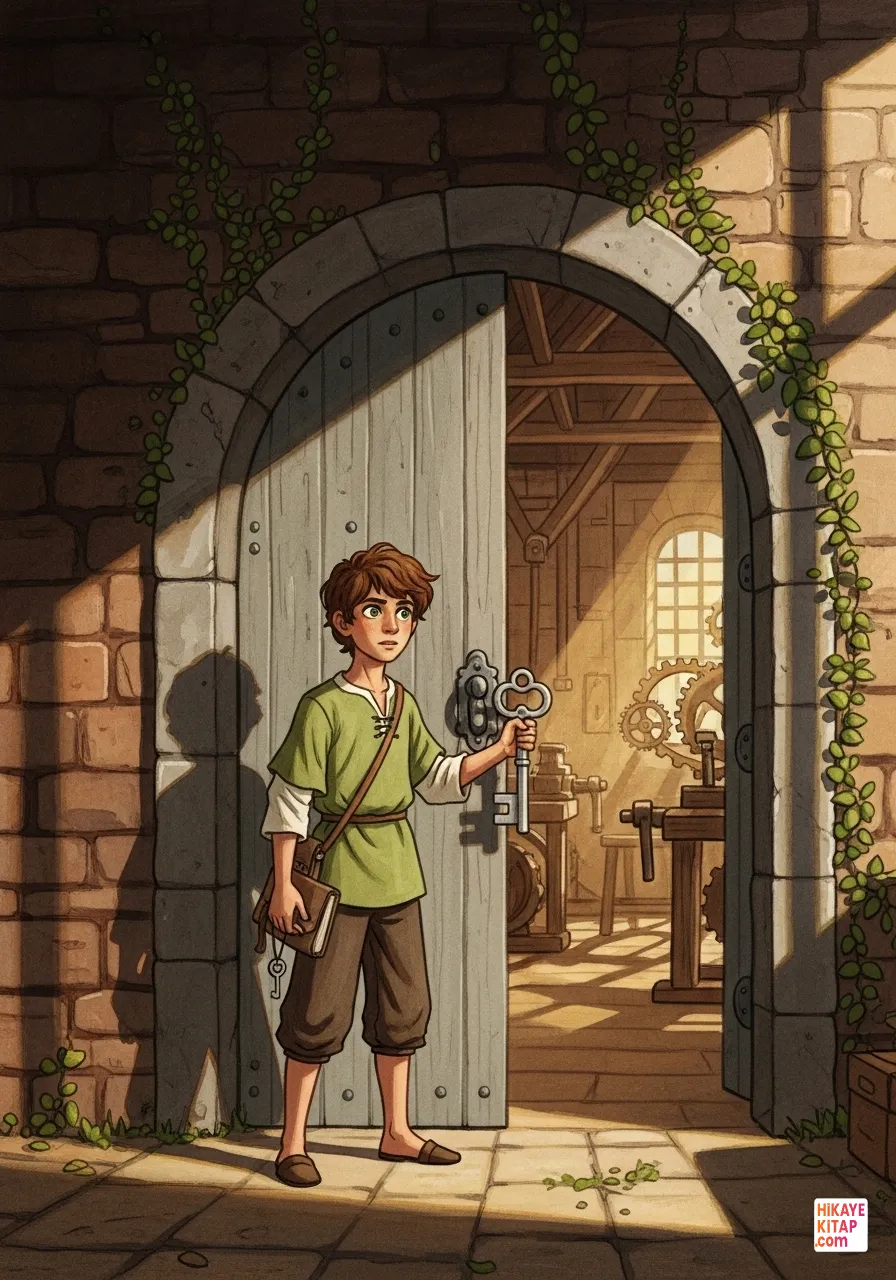
On the steep northern slopes, on those high hills where clouds stretched like cotton fields, there stood an old workshop that had been closed for years. Young Adrian felt as if he could hear the whispers of the dusty workbenches and rusty wheels inside whenever he passed by this silent building. One morning, he stood before the heavy oak door with a silver key in his hand. The smell inside was a mixture of old paper, dried oil, and thousands of stories waiting to be discovered. When Adrian wiped the thick layer of dust from the window, the first beam of light entering the room illuminated the dust particles dancing in the air. It was time to turn the sound of the wind into a mechanical melody.
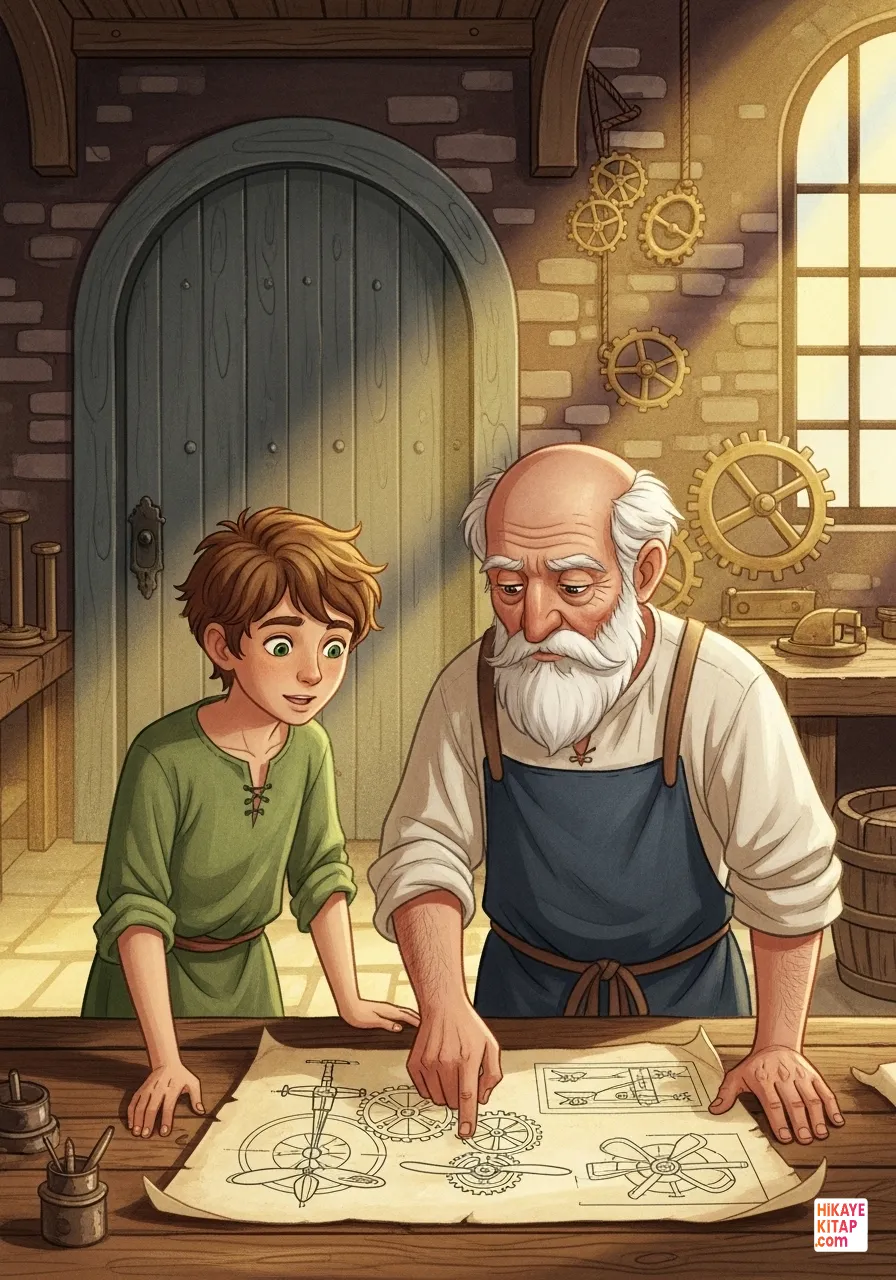
Excitement alone was not enough to bring the workshop back to life; experience was needed too. Adrian knocked on the door of Master Arthur, the wisest craftsman in the village. Master Arthur was a man whose hands were as hard as tree bark, but whose heart was as soft as a child’s. When he heard Adrian’s intention, his eyes lit up. “My boy,” he said, “it is easy to turn a wheel, but for that wheel to have a soul, you must know the old techniques and the language of nature.” From the dusty shelves, he took out a yellowed parchment. It was the unfinished drawing of a great mechanism that would turn the power of the wind into water and bread. They promised to work together.
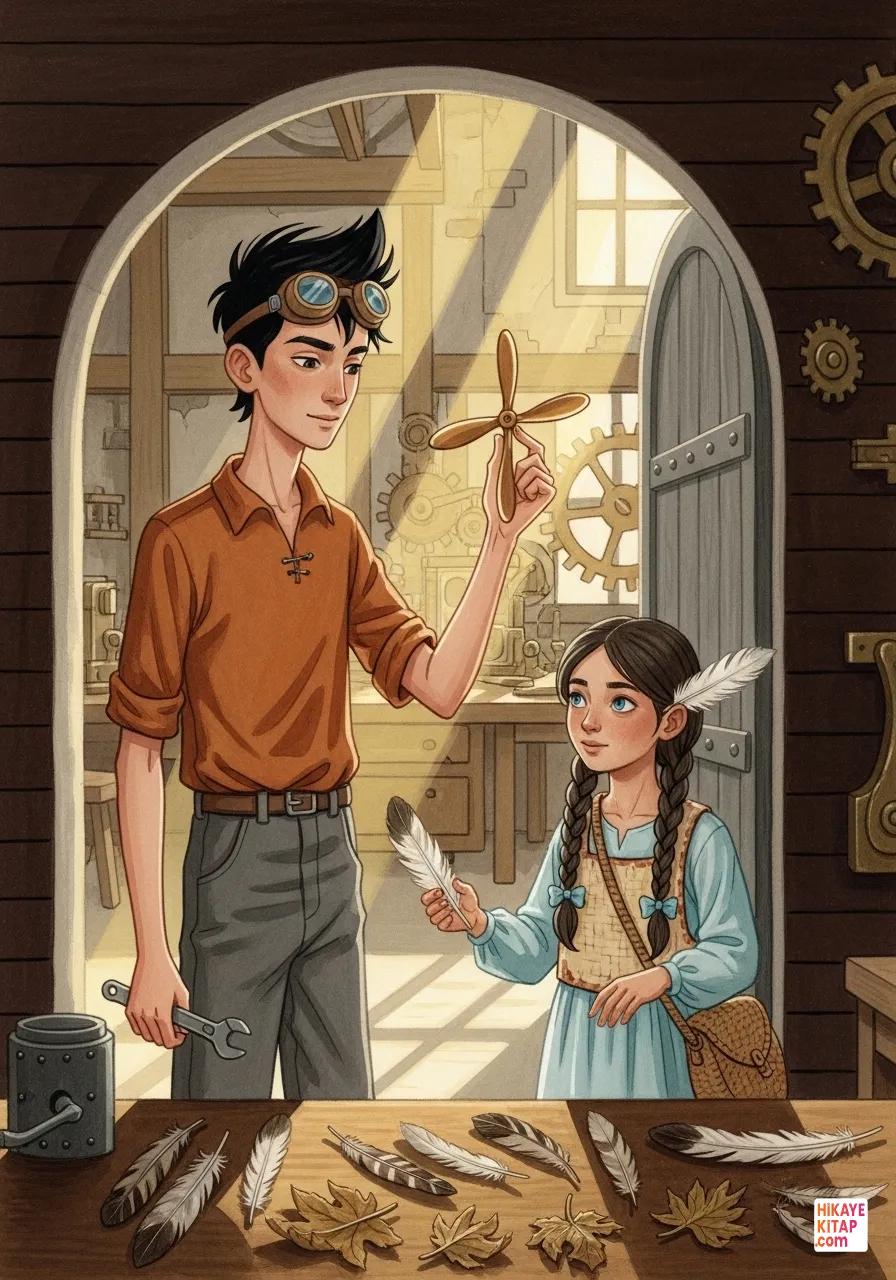
Two more important people joined the workshop: Simon, an inventor whose imagination knew no limits, and Dylan, who noticed even the smallest movement in nature. Simon loved turning the copper wires and brass screws in his hands into works of art. Dylan could understand when and from which direction the wind would blow by watching the wingbeats of birds. As Simon placed a small model on the table, Dylan took different tree seeds and feather samples from his pocket. Each of them was eager to add their own talent to the great project. As the first smoke rose from the workshop chimney, the four friends planned a new journey.
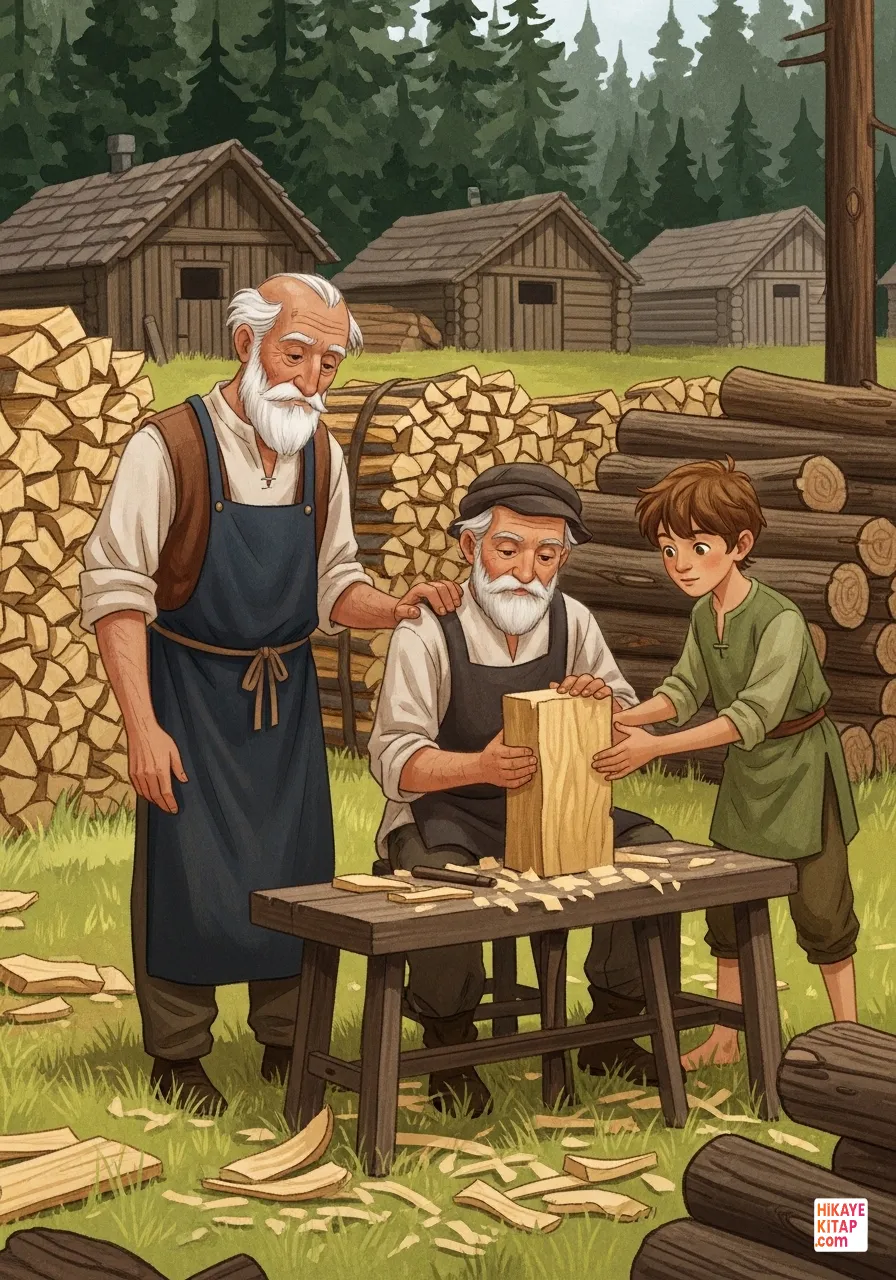
Knowledge was not only in books, but also in masters. Adrian and Master Arthur crossed the valley and went to the neighboring village to visit the old Wood Master. The master told them how durable hornbeam wood was and how stubborn oak could be. “You must speak with the wood,” the old man said. “When you strike it with the chisel, it tells you where it wants to go.” Adrian took notes as he watched the master’s hands. He learned how the grain direction of the wood should be so that a gear could turn smoothly. Every carving would become a part of the future wind mechanism.
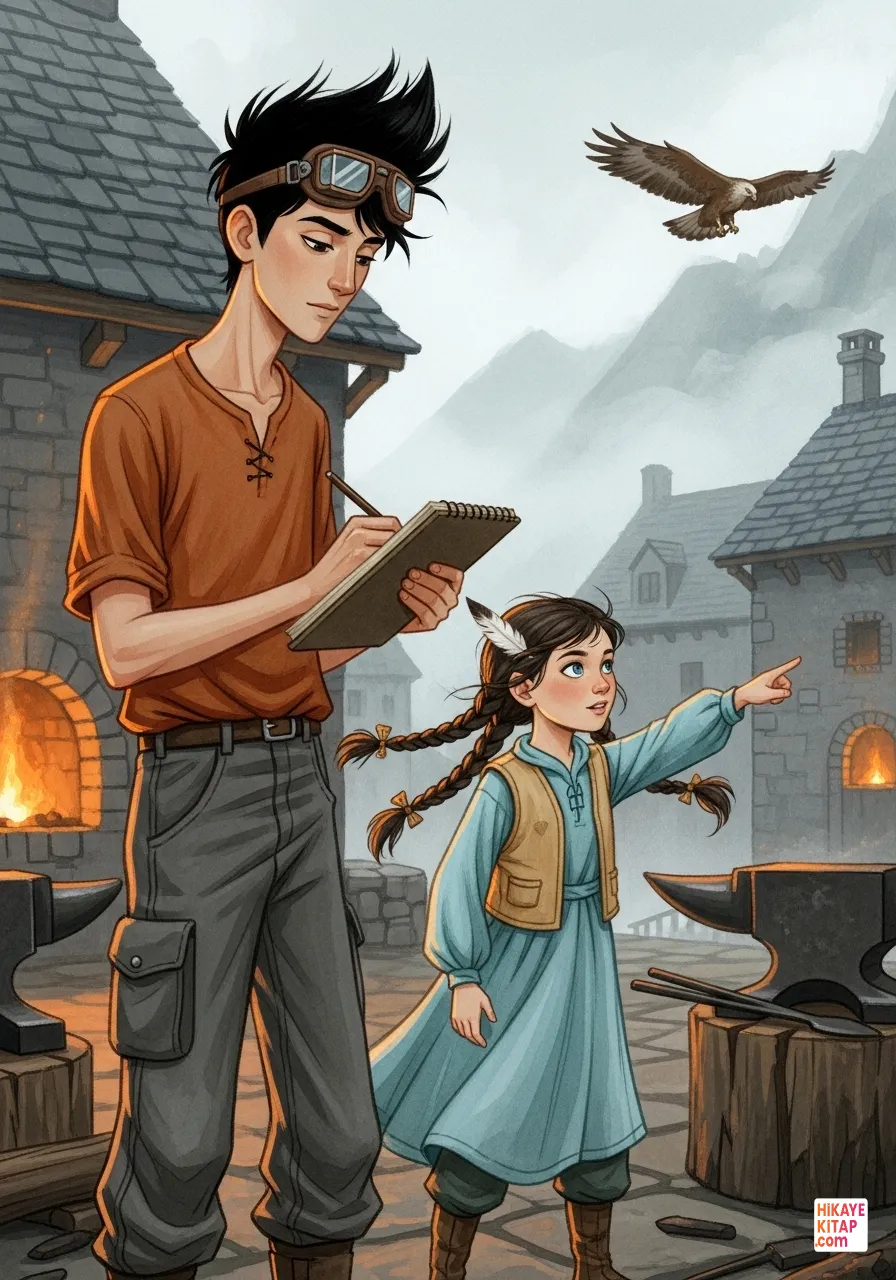
Simon and Dylan set out in another direction, toward the village hidden in mist where metalworkers lived. There, they saw how alloys that were light but as strong as steel were crafted. While Simon put his designs for mechanical joints onto paper, Dylan observed outside how the wind swept through the valley. “Look, Simon,” said Dylan, “the wind speeds up in the narrow passages between the rocks. We should curve the tips of the propeller blades slightly, like the wingtips of a hawk.” Simon immediately added this observation to his notebook as a diagram.
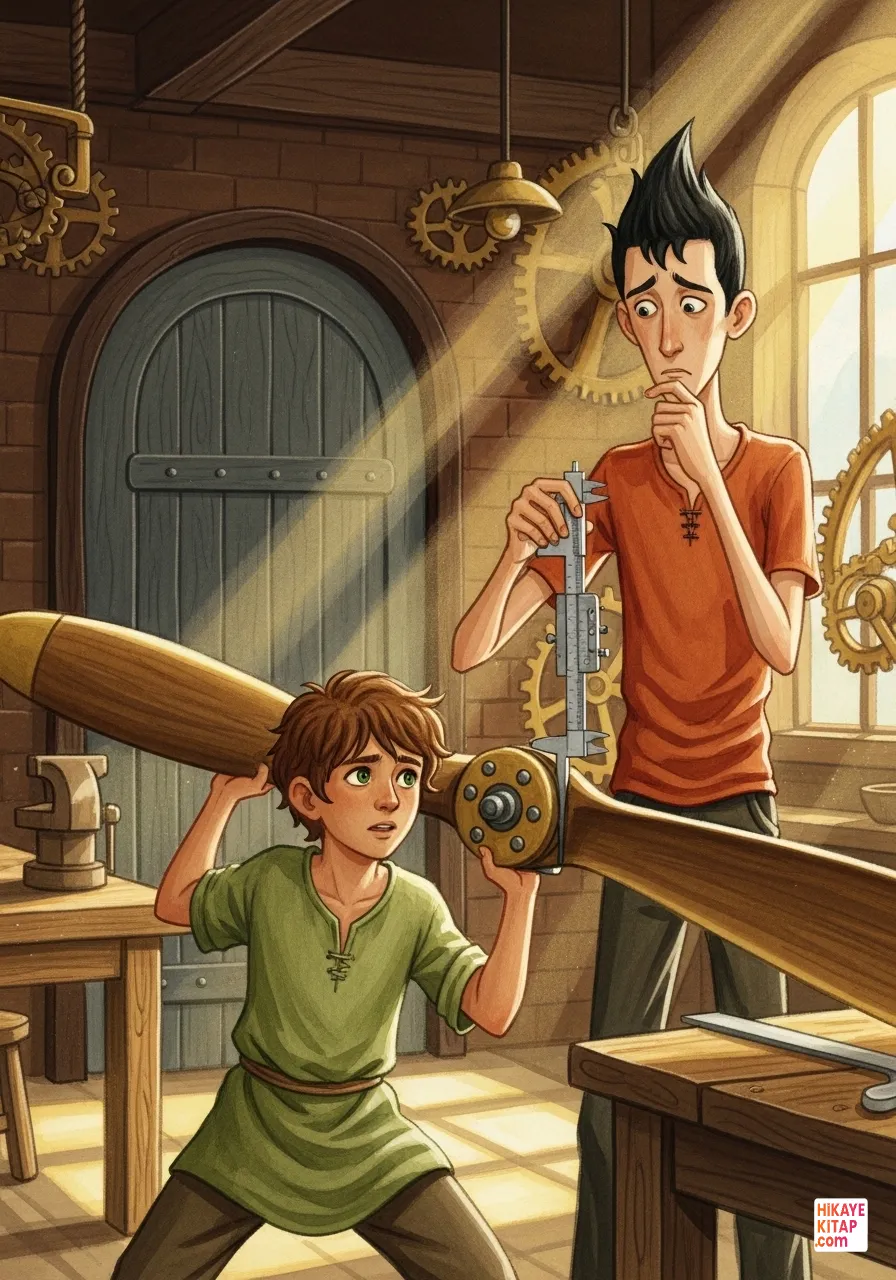
When they returned to the workshop, they faced a major problem: the propeller blades were too heavy and would not turn in light breezes. Adrian and Simon spent days trying different materials. Oak was too heavy, while thin sheet metal bent too quickly. “If we cannot find the balance, all our efforts will be wasted,” Simon murmured. Instead of feeling discouraged, Adrian continued examining the pieces on the workbench. The problem was not a mistake, but a solution that had not yet been discovered. Every attempt brought them one step closer to the right material.
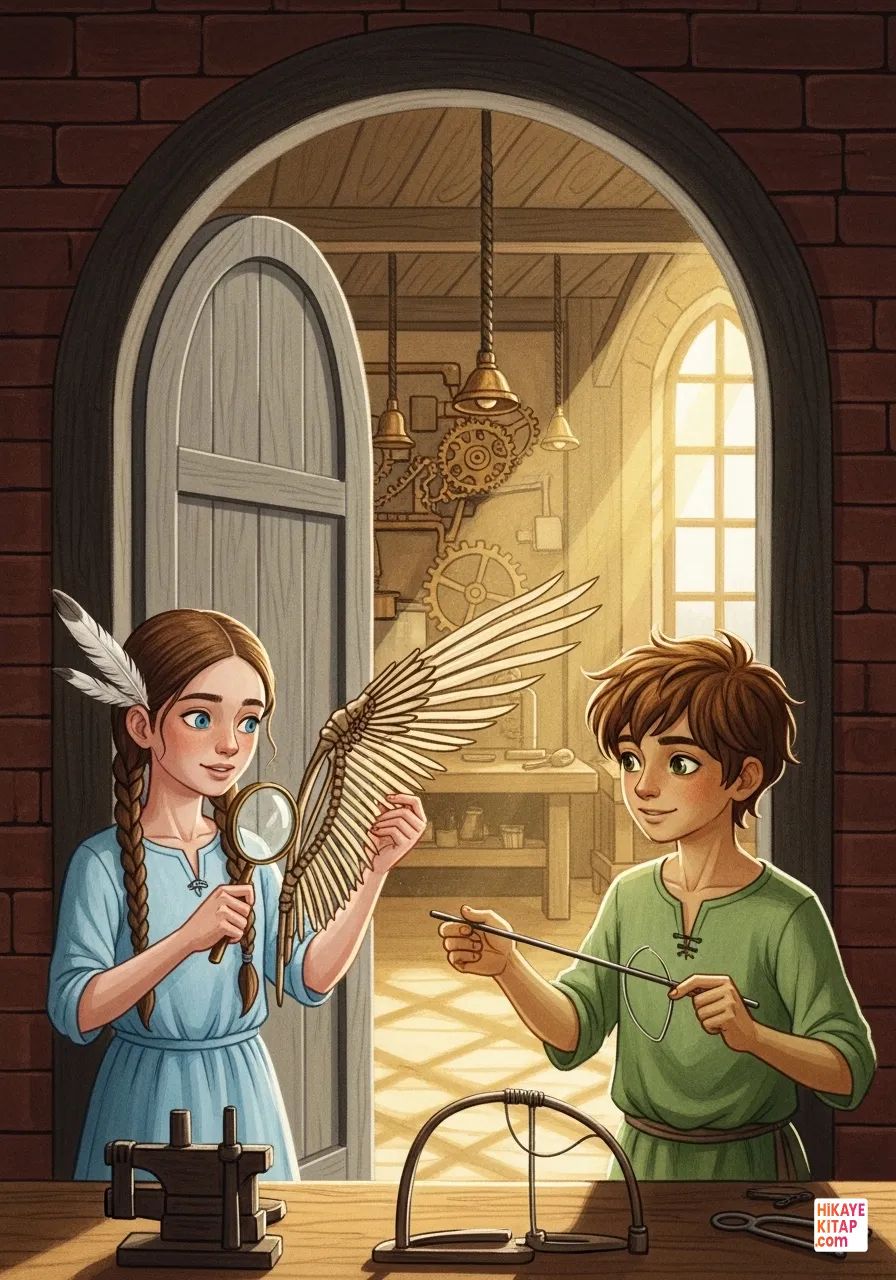
Dylan came inside holding a dried eagle wing and several reed stalks. As he watched Adrian and Simon, he said, “Nature never carries unnecessary weight.” Pointing to the structure of the wing, he explained its hollow yet strong design. Adrian jumped up with excitement. If they made the blades not from solid wood, but by hollowing them out and covering them with a thin, durable fabric, they would be both light and flexible. They immediately got to work; Dylan guided them, while Adrian prepared the frame with great care.
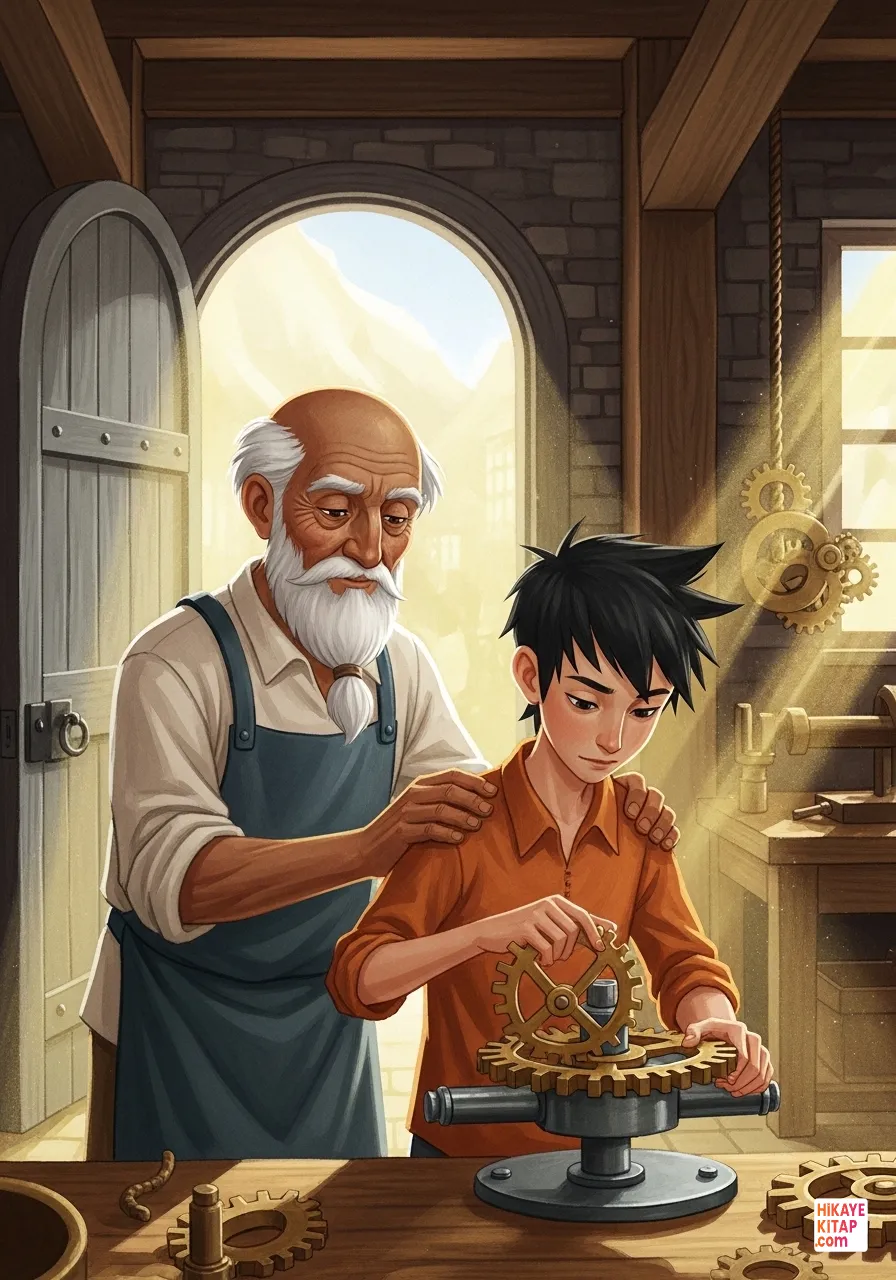
Now it was time to assemble the enormous mechanical wheels. Under Master Arthur’s guidance, Simon placed the main shaft into position. But when the metal parts touched one another, they made a harsh scraping sound that hurt the ears. “If we cannot solve this friction, the metal will heat up and the system will jam,” said Simon. Master Arthur stroked his beard; this was an old problem, and its answer was hidden once again in a traditional method. He reminded Simon to be patient and that every part needed time to adapt to the others.
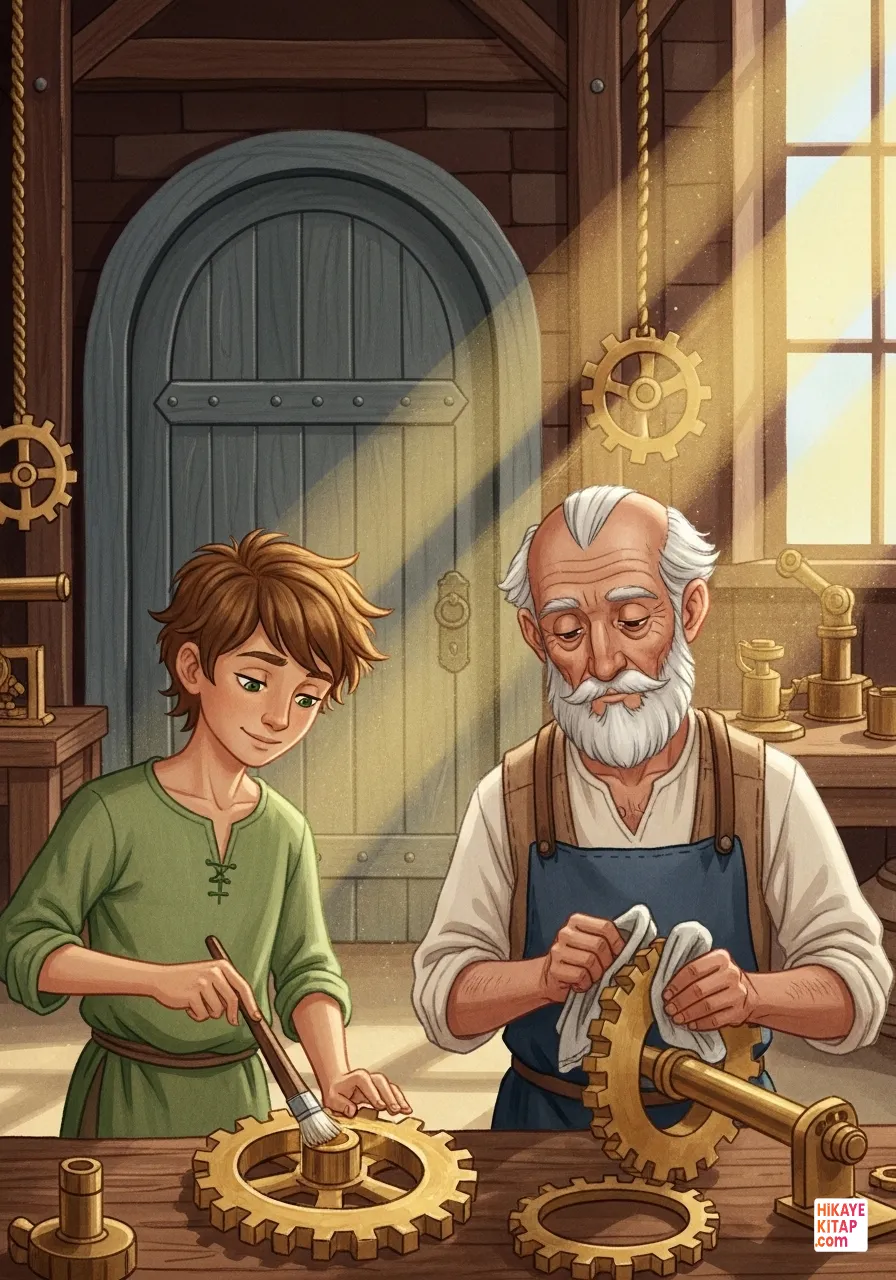
Adrian and Master Arthur used a special herbal oil brought from a distant village to reduce the friction. This oil not only stopped the friction, but also protected the wood and metal. Adrian wiped each gear one by one with this oil, while Master Arthur checked the balance of the system. “Craftsmanship is hidden in the details, Adrian,” said Master Arthur. “The more carefully you tighten that tiny screw no one sees, the more respect you show to your work.” Adrian understood what the master meant better with every brushstroke.
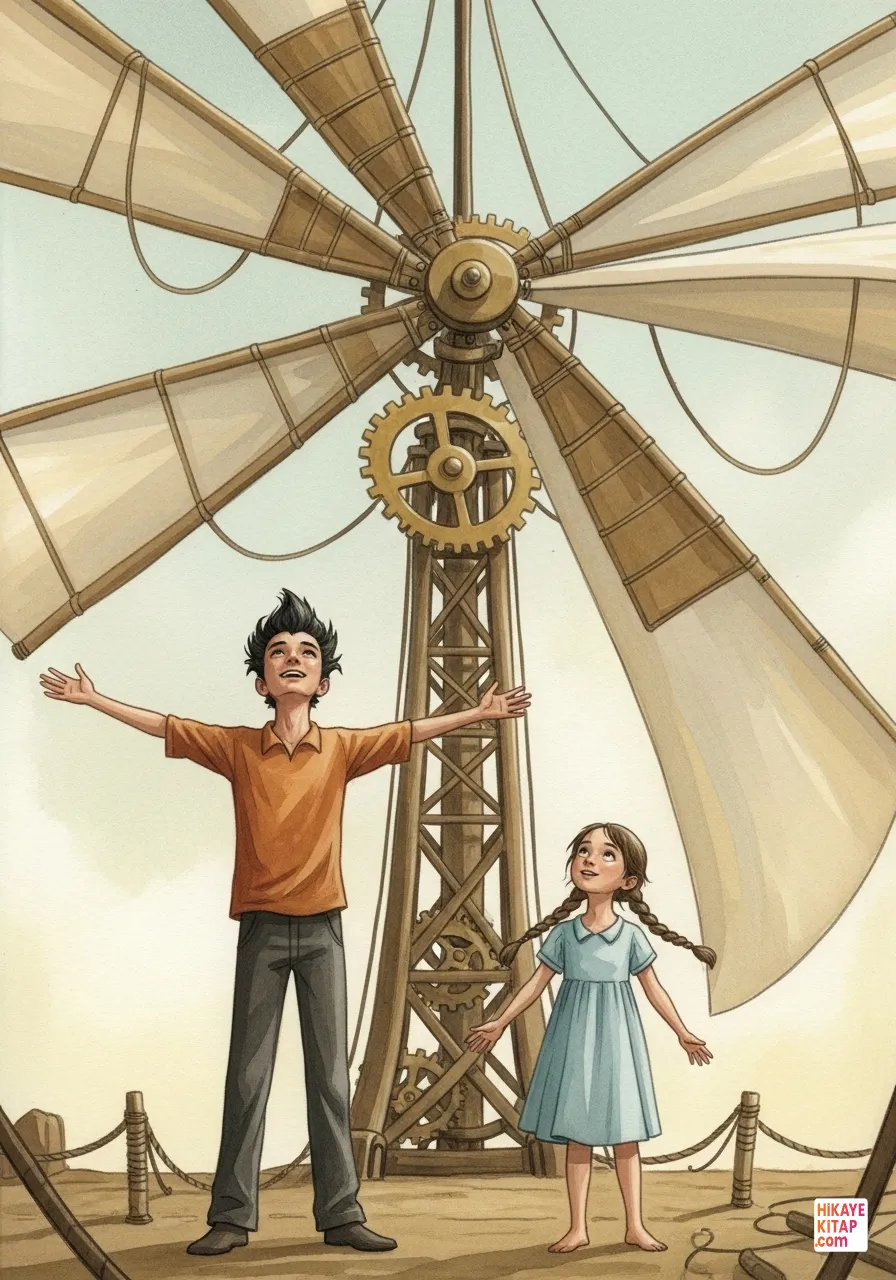
At last, the great day arrived. All the children and elders of the village gathered in front of the workshop. Simon tightened the final screw, and Dylan pointed to the direction of the wind. Adrian slowly pulled the main lever. At first, there was a loud creak; then the wheels slowly began to turn, as if waking from a deep sleep. The blades embraced the wind, and the whole mechanism began to hum in harmony. Simon and Dylan looked at each other beneath the propeller turning with the power of the wind and smiled; their dreams were now spinning in the sky.
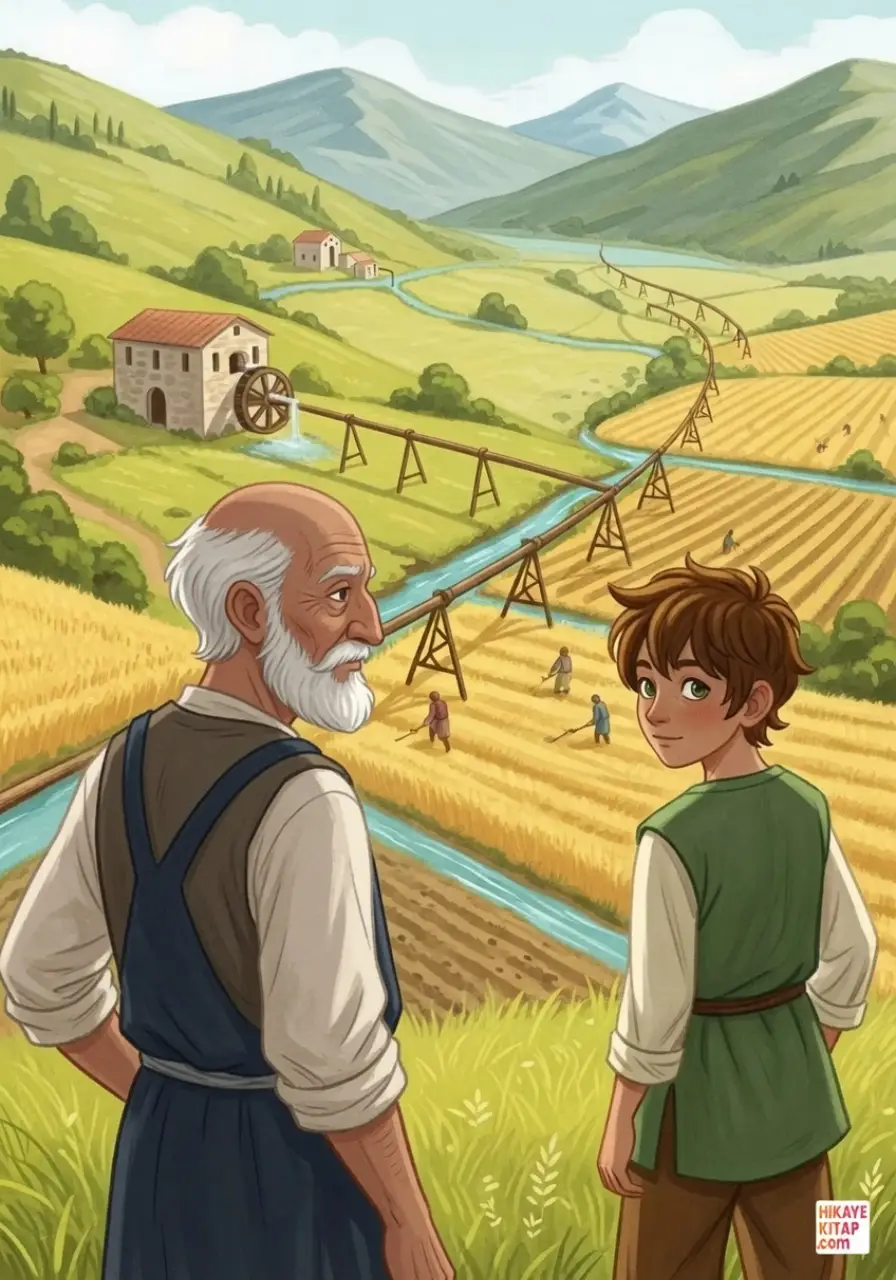
The wind workshop was no longer just a building; it had become the heart of the village. With the power of the turning shaft, the mill below ground wheat, and the pumps carried water to the fields. The villagers’ work had become easier, and smiles had begun to appear on their faces. As Master Arthur and Adrian looked down at the village from the hill, they understood that what they had achieved was not only a machine. They had found a way to be united and to live in friendship with nature. Knowledge was like a seed that grew as it was shared and made the soil fertile.
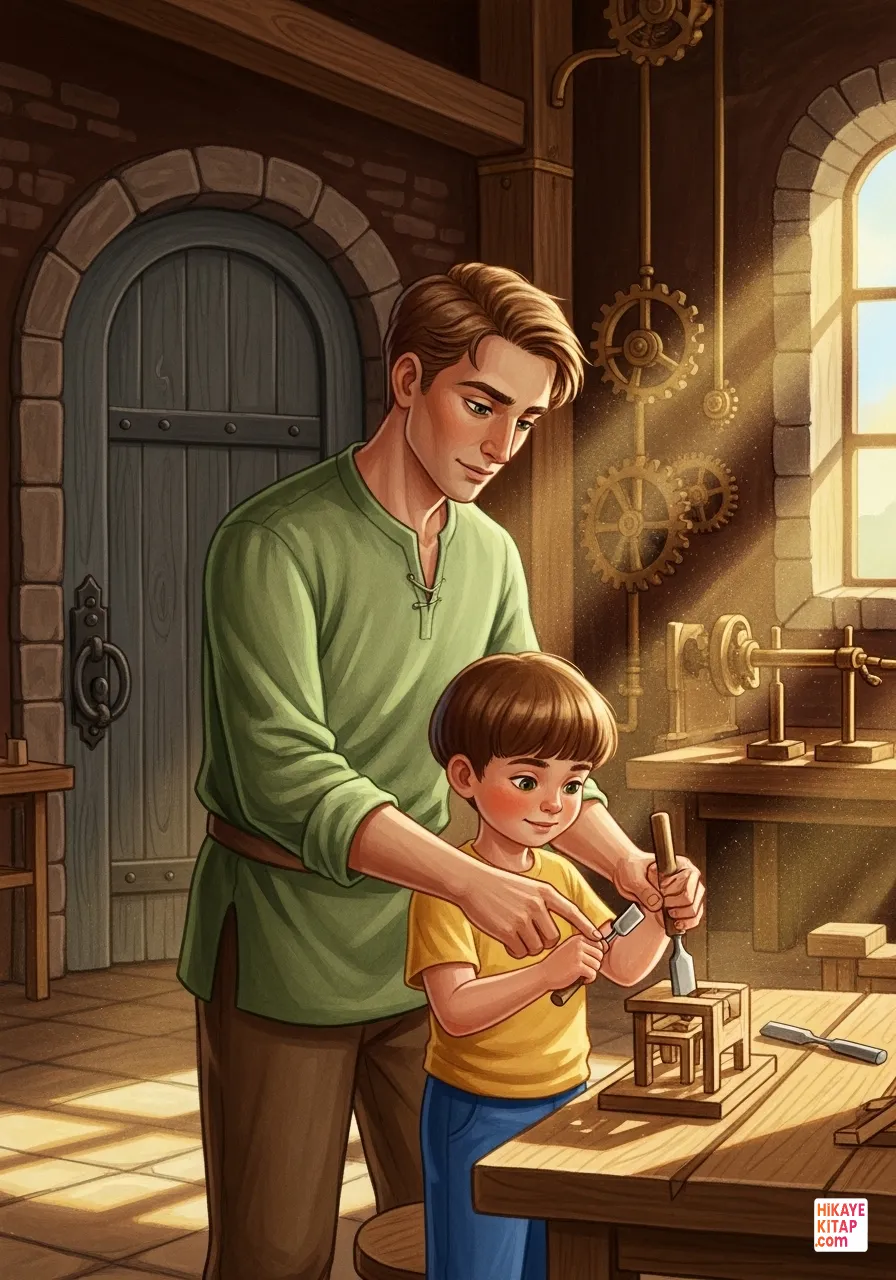
Years later, Adrian had become a master craftsman who trained his own apprentices. While showing the old drawings to a small child named Oliver who had entered the workshop, he remembered Master Arthur’s words. “True craftsmanship is the work of people who share knowledge, give effort, and continue learning all the time, Oliver,” he said. Adrian handed a chisel to his young apprentice. As the wind blowing through the workshop window opened the door to new dreams, the Wind Workshop on the Northern Slopes continued to train the masters of the future.
Arthur finds his grandfather's journal, The Hidden Flora of Glass Valley, in the attic. With Sophie the artist, sturd...
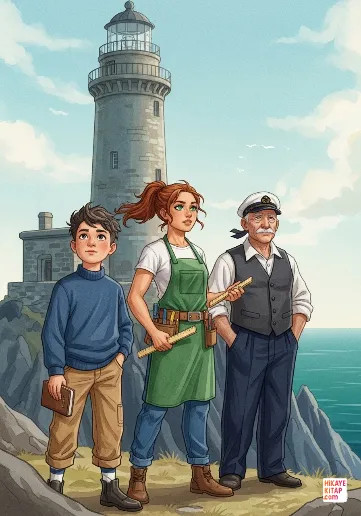
Twelve-year-old Liam decides to revive the dark old lighthouse of Silver Village. Guided by Captain Harold, he works ...
Emily has always wondered what lies on the misty far bank of the Silver River. On a raft built by Ethan, she crosses ...
Use the link and iframe code below to embed the book on your site.