Short reading stories for 1st grade should have one or two short sentences per page and run about 80 to 400 words, so a beginning reader can finish one on their own in a few minutes. For a new reader, finishing matters more than length: each completed story says “I can do this.” The eight free texts below are ordered by word count from easiest to hardest. Each can be read online, played with narration, or printed as a PDF.
Why short, and why in order?
In first grade, children move from sounding out single words to reading whole sentences. A long book can wear them out by page three. A short text lets them reach the end, and it is short enough to read again tomorrow, which is where fluency grows.
Ordering matters as much as length. When word counts rise gradually, your child builds stamina without hitting a wall. If one story feels hard, step back one; if it feels easy, skip ahead.
8 short stories, easiest first
| Book | Age | Level | Pages | Time | Why this one |
|---|---|---|---|---|---|
| Chirpy the Little Bird and the Small Nest | 4-6 | A2.1 | 12 | 30 sec | 88 words, one short sentence per page |
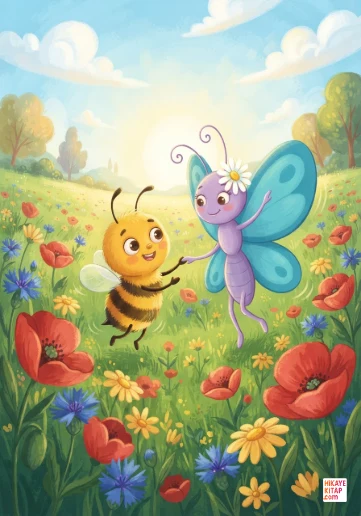
| Little Bee Buzz and the Flower Dance | 4-6 | A2.1 | 12 | 41 sec | 115 words, first quoted dialogue |
| Where is the Little Kitten Hiding? | 0-3 | A1.1 | 12 | 1 min 5 sec | 173 words, a repeated question to spot |
| Elara and the Little Bird | 7-9 | A2.1 | 10 | 1 min 34 sec | 260 words, a rainbow feather and imagination |
| Little Rabbit Lily and the Little Snowman | 4-6 | A2.1 | 12 | 1 min 49 sec | 314 words, small, medium and large |
| Pip’s Big Little Adventure | 4-6 | A2.1 | 12 | 2 min 2 sec | 320 words, tiny hero, brave thoughts |
| The Little Chick | 4-6 | A2.1 | 12 | 1 min 56 sec | 346 words, sharing and “I was in a hurry” |
| The Secret of the Golden Feather | 4-6 | A2.1 | 12 | 2 min 35 sec | 388 words, rhyming kindness story |
The times shown are narration times. A beginning reader may take several times longer to read the same text aloud, and that is completely normal.
Step one: under 200 words
Chirpy the Little Bird and the Small Nest is the place to start. Each page has a single sentence: “First, he collected soft twigs.” “Then, he found a few dry leaves.” “The nest turned out a bit crooked.” Sequence words like first, then and this time help your child follow the order of events. The plot is encouraging too: Chirpy’s first nest is crooked, so he fixes it. If your child gets stuck on a word, you can point out that Chirpy didn’t get it right the first time either.
Little Bee Buzz and the Flower Dance introduces quotation marks. Buzz asks, “Can I dance too?” and Lily the butterfly says, “Let’s try slowly first.” Use it to show how a voice rises on a question mark and how we change voices for different characters.
Where is the Little Kitten Hiding? repeats one question three times: “Where is the little kitten hiding?” By the second time, most new readers recognize the whole sentence. Let your child read that line every time, even if you read the rest.
Step two: 250 to 400 words
Move here once your child reads the first three without many stops. Sentences get longer and pages hold two or three of them.
Elara and the Little Bird follows seven-year-old Elara, who finds a shimmering rainbow feather and meets its owner, a tiny bird named Minik, who tells her the real magic is inside her.
Little Rabbit Lily and the Little Snowman is a step-by-step build: a tiny snowball, a big one that grows as she rolls it, a medium one balanced on top, then the smallest as the head. Ask your child to retell the steps in order.
Pip’s Big Little Adventure stars tiny Pip, who lives under a mushroom, packs a backpack and meets a butterfly and a ladybug. When a breeze sways him, he thinks, “I am brave!” and he comes home to say being different is wonderful.
The Little Chick and The Secret of the Golden Feather finish the ladder. The Little Chick shares a strawberry and an acorn on her egg-gathering walk, and when Hazel the squirrel nearly knocks over her basket, Hazel says, “You’re right, I was in a hurry.” In The Secret of the Golden Feather, Işıl uses a glowing feather to help a lost kitten, an older neighbor with heavy bags and a friend whose ball rolled away.
The three-day repeated reading routine
- Day 1, listen and track: Play the narration while your child follows each word with a finger.
- Day 2, take turns: You read one page, your child reads the next.
- Day 3, solo: Your child reads the whole story aloud to you. When they get stuck, wait a few seconds before helping, then offer just the first sound.
If day three goes smoothly, move to the next story. If not, give it one more day. That is not falling behind; it is exactly how fluency is built.
How narration and PDFs help
Narration lets your child hear how the words should sound while seeing them on the page, which connects spelling with sound. The PDF download button on each book page opens up paper practice: your child can follow lines with a finger or a bookmark, underline words they read easily in green and tricky ones in orange. A week later, turning orange words green is a visible win.
Find all printable stories on the free PDF children’s books page. If you want to track progress, the reading speed test can be repeated every few weeks. First graders vary a lot, so compare your child only with their own earlier results.
Is the text a good fit?
- Just right: a few stumbles, but your child can tell you what happened.
- Too hard: stopping on most words, unable to retell, avoiding reading. Step back one story or keep using narration a bit longer.
- Too easy: smooth on the first try. Skip a step, or move on to the longer picks in free story books for 1st graders.
A 4-week reading ladder
- Week 1: Chirpy and the Small Nest, then Little Bee Buzz. Three-day routine for each.
- Week 2: Where is the Little Kitten Hiding?, then Elara and the Little Bird.
- Week 3: Little Rabbit Lily and the Little Snowman, then Pip’s Big Little Adventure.
- Week 4: The Little Chick, then The Secret of the Golden Feather. End the month with your child reading a favorite aloud to the family.
Mark each story on the free reading log.
Questions after reading
- What did Chirpy collect first, and what did he find next?
- What did Lily the butterfly tell Buzz when he got dizzy?
- Where was the kitten hiding the third time?
- In what order did Lily stack the snowballs?
- Name two ways Işıl used the golden feather to help someone.
More resources
For a broader list, see free story books for 1st and 2nd graders. Find more short texts on the ages 4-6 and ages 7-9 pages and in educational stories.