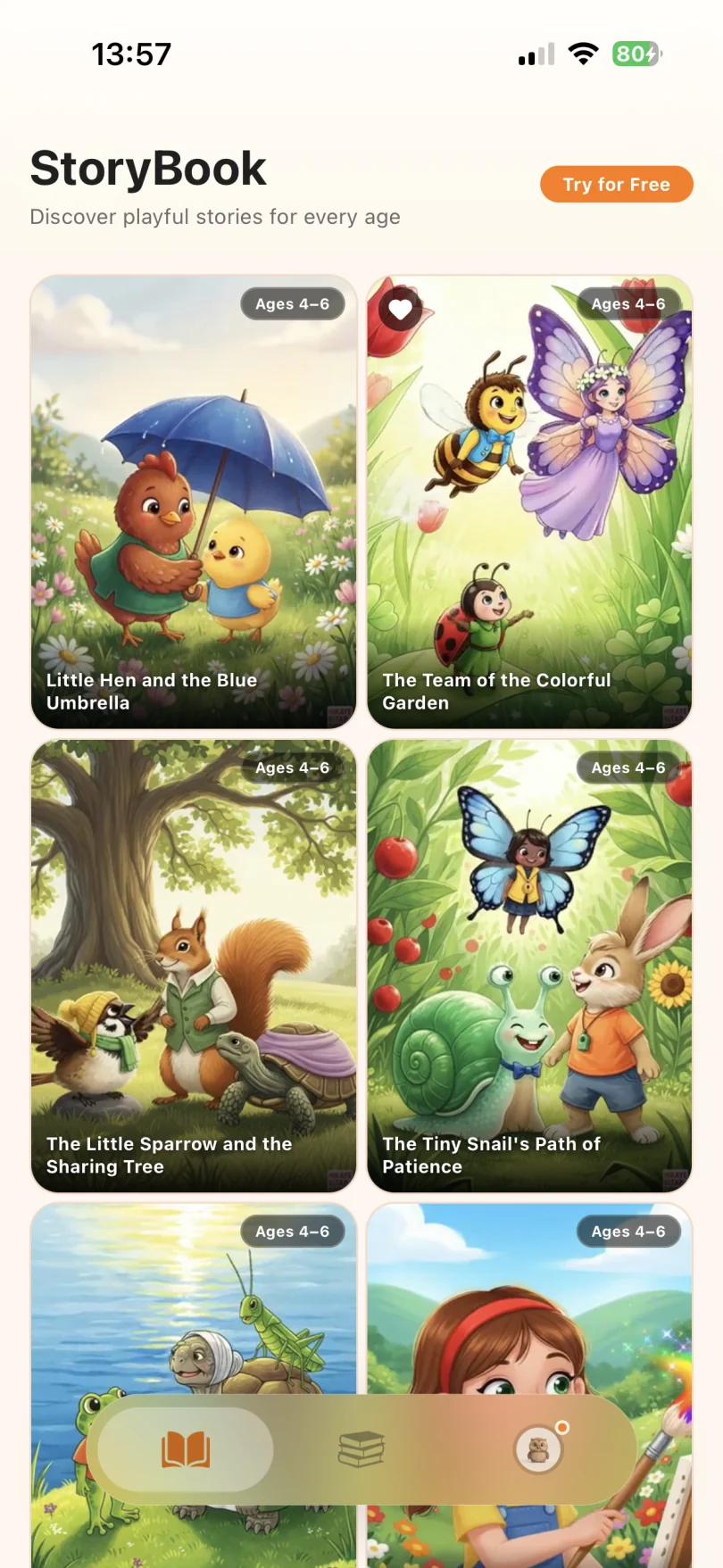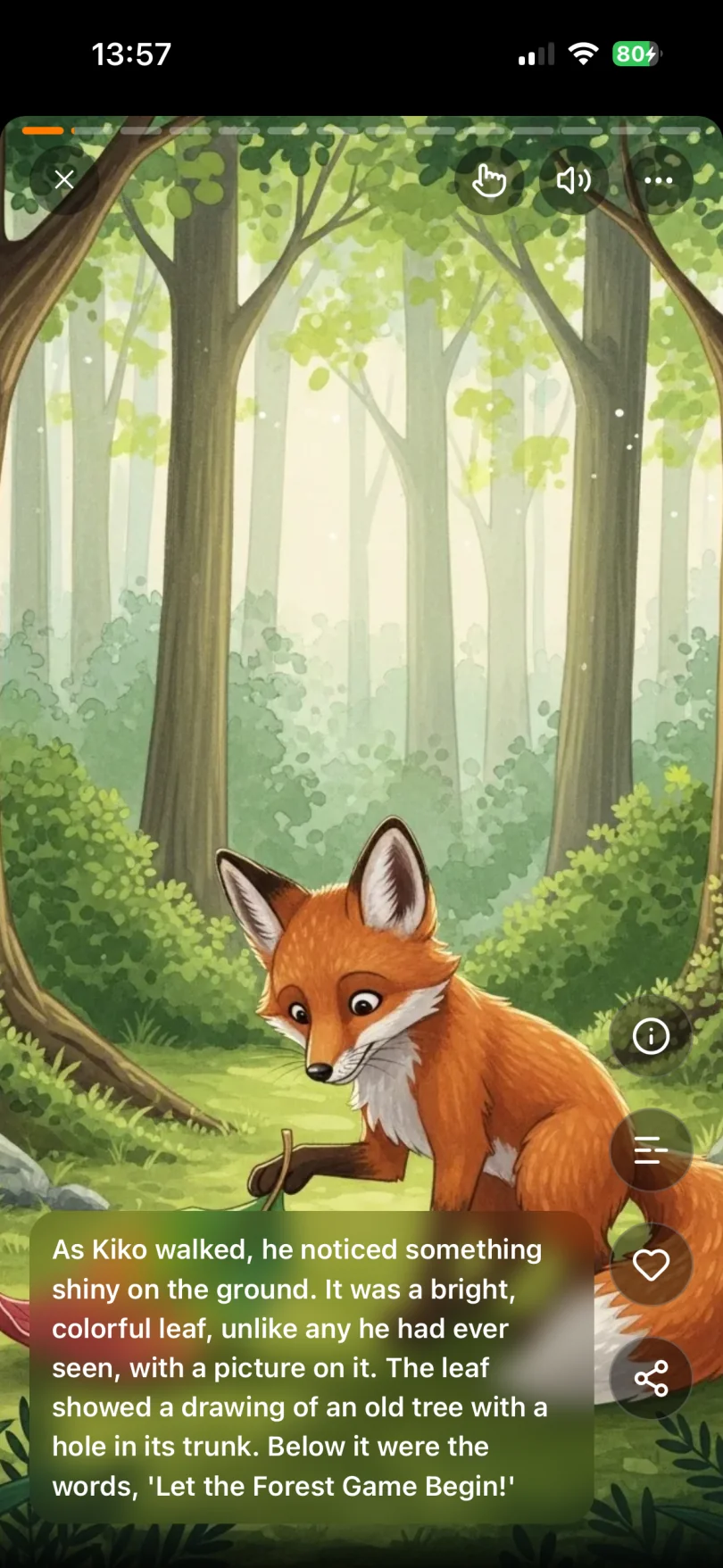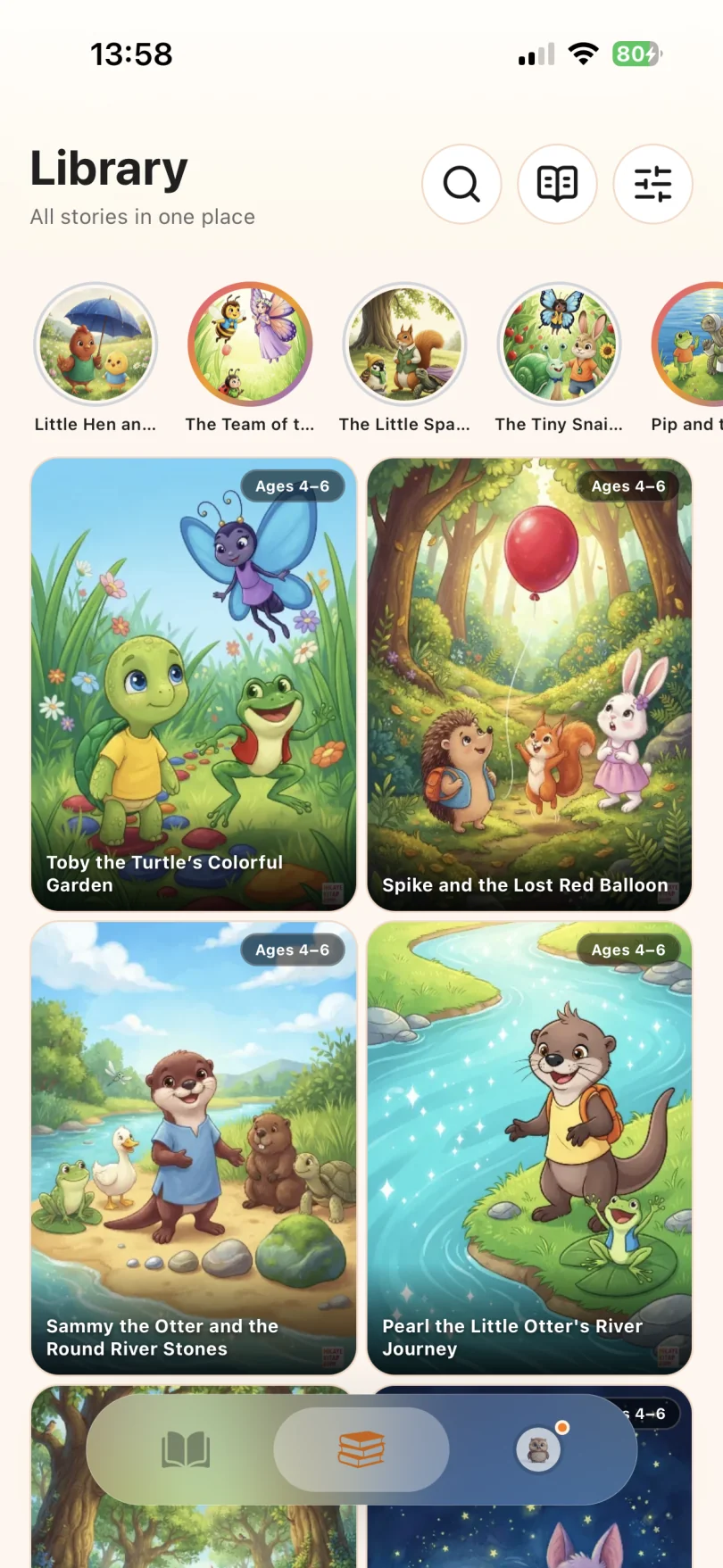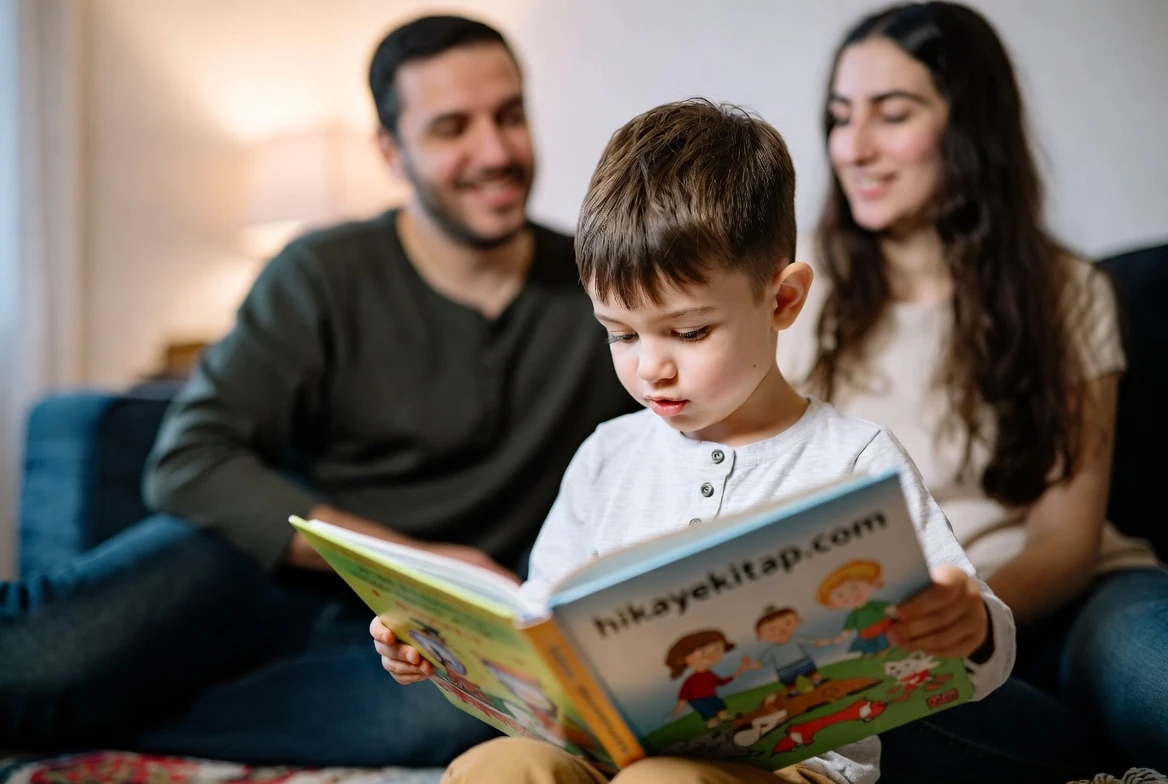
HikayeKitap has free, short picture books that fit 1st graders: 10-14 pages, a few sentences per page, and 1-3 minutes of audio narration. Most sit on the ages 4-6 shelf, with a step up on the ages 7-9 shelf. Every book can be read online, listened to with narration, or downloaded as a free PDF.
This guide focuses on what first grade actually asks of a child: turning letters into words, building a bank of sight words, and retelling a simple story. Below you’ll find a book list chosen for those skills, a four-week plan, and simple ways to use the audio and the printable PDF together.
11 Free Story Books for 1st Graders
The list starts with an alphabet book and a counting book, then moves to short stories with clear beginnings, middles, and ends. Times are for the audio narration; a child reading alone will take longer, and that’s fine.
| Book | Age | Level | Pages | Time |
|---|---|---|---|---|
| Ali’s Alphabet Picnic | 4-6 | A2.1 | 12 | 1 min 53 sec |
| First Numbers for Little Hands | 4-6 | A2.1 | 10 | 1 min 42 sec |
| Zippy’s Giant Carrot | 4-6 | A2.1 | 10 | 1 min 23 sec |
| Hazel the Curious Squirrel | 4-6 | A2.1 | 10 | 1 min 33 sec |
| The Secret Path in the Park | 4-6 | A2.1 | 12 | 2 min |
| The Colorful Bridge in the Sky | 4-6 | A2.1 | 10 | 2 min 19 sec |
| The Song of the Seasons | 4-6 | A2.1 | 12 | 2 min 26 sec |
| Tekir’s Big Game | 4-6 | A2.1 | 12 | 2 min 28 sec |
| The Little Sparrow and the Sharing Tree | 4-6 | A2.1 | 12 | 2 min 54 sec |
| Pip the Little Panda and the Smiling Flower | 4-6 | A2.1 | 12 | 2 min 58 sec |
| The Curious Fox and the Forest Game | 4-6 | A2.1 | 14 | 3 min 12 sec |
What Matters in 1st Grade Reading
First grade is when most children move from “pretend reading” to decoding real words on their own. A few concrete things to watch for at home:
- Sounding out: Can your child blend the sounds in short words like sun, fox, or path? If not, slow down and model it: “/f/ /o/ /x/… fox.”
- Sight words: Words like the, was, said, and friends show up on almost every page. Point them out each time you see them; recognition builds through repetition.
- Reading with expression: Listening to the narration first gives your child a model of how a sentence should sound, including pauses at periods and excitement at exclamation marks.
- Retelling: After each book, ask for the story in three parts: “What happened first? Then? At the end?” This is one of the clearest signs that your child understood the story, not just the words.
The five-finger rule. Have your child read one page and hold up a finger for every word they can’t read. Zero or one finger: easy, great for fluency practice. Two to four: just right. Five or more: too hard to read alone for now, so make it a listen-along book and come back to it later.
How to Use Audio and PDF Together
A short book gets much more useful when you read it three ways over three days:
- Day 1, listen: Open the book online and play the narration. Your child follows along with a finger under each line.
- Day 2, read together: Turn the sound off. You read one page, your child reads the next. Help with tricky words by sounding out the first letter together.
- Day 3, read on paper: Print the PDF. Your child reads it alone and circles three words they now know by sight.
Because these books are short, a whole session, including the retell, fits into 10-15 minutes. That keeps reading time something a six-year-old looks forward to rather than a chore.
A 4-Week Reading Plan
Follow the three-day cycle above for each book, and use Fridays for a reread of the child’s favorite from that week.
| Week | Books | Skill focus |
|---|---|---|
| Week 1 | Ali’s Alphabet Picnic, First Numbers for Little Hands | Letter sounds, counting words |
| Week 2 | Zippy’s Giant Carrot, Hazel the Curious Squirrel | Short words, retelling in three parts |
| Week 3 | The Secret Path in the Park, The Colorful Bridge in the Sky, The Song of the Seasons | Sight words, describing words (colors, seasons) |
| Week 4 | Tekir’s Big Game, The Little Sparrow and the Sharing Tree, Pip the Little Panda and the Smiling Flower, The Curious Fox and the Forest Game | Longer stories, reading with expression |
Track finished books on the printable reading log; kids can earn a reading certificate when it’s full. If you create a free account, badges and reading history are saved automatically, too.
How to Download the PDF
- Click a book title in the table above.
- On the book page, tap the PDF download button.
- Print on A4 or US Letter paper; single-sided pages are easier for little hands to mark.
Many of the stories also have printable coloring pages, which make a nice follow-up activity: color the characters, then retell the story using the picture. You’ll find every free download in the free PDF children’s books library, and the iOS and Android app is handy for reading on the go.
Questions to Ask After Reading
- Zippy’s Giant Carrot: Zippy finds a giant carrot. What did Zippy decide to do with it, and how did sharing change the story?
- Hazel the Curious Squirrel: What were Hazel and the friends cleaning up in the forest? What could we pick up on our next walk?
- Ali’s Alphabet Picnic: Ali meets friends and treats from A to L. Can you name a food that starts with each of the first three letters?
- Pip the Little Panda and the Smiling Flower: Pip thought the flower was smiling. What did he find out it really was?
- The Song of the Seasons: Which season does Lila explore first? Which season is your favorite, and what would you do in it?
Where to Go Next
For more books at this level, browse the ages 4-6 shelf, and when your child is reading these comfortably, try the ages 7-9 shelf. Our guides for kindergarten story books and 2nd grade story books cover the year before and the year after.