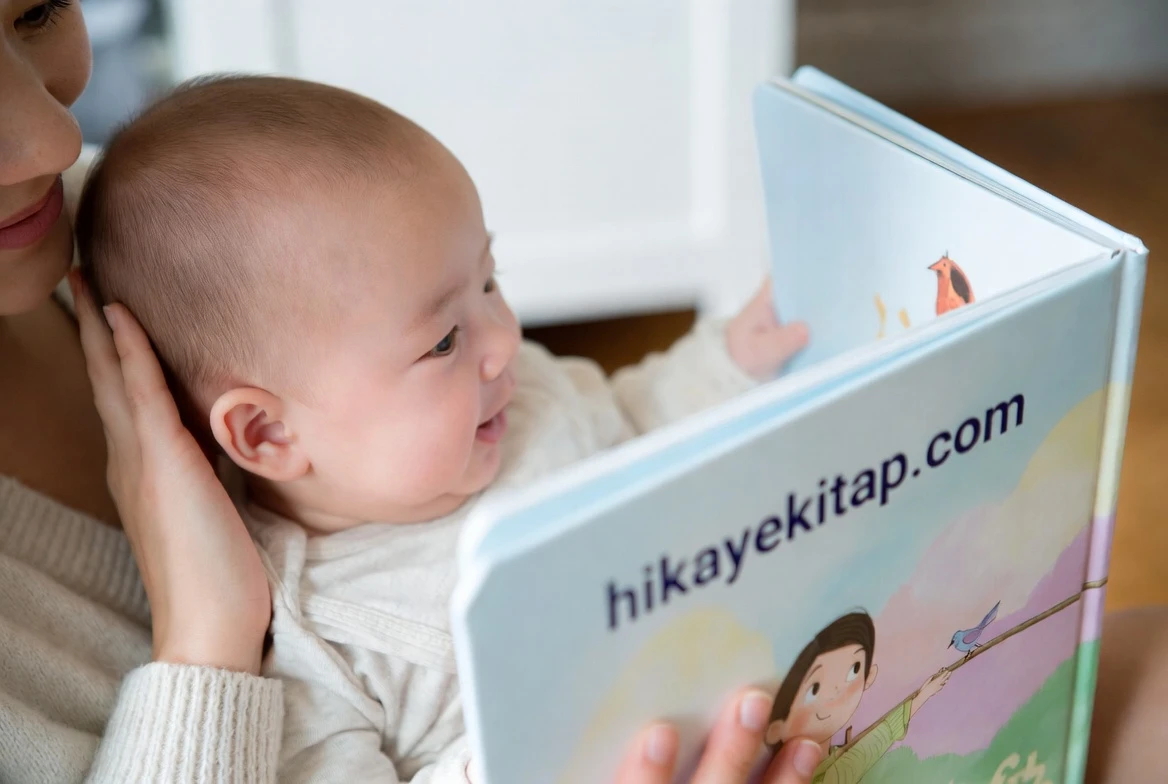
Free story books for ages 0-3 work best when they match the stage your child is in right now. Our 0-3 library has short A1.1 picture books, 7–15 pages long with roughly 30 seconds to 2.5 minutes of narration, and every one can be read online, listened to with audio narration, or downloaded as a free PDF.
This guide is organized around stages and routines: what a baby or toddler can actually do with a book at 0–6 months, 6–12 months, 12–24 months and 24–36 months, and which of our books fit each stage. If you’re mainly wondering why early reading matters, our article on why read books to 0-3 year old babies covers that side.
Books by Stage
| Book | Age | Level | Pages | Time |
|---|---|---|---|---|
| World of Colors | 0-3 | A1.1 | 12 | 48 sec |
| Good Night, My Animal Friends | 0-3 | A1.1 | 12 | 1 min 11 sec |
| Cute Animal Sounds | 0-3 | A1.1 | 7 | 33 sec |
| The Finger Play Book | 0-3 | A1.1 | 10 | 59 sec |
| What Do Little Feet Do? | 0-3 | A1.1 | 12 | 50 sec |
| Birds are Flying | 0-3 | A1.1 | 12 | 1 min 31 sec |
| Pip Looks for His Mommy | 0-3 | A1.1 | 10 | 1 min 12 sec |
| I’m Tasting Fruits | 0-3 | A1.1 | 12 | 1 min 11 sec |
| My Colorful World | 0-3 | A1.1 | 10 | 58 sec |
| Ayse’s Park Adventure | 0-3 | A1.1 | 12 | 1 min 26 sec |
| The Little Caterpillar’s Colorful World | 0-3 | A1.1 | 12 | 2 min 5 sec |
| Little Friends of Nature | 0-3 | A1.1 | 12 | 2 min 22 sec |
0–6 months: your voice is the book
Newborns can’t follow a story, but they do turn toward voices, especially familiar ones. What helps at this stage is a short book you can read slowly with your face 20–30 cm from your baby’s. World of Colors (under a minute) and Good Night, My Animal Friends are good first choices: one simple idea per page, a soft rhythm, and an ending that winds down.
What to do: hold your baby in your lap or lie side by side, read one or two pages, and stop when your baby looks away. That’s your cue, not a failure.
6–12 months: sounds, hands, and grabbing
Babies start sitting, reaching and grabbing, and many begin babbling. Books with sounds to copy and actions to do are perfect now. Cute Animal Sounds is only seven pages, which matches a short attention span. The Finger Play Book and What Do Little Feet Do? turn reading into a game with your baby’s own hands and feet.
What to do: make the animal sounds big and silly, wiggle toes along with the feet book, and let your baby grab the printed page. Mouthing it is part of the exploring.
12–24 months: pointing and naming
Toward the end of the first year, many babies start pointing to share what they see, and first words often appear around this time. Birds are Flying invites flapping arms on every page. Pip Looks for His Mommy shows vehicles and their sounds as the chick searches. I’m Tasting Fruits connects the page to snack time.
What to do: ask “Where is the bird?” and wait for a point. When your child points, name the thing and add a word: “Yes, a little bird.”
24–36 months: short stories and “again!”
Two-year-olds can usually listen to a whole short story, try to finish familiar sentences, and ask for the same book over and over. My Colorful World, Ayse’s Park Adventure, The Little Caterpillar’s Colorful World and Little Friends of Nature have a simple beginning, middle and end.
What to do: pause before a familiar word and let your child fill it in. Welcome repeat requests; they’re how toddlers learn words. Our book recommendations for 2 year olds go deeper on this stage.
Building a Routine That Sticks
Short and predictable beats long and occasional. A few routine ideas that fit around naps and meals:
- Same place, same time. The rocking chair after the bath, or the couch after breakfast. Babies learn the pattern before they learn the words.
- One bedtime book. Choosing a single book, like Good Night, My Animal Friends, for the end of every day becomes a sleep signal.
- Narration first, your voice second. Listen to a new book together with audio narration, then read it yourself the next day at your own pace.
- Keep a printed copy nearby. A PDF printed on A4 and slipped into plastic sleeves can live in the diaper bag or by the high chair for screen-free reading.
A 7-Day Starter Routine
Pick the row that matches your child’s stage, or mix and match. One or two reading moments a day, a few minutes each.
| Day | 0–12 months | 12–36 months |
|---|---|---|
| Monday | World of Colors | Birds are Flying |
| Tuesday | Cute Animal Sounds | Pip Looks for His Mommy |
| Wednesday | The Finger Play Book | I’m Tasting Fruits (at snack time) |
| Thursday | What Do Little Feet Do? | My Colorful World |
| Friday | World of Colors (repeat) | Ayse’s Park Adventure |
| Saturday | Cute Animal Sounds (repeat) | The Little Caterpillar’s Colorful World |
| Sunday | Good Night, My Animal Friends at bedtime | Little Friends of Nature |
In week two, repeat the same books and watch which ones your child reaches for. That preference is the best guide for what to read next. You can mark each read on our printable reading log if you like seeing the habit grow.
How to Download the PDF
- Click a book title in the table to open its book page.
- Use the PDF download button on that page.
- Print on A4. Heavier paper or plastic sleeves help pages survive little hands.
Older siblings can join in with our coloring pages while you read to the baby.
Questions to Ask After Reading
Babies won’t answer, but asking and answering yourself models how conversation works. Toddlers can point or say a word.
- Pip Looks for His Mommy: “What vehicles did Pip see? What sound did the car make? Did Pip find his mommy?”
- I’m Tasting Fruits: “Which fruit did Ali taste? Which one do you like? Show me.”
- Ayse’s Park Adventure: “Where did Ayse go with her family? What did she share?”
- The Little Caterpillar’s Colorful World: “What big change happened to the caterpillar at the end? Who were its new friends?”
More for Ages 0-3
Browse every book on our ages 0-3 page, or find all printable files in the free PDF children’s books library. For a checklist on picking books at this age, see what to consider when choosing storybooks for 0-3 year olds.








