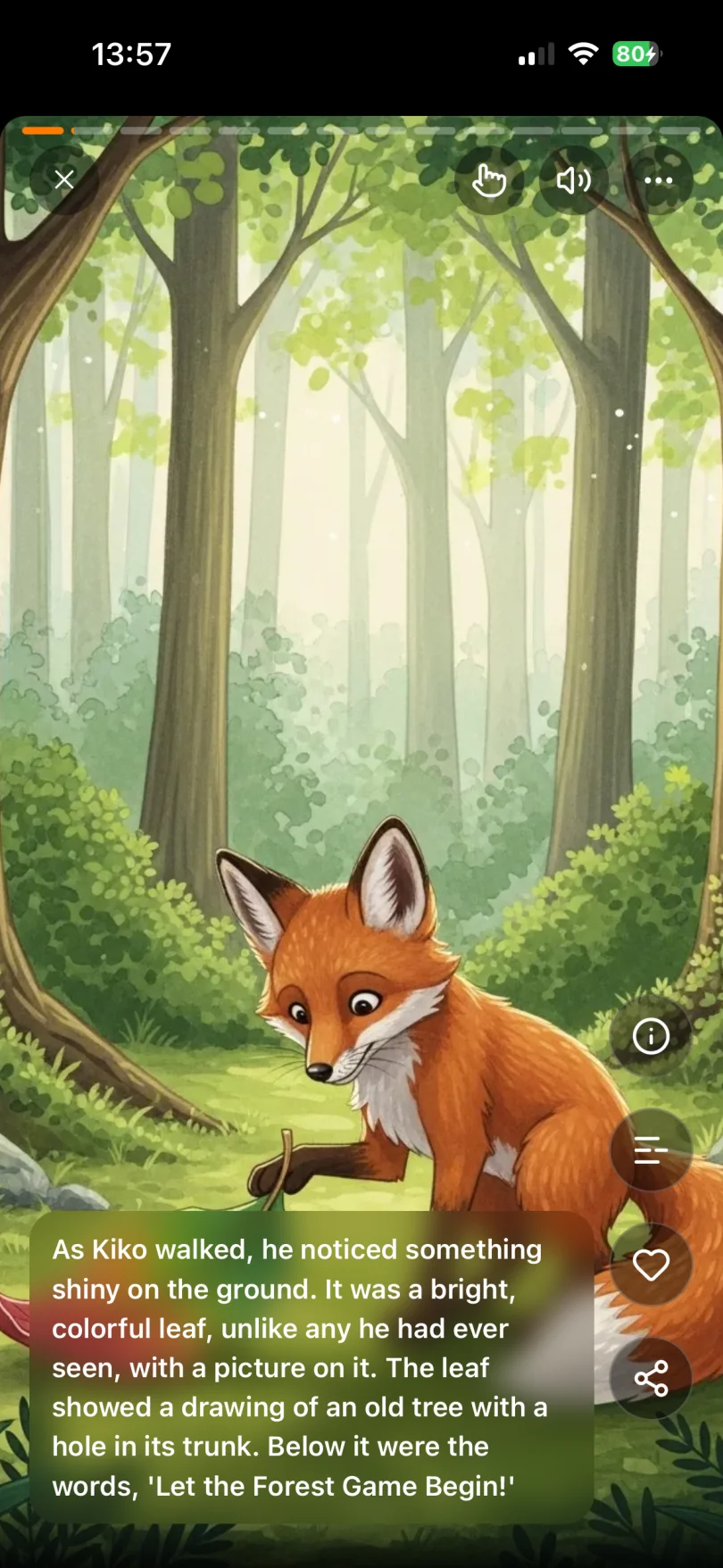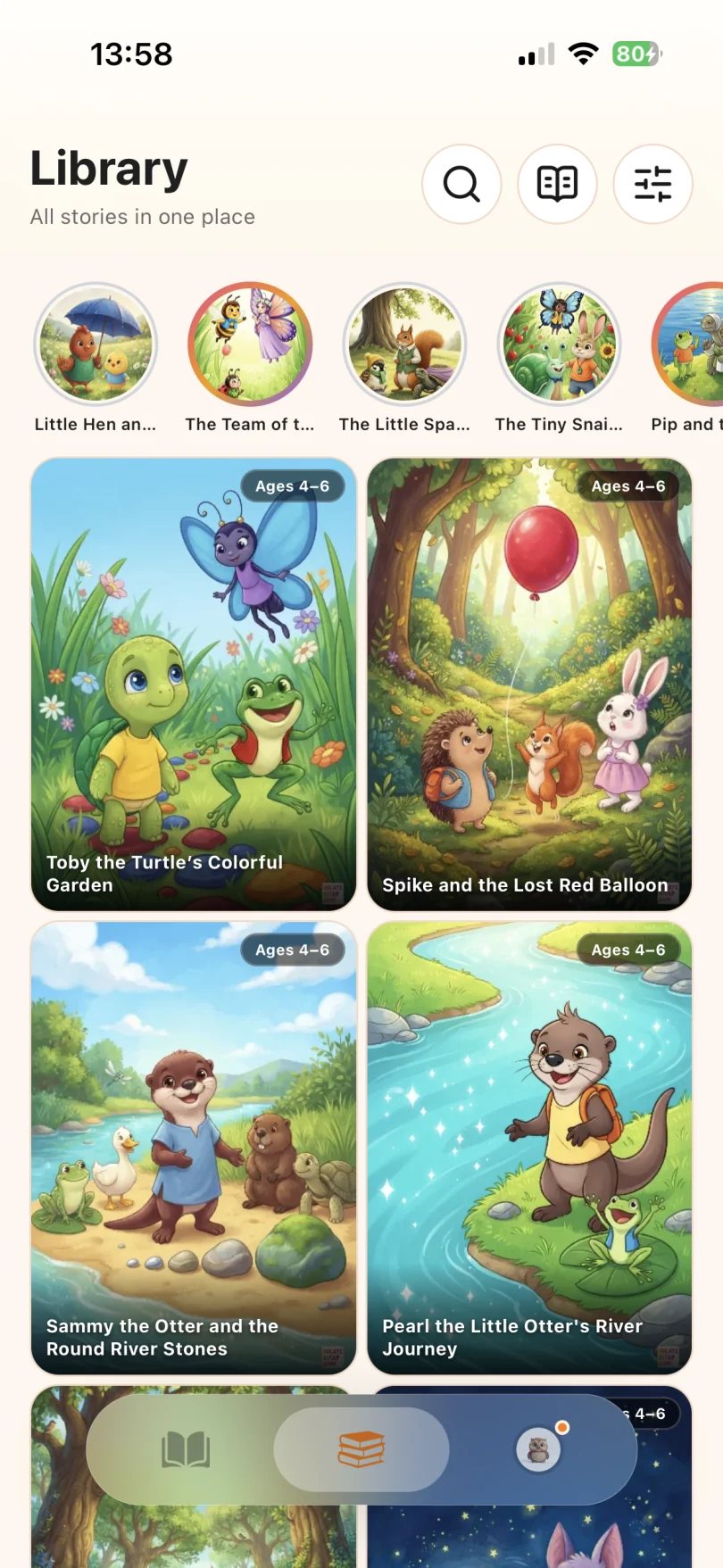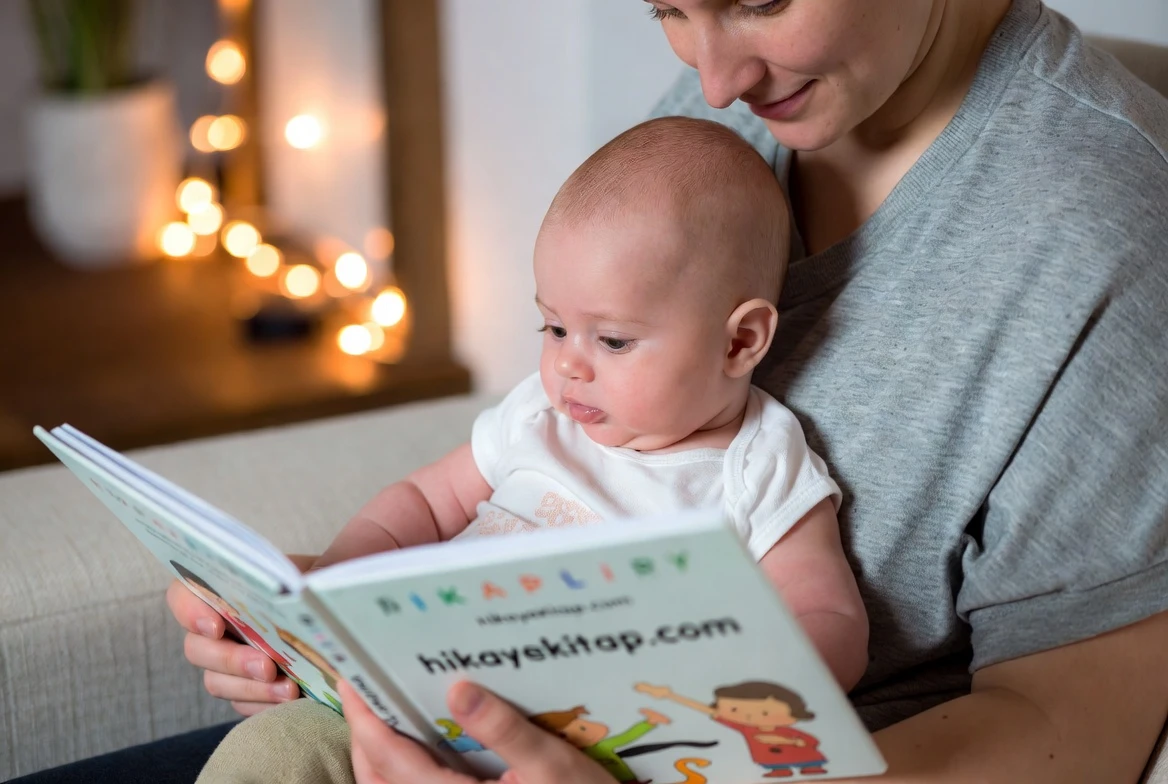
If you want to read a story book online with your child right now, start with one of the four top picks below: one for each age group (0-3, 4-6, 7-9 and 10-12). Each takes between one and five minutes, and every book is free to read as an online flipbook, listen to with audio narration, or download as a printable PDF. Two backups per age are included in case the first one doesn’t land.
This page is meant for the moment when you have five minutes and a child asking for a story. For a broader browse, the full story book library lets you filter by age.
The 4 top picks and 8 backups
| Book | Age | Level | Pages | Time |
|---|---|---|---|---|
| Top pick: Little Kitten Cotton’s Garden | 0-3 | A1.1 | 12 | 1 min 8 sec |
| Good Night, My Animal Friends | 0-3 | A1.1 | 12 | 1 min 11 sec |
| The Raindrop’s Journey | 0-3 | A1.1 | 12 | 1 min 34 sec |
| Top pick: Can and His Flying Friend Pof | 4-6 | A2.1 | 10 | 1 min 59 sec |
| The Piper of Hamelin | 4-6 | A2.1 | 12 | 2 min 2 sec |
| The Little Rabbit and the Lost Carrots | 4-6 | A2.1 | 14 | 2 min 25 sec |
| Top pick: The Little Astronaut in the Moonlight | 7-9 | A2.2 | 15 | 3 min 2 sec |
| The Time Tree | 7-9 | A2.2 | 15 | 3 min 30 sec |
| Prince Atlas and the Villager Can | 7-9 | A2.2 | 15 | 3 min 18 sec |
| Top pick: The Curious Doctor’s Wonderful Travels | 10-12 | B1 | 15 | 4 min 43 sec |
| The Secret of the Lost Map | 10-12 | B1 | 15 | 5 min 52 sec |
| The Stardust Journal | 10-12 | B1 | 12 | 3 min 41 sec |
Why these four?
Ages 0-3: Little Kitten Cotton’s Garden. Cotton the kitten explores the garden (a ball, a flower, a bee, a butterfly, the sun, soft grass) and then curls up to sleep. One object per page and a sleepy ending make it work as a daytime picture book and a bedtime book.
Ages 4-6: Can and His Flying Friend Pof. Can and his balloon friend Pof float to the tallest tree, into the clouds and to a rainbow. It’s under two minutes, has a clear “and then” structure preschoolers can retell, and every page offers something to point at.
Ages 7-9: The Little Astronaut in the Moonlight. Atlas takes an imaginative journey to the Moon. At 15 pages it’s long enough to feel like a real story for early independent readers, and space is a near-universal hook at this age.
Ages 10-12: The Curious Doctor’s Wonderful Travels. Levent’s adventures in the lands of Tinyvale and Giantreach will remind adults of Gulliver’s Travels. At B1 level it’s a good test of whether your child is ready for longer stories.
Your first five minutes, by age
0-3: Lap, voice, point. Hold your child on your lap, read slowly, and point at each object as you name it. Don’t worry about finishing; if they want to stay on the butterfly page, stay. Repeat the same book for several days before switching to a backup.
4-6: Listen, then retell. Play the audio narration once while your child turns the pages. Then close the book and ask, “Where did Pof go first?” Preschoolers love correcting adults, so get one detail wrong on purpose.
7-9: Listen, then read aloud. Listen to the narration first, then have your child read the same story aloud with the sound off. If they stumble on five or more words on a page (the five-finger rule), stay in listening mode for now and try again in a week.
10-12: Read alone, then talk. Let your child read independently, then ask one question that has no right answer: “Would you rather visit Tinyvale or Giantreach, and why?” Use the printed PDF if they like to underline or take notes.
A 4-week plan for any age
| Week | 0-3 | 4-6 | 7-9 | 10-12 |
|---|---|---|---|---|
| Week 1 | Little Kitten Cotton’s Garden | Can and His Flying Friend Pof | The Little Astronaut in the Moonlight | The Curious Doctor’s Wonderful Travels |
| Week 2 | Good Night, My Animal Friends | The Piper of Hamelin | The Time Tree | The Secret of the Lost Map |
| Week 3 | The Raindrop’s Journey | The Little Rabbit and the Lost Carrots | Prince Atlas and the Villager Can | The Stardust Journal |
| Week 4 | Child’s favorite, plus a coloring page | Retell the favorite with toys | Write or draw a new ending | Write a one-page story in the same style |
Aim for one story a day, reread as often as your child asks. Mark each day on our printable reading log; after a month you can print a reading certificate. A free account adds badges and keeps a reading history.
How to download the PDF
- Open any book page from the table.
- Click “PDF İndir” (Download PDF).
- Print on A4 or US Letter at full page. For toddlers, glue pages onto card stock so they last.
The coloring books section has printable coloring PDFs for a quiet after-story activity, and the free PDF children’s books library collects every download. On the go? Our iOS and Android app has the same books.
Questions to ask after reading
- Little Kitten Cotton’s Garden: “Where’s the bee? Where’s the butterfly?” Let your toddler point. Then: “What did Cotton do at the end?”
- Can and His Flying Friend Pof: Where did Can and Pof go: the tree, the clouds or the rainbow first? Where would you fly with Pof?
- The Little Astronaut in the Moonlight: What do you think Atlas saw on the Moon? What would you pack for a trip there?
- The Curious Doctor’s Wonderful Travels: How did being a giant in Tinyvale feel different from being tiny in Giantreach?
- The Secret of the Lost Map: Aras, İdil and Mete followed clues from a torn map in their school library. Why did they decide that knowledge, trust and teamwork were the real treasure?
Browse by age
Each age group has its own page: ages 0-3, ages 4-6, ages 7-9 and ages 10-12. For more help choosing, read How to Choose a Children’s Story Book or Where to Find Free Children’s Books.