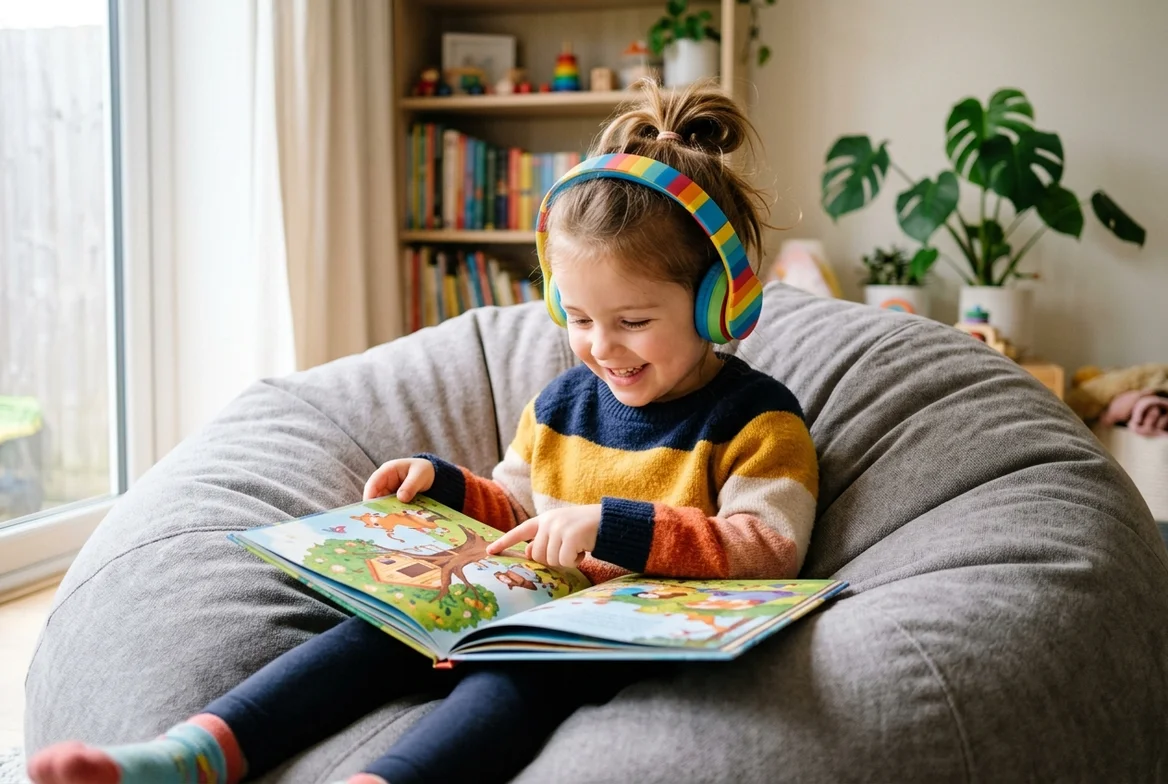
The biggest benefit of audio children’s books is that they let kids hear words they can’t yet read, spoken with clear pronunciation and natural expression. That supports listening skills, vocabulary, and, later on, reading fluency. Below are ten narrated stories for ages 0–12, from about 30 seconds to five minutes long, each readable online, playable with audio narration, and downloadable as a free PDF.
Rather than just listing benefits, this post is about using narration well: how much at each age, screen on or screen off, and how to pair listening with reading the same story.
10 Narrated Stories for Listening Practice
We chose these by age and by what they invite children to listen for: animal and vehicle sounds, voice volume, music, new words, and the sounds around us.
| Book | Age | Level | Pages | Time |
|---|---|---|---|---|
| Cute Animal Sounds | 0-3 | A1.1 | 7 | 33 sec |
| Pip Looks for His Mommy | 0-3 | A1.1 | 10 | 1 min 12 sec |
| The Piper of Hamelin | 4-6 | A2.1 | 12 | 2 min 2 sec |
| Phinney the Little Elephant and the Whisper Game | 4-6 | A2.1 | 12 | 2 min 43 sec |
| The Merry Quartet’s Music Journey | 4-6 | A2.1 | 12 | 3 min 30 sec |
| Lily and the Secret Map of Sounds | 7-9 | A2.2 | 12 | 3 min 8 sec |
| Ellie and the English Adventure of Colors | 7-9 | A2.2 | 12 | 3 min 15 sec |
| Sophie and the Little Music Box | 7-9 | A2.2 | 10 | 3 min 23 sec |
| Leo and the Quest for the Lost Sound | 7-9 | A2.2 | 12 | 4 min 29 sec |
| The City’s Invisible Melody | 10-12 | B1 | 12 | 5 min 25 sec |
What Narration Actually Helps With
Pronunciation and expression. Children usually learn a word by hearing it before they ever see it written. In a narrated story they hear a question rise at the end, and the tone of surprise or delight. Phinney the Little Elephant and the Whisper Game is literally about this: Phinney learns to control his volume when he gets excited.
Vocabulary. Everyday family talk uses a fairly small set of words. Stories bring in words like “whisper,” “melody,” and “echo” in a context that makes their meaning clear.
Listening comprehension. In school, kids need to stay with a teacher’s explanation, keep events in order, and retell them. Short audio stories practice that in small steps.
A bridge to reading. Reading an unfamiliar text is tiring for a new reader. When a child hears a story first and then reads it, the words are familiar, fluency improves, and they get to feel “I can read this.”
How to Use Audio Books at Each Age
Ages 0–3: Listen together, with your child on your lap. With one-to-two-minute books like Cute Animal Sounds and Pip Looks for His Mommy, copy each sound yourself and wait for your little one to try. Keep screen time short at this age: one or two books, then switch to the pictures on a printed PDF.
Ages 4–6: Five to ten minutes is enough. With musical stories like The Merry Quartet’s Music Journey and The Piper of Hamelin, clap a rhythm or hum along. Afterward, ask your child to retell the story using the pictures; putting what they heard into their own words is the real payoff.
Ages 7–9: Have your child follow the text on screen while listening, then read the same story aloud themselves. Recording their own reading on a phone and comparing it with the narration helps them hear their expression. If a book feels hard, use the five-finger rule: if there are five unknown words on one page, keep it as a listening book for now.
Ages 10–12: With a longer story like The City’s Invisible Melody, read it silently first, then listen to check what they missed. It’s a good way to notice both speed and attention.
Screen-off listening: At any age, once or twice a week, turn on the audio and turn the screen away. Your child listens only, then describes or draws a favorite scene. Listening without pictures means building the scene in their head.
Two languages: Every story on HikayeKitap has an English and a Turkish version. In bilingual homes, a child can hear a story in the stronger language first, then in the other one, and focus on the language because the plot is already familiar.
What Makes a Good Children’s Audiobook?
Not every recording is equally useful. Look for:
- A clear, unhurried pace that leaves small pauses between sentences.
- Text visible on screen, so a new reader sees each word as it’s spoken.
- Short, complete stories that finish in one sitting, rather than long recordings left halfway.
- A printable version, so the same story can be read on paper after listening.
- Calm sound design, without loud music or effects that pull attention away from the story.
A 4-Week Listening Plan
| Week | Books | Focus |
|---|---|---|
| 1 | Cute Animal Sounds, Pip Looks for His Mommy | Copying sounds (ages 0–3 and little siblings) |
| 2 | The Piper of Hamelin, Phinney the Little Elephant and the Whisper Game, The Merry Quartet’s Music Journey | Loud, soft, and whisper; retelling from the pictures |
| 3 | Lily and the Secret Map of Sounds, Sophie and the Little Music Box, Ellie and the English Adventure of Colors | Listen first, then read aloud; one screen-off evening |
| 4 | Leo and the Quest for the Lost Sound, The City’s Invisible Melody | List the sounds at home or on your street; draw your own sound map |
Each week, start with the row that fits your child’s age, and let older siblings join the younger ones’ books as reading-aloud practice.
How to Download the PDF
- Click a book title in the table.
- Press the PDF download button on the book page.
- Print the text on A4 or US Letter.
A printed copy is the easiest way to move from listening to reading: your child can underline words they heard in the narration. The coloring books section has free printable pages too.
Questions to Ask After Listening
- Cute Animal Sounds: Which animal sound did you like best? Make one, and I’ll guess the animal.
- Pip Looks for His Mommy: Which vehicles did Pip meet while he searched for his mommy? Which vehicle do you hear most on our street?
- Phinney the Little Elephant and the Whisper Game: Why did Phinney need to learn to lower his voice? Can you whisper me a secret?
- Ellie and the English Adventure of Colors: Which color words did Ellie and Nutty learn? Can you name the colors of the sun and snow?
- The City’s Invisible Melody: Why did the four students map the sounds of their neighborhood? Where does the most noise come from where we live, and what could help?
Keep Exploring
Find more narrated books on the ages 0–3, ages 4–6, and ages 7–9 pages, or browse everything in the free PDF children’s books library. For screen-time balance, read digital children’s books: free and safe reading tips and e-books for kids.








