The best bedtime stories to listen to online are one to four minutes long, slow in rhythm, and end with a character falling asleep. All eight books below have free narration right on the book page, from one-minute goodnight books for babies to a quiet stargazing story for kids around nine.
What makes an audio bedtime story work
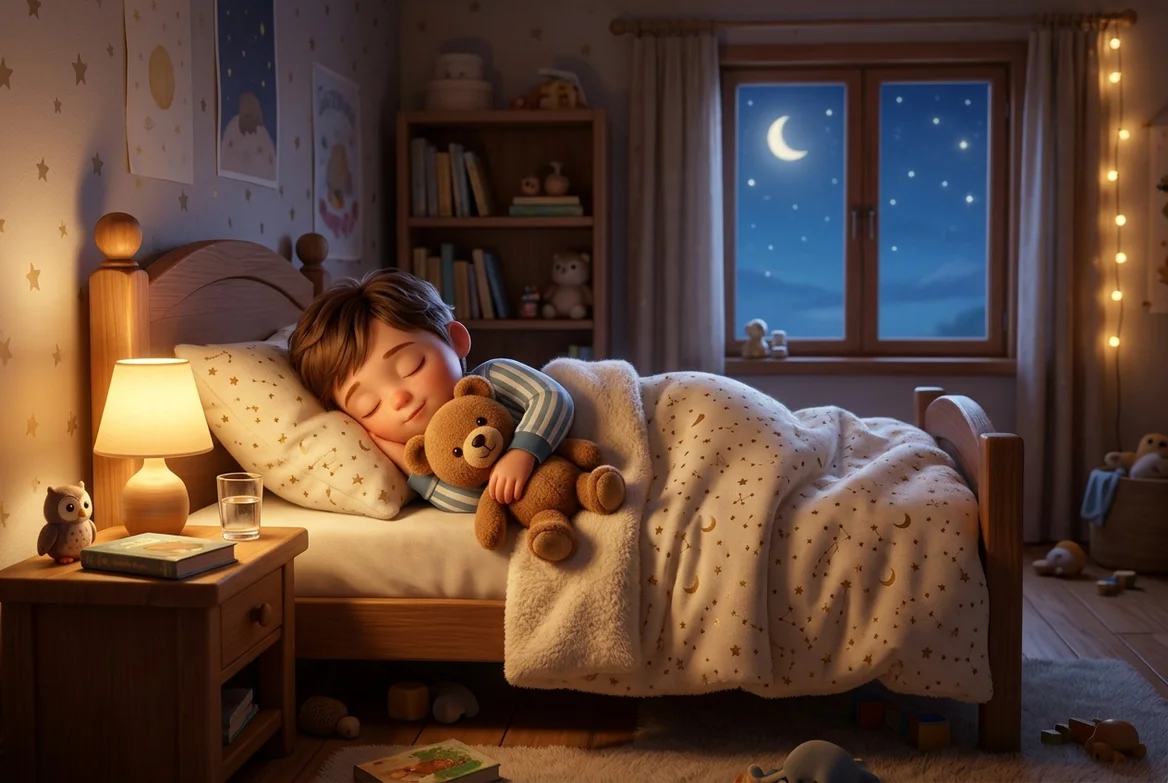
A bedtime story’s job isn’t to excite; it’s to slow things down. Good ones share three traits: a repeating pattern (“Goodnight, …”), a pace that winds down, and a final scene where the lights go out. After a few nights, your child knows exactly where the story ends, and that ending becomes the cue that it’s time to sleep.
Narration helps in two ways. On nights when you’re exhausted, the story still comes in the same calm voice. And once you’ve looked at the pictures together, you can turn the screen away and let your child just listen. Keeping bright light out of the last minutes before bed is common sleep advice.
8 calm stories to listen to tonight
| Book | Age | Level | Pages | Time | Why this one |
|---|---|---|---|---|---|
| Goodnight, Sky | 0-3 | A1.1 | 12 | 51 sec | Goodnight to the sun, moon and stars |
| My Bedtime Buddies | 0-3 | A1.1 | 12 | 1 min 15 sec | “Who is my bedtime buddy?” on repeat |
| Good Night, My Animal Friends | 0-3 | A1.1 | 12 | 1 min 11 sec | Elif tucks in the farm, then herself |
| The Quiet Lake of the Little Linen Sail | 0-3 | A1.1 | 10 | 1 min 56 sec | Slow lake lines ending in goodnight |
| The Little Boat’s Quiet Lake | 0-3 | A1.1 | 10 | 2 min 4 sec | A tiny boat ends the day with friends |
| What Are We Doing Today? | 0-3 | A1.1 | 12 | 1 min 28 sec | Replays the whole day up to pajamas |
| Lily and the Little Sleepy Library | 7-9 | A2.2 | 12 | 3 min 25 sec | Lily builds a shelf of calm bedtime books |
| Chloe and the Little Starry Night | 7-9 | A2.2 | 12 | 3 min 44 sec | Quiet stargazing on a summer blanket |
Find every sleep-themed title on the bedtime stories shelf, or browse ages 0-3 for the littlest listeners. If you’re setting up a routine from scratch, our guide to bedtime stories and a calming sleep routine walks through it.
Picks by age
Babies to age 2. Goodnight, Sky is under a minute: a child says goodnight to the sun, the clouds, the moon, the stars and some floating balloons. My Bedtime Buddies repeats “Who is my bedtime buddy?” for pajamas, a toothbrush, a teddy bear and a blanket. Point to your own child’s teddy or blanket as each one comes up, and the story moves into their room.
Ages 2-4. In Good Night, My Animal Friends, Elif says goodnight to a kitty, a dog, birds and lambs before falling asleep herself. What Are We Doing Today? walks through a whole day, from waking up to bath time to clean pajamas. Replaying the day’s order in story form is a gentle way of saying “now it’s time for sleep.”
Ages 3-5. The Quiet Lake of the Little Linen Sail and The Little Boat’s Quiet Lake are slow lake stories where a small sail or boat meets friendly animals. Both close with a soft “goodnight” line. The repeated “Sail, little sail, sail” is perfect for whispering along.
Ages 6-9. In Lily and the Little Sleepy Library, Lily paints a small shelf and fills it only with her calmest books for bedtime. It hands older kids the idea of designing their own wind-down routine. Chloe and the Little Starry Night follows Chloe and her friend Leo lying on a blanket and learning to recognize the stars. It’s curious and quiet, not thrilling.
A step-by-step listening routine
- Dim the lights. About 10-15 minutes before the story, lower the lights and tidy toys together.
- Look once. Open the book page and look at the pictures together. Let your child pick the story.
- Turn the screen away. Start the narration, then flip the device face down or set it across the room.
- Say the last line yourself. When the story ends, repeat its closing words in your own voice: “Good night, my animal friends, good night, world!”
- Stay quiet. Don’t start a new activity afterward. A hug and lights out is enough.
When the story keeps them up
Some kids beg for “one more.” Set a two-story limit and make the second story always the same short one, such as Goodnight, Sky. If your child asks questions, gets up, or giggles through the story, it may be too lively for that night; go back to a more repetitive text. Moving adventure stories to the afternoon helps on school nights, too.
Siblings, travel and sick nights
Siblings sharing a room. Play the younger child’s one-minute story first, then the older child’s longer one. Giving the big sibling the job of saying the little one’s closing line makes them part of the routine instead of an onlooker.
Travel and sleepovers. A strange bed is hard for small kids. Playing the same story you use at home gives them a familiar voice and a familiar ending. If Wi-Fi might be spotty, download the PDF ahead of time and tell the story yourself from the pictures.
Sick or restless nights. This isn’t the night for something new. Choose the shortest favorite and play it twice if needed.
A 7-night bedtime plan
- Night 1: Goodnight, Sky
- Night 2: My Bedtime Buddies (point out your child’s own bedtime buddies)
- Night 3: Good Night, My Animal Friends
- Night 4: What Are We Doing Today?
- Night 5: The Little Boat’s Quiet Lake
- Night 6: The Quiet Lake of the Little Linen Sail
- Night 7: Your child’s favorite of the week
For an older sibling, add Lily and the Little Sleepy Library and Chloe and the Little Starry Night to the same week. Older kids enjoy checking off each night on the reading log.
Gentle questions for after the story
Keep it to one or two quiet questions at bedtime.
- In Goodnight, Sky, what was the last thing the child said goodnight to? Who would you like to say goodnight to tonight?
- Which of the bedtime buddies do you have in your bed too?
- Which of Elif’s animal friends fell asleep first?
- Who did Taka the little boat meet on the lake?
- Why did Lily keep only calm books on her bedtime shelf?
Curious how listening supports language growth? See the benefits of audio children’s books.