Lily and the Little Protectors of the World
During the first week of school, Lily saw a colorful poster hanging on the bulletin board in the hallway: Environment...
12 pages · 3 min
Type into the box above to start searching
Features and shortcuts to enhance your reading experience

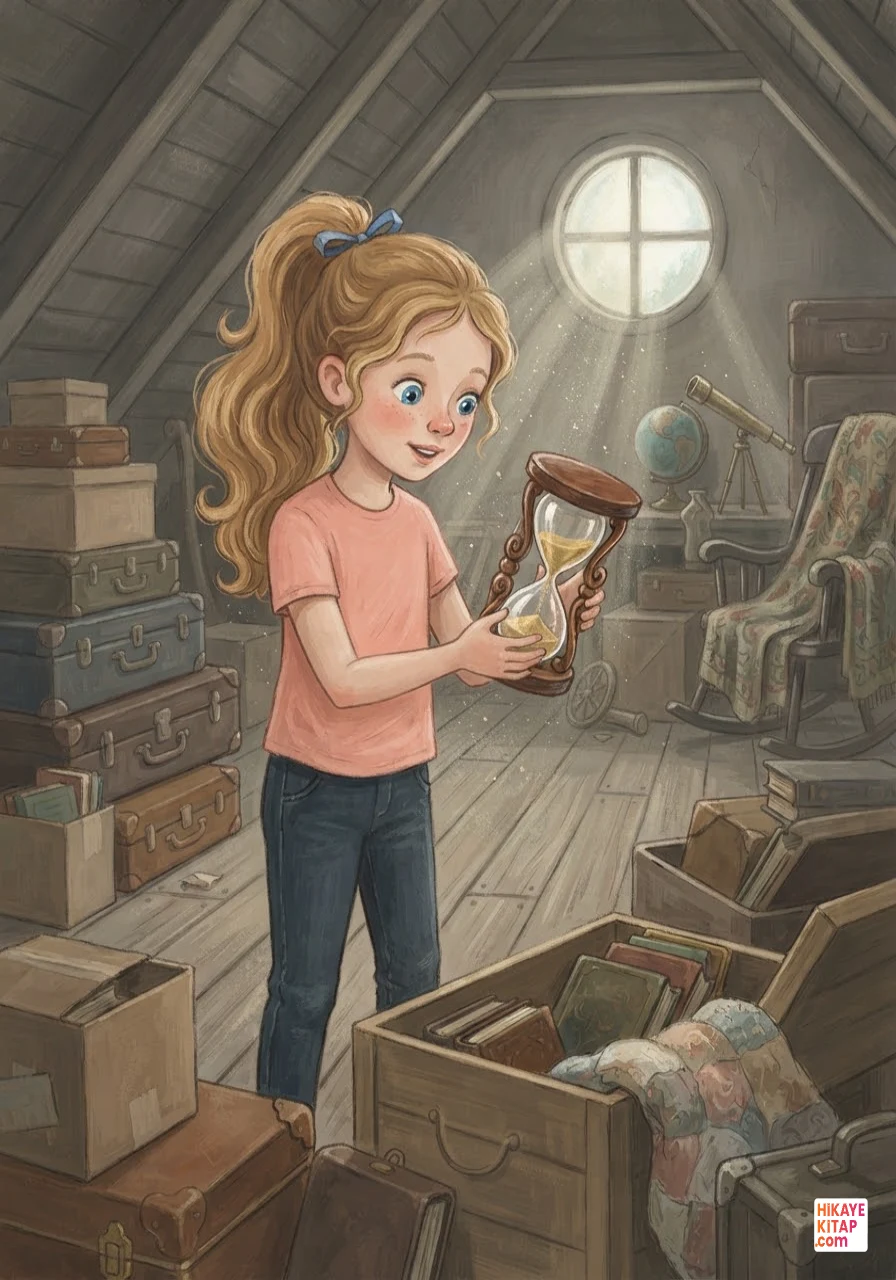
Danny was exploring his grandmother's attic, a place filled with dusty trunks and forgotten secrets. Behind a stack of old, leather-bound books, he discovered a beautiful, wooden hourglass. The golden sand inside shimmered like trapped starlight, waiting for someone to turn it over and start the count.
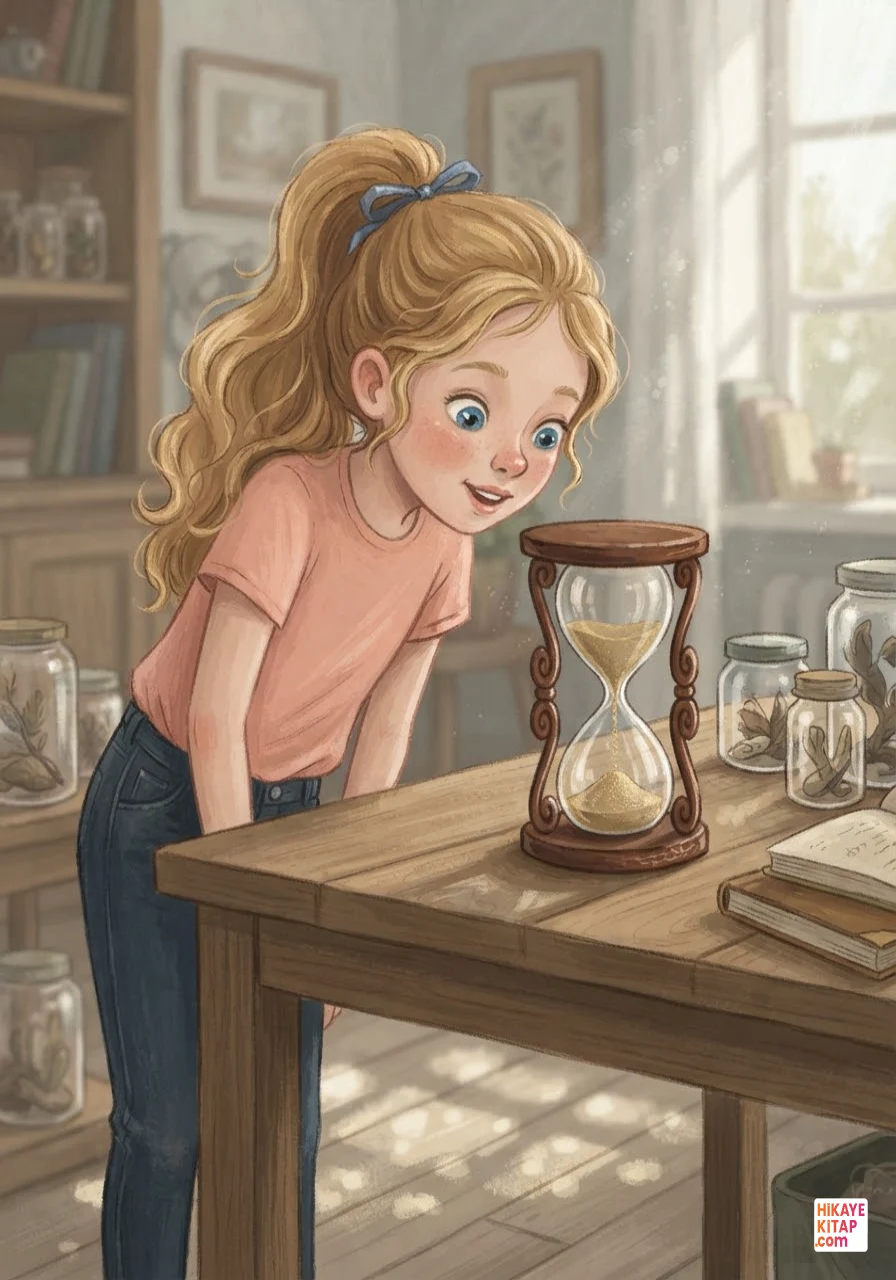
Danny sat on a wooden crate and flipped the glass. A tiny, silent waterfall of sand began to drift from the top bulb to the bottom. It was peaceful to watch, but Danny’s mind started racing with questions. He wondered exactly how long it took for every single grain to fall down.
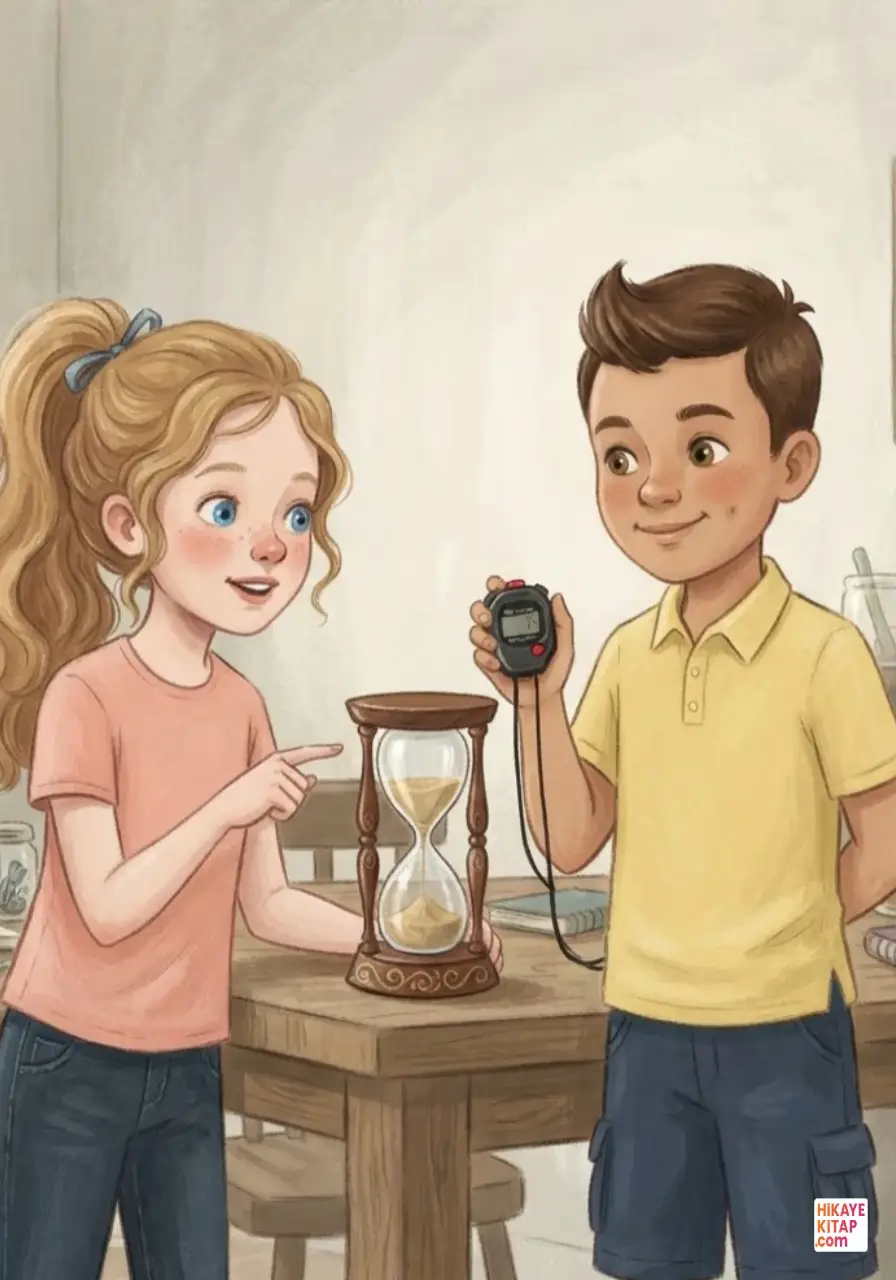
He decided to put the mystery to the test. He carried the hourglass to a table and began using the clock to make different time measurements. He flipped it over and over, trying to count the seconds in his head, but he realized he needed a friend to help him be more accurate.
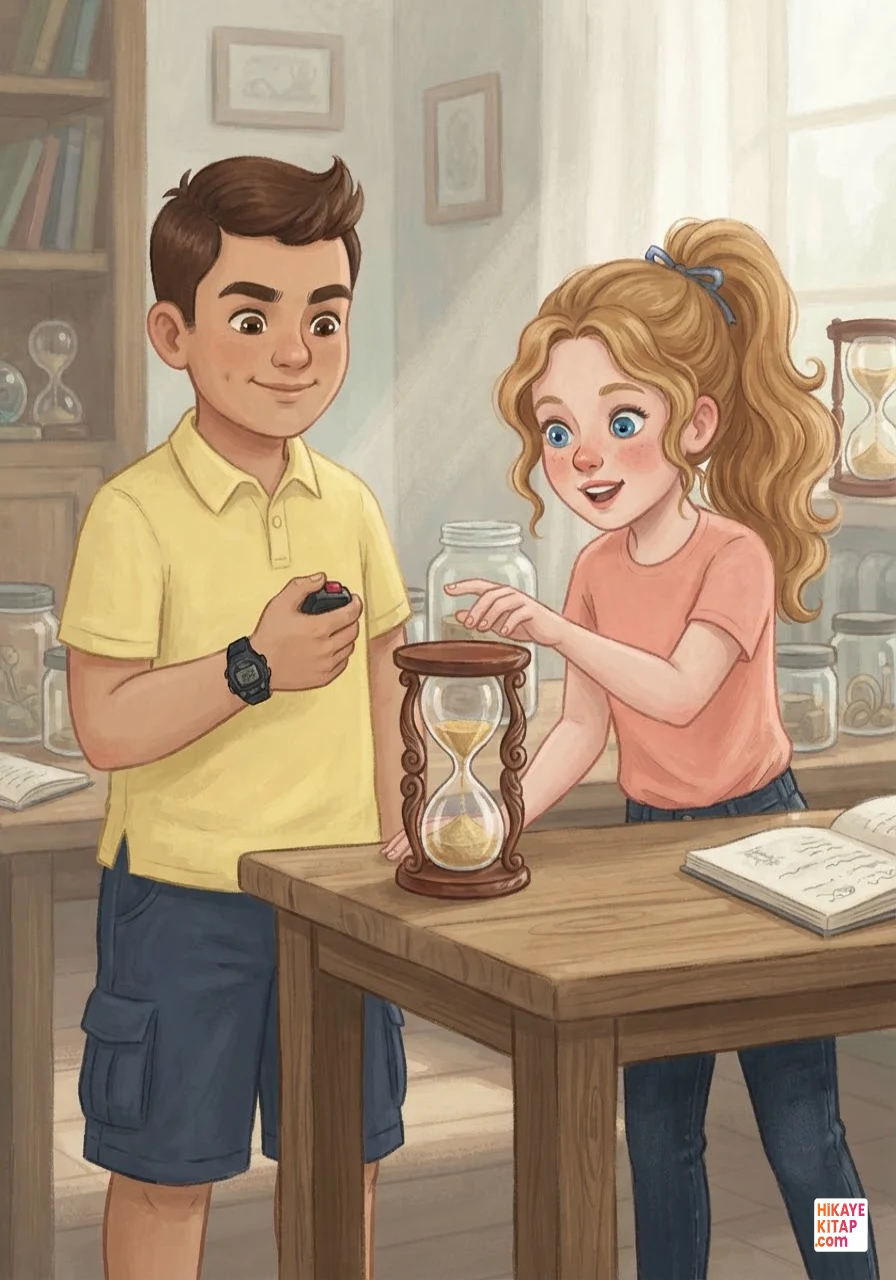
Just then, his friend Leo joined him. Leo was a boy who loved science and gadgets, and he always had a digital stopwatch hanging from his neck. When Danny showed him the old hourglass, Leo’s eyes sparkled. “Let's see if this old-fashioned clock is as smart as my stopwatch!” Leo suggested.
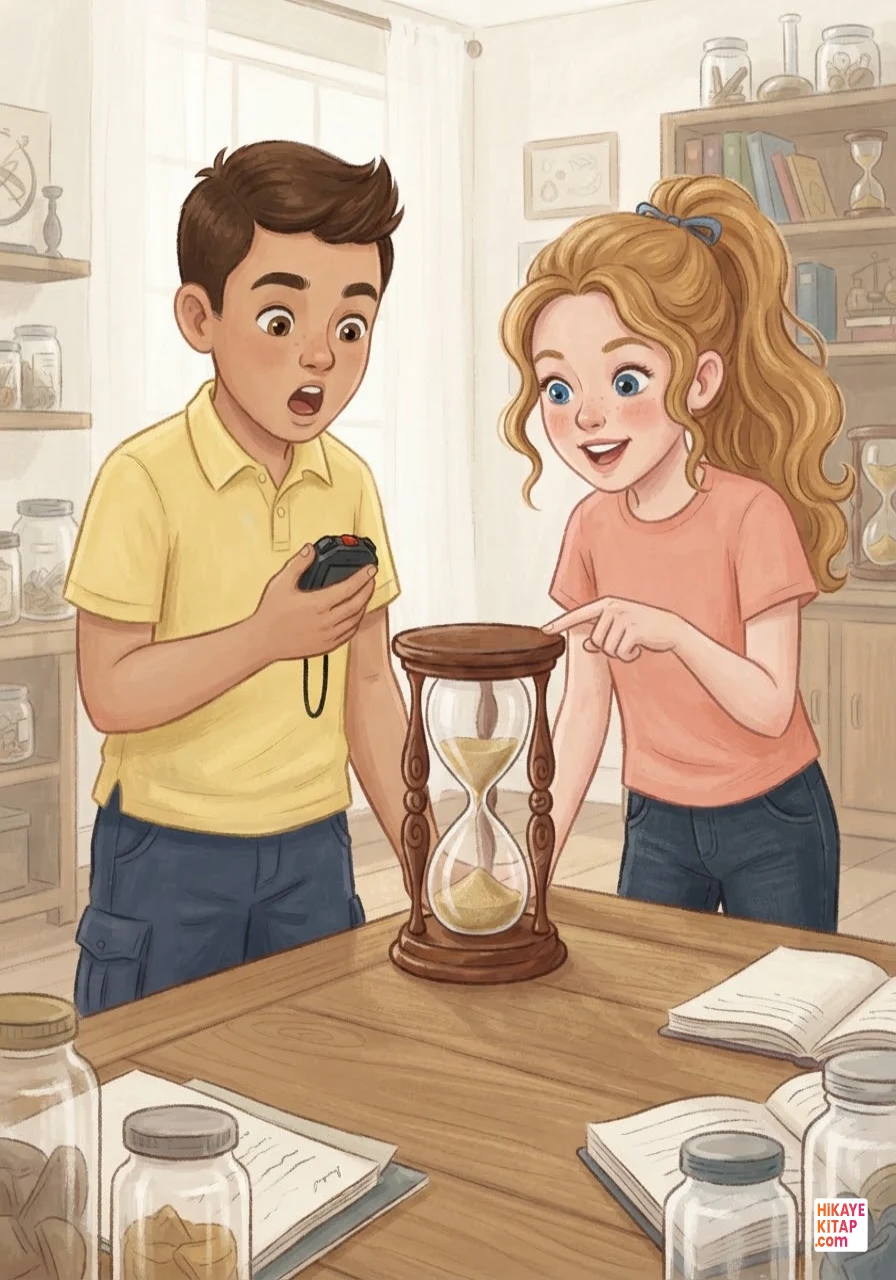
Together, they began their grand experiment. They used the hourglass to try and capture specific moments. They practiced timing one-minute, two-minute, and even five-minute intervals. They watched the golden grains pile up at the bottom, waiting for the very last one to drop.

To be sure of the results, they compared the hourglass with Leo's digital stopwatch. Leo would press the button the exact moment Danny flipped the glass. They watched the digital numbers climb while the sand fell, comparing the old world of wood and glass to the new world of batteries and screens.
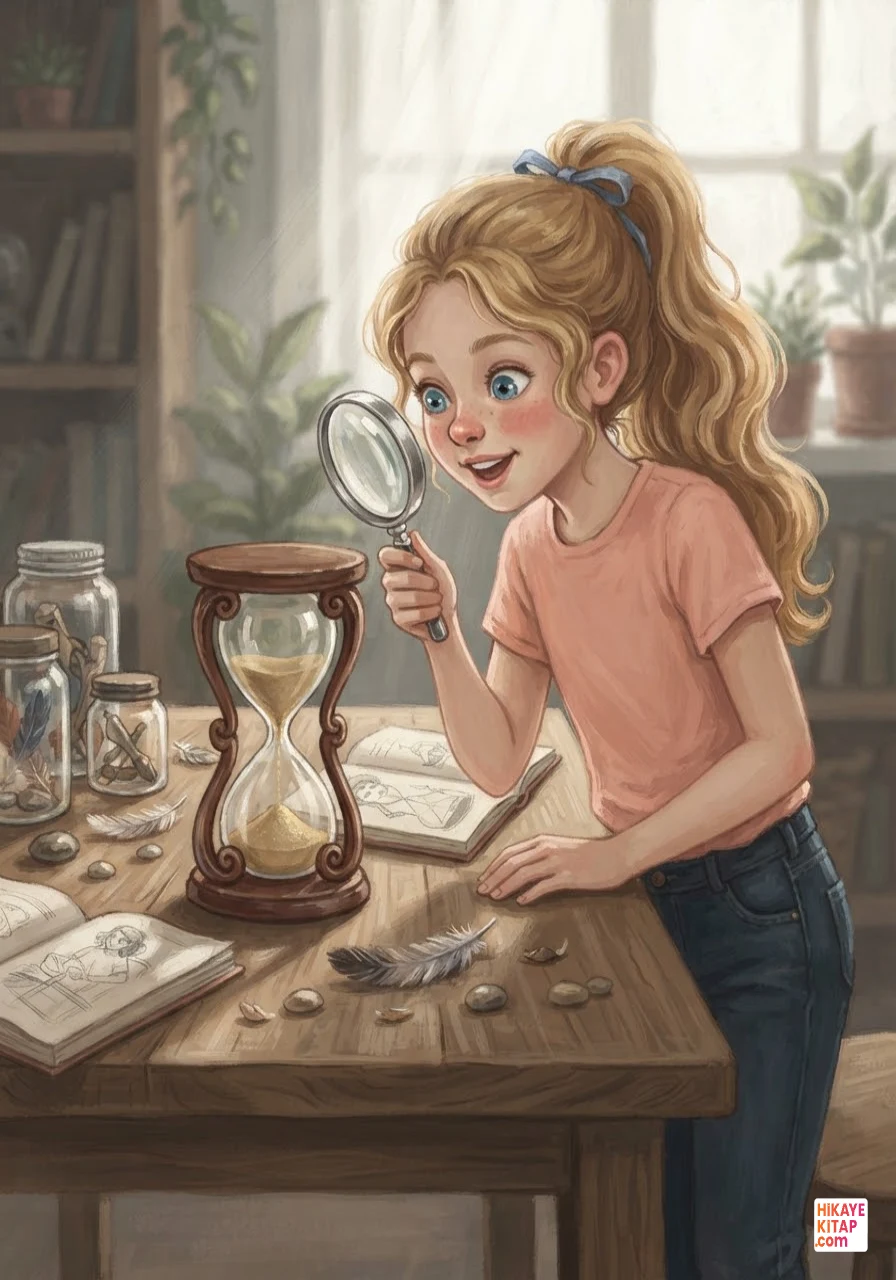
After several tries, they noticed something very strange. The hourglass didn't give the exact same result every time! Sometimes the sand finished before the stopwatch hit the mark, and other times it was a few seconds late. “It's changing!” Danny whispered in surprise.

When they researched why this happened, they learned a fascinating secret. They discovered that the size of the sand grains and the flow rate could affect the result. “Look,” Leo explained, “even tiny differences in the shape of the sand or a little bit of moisture can change how fast it flows.”
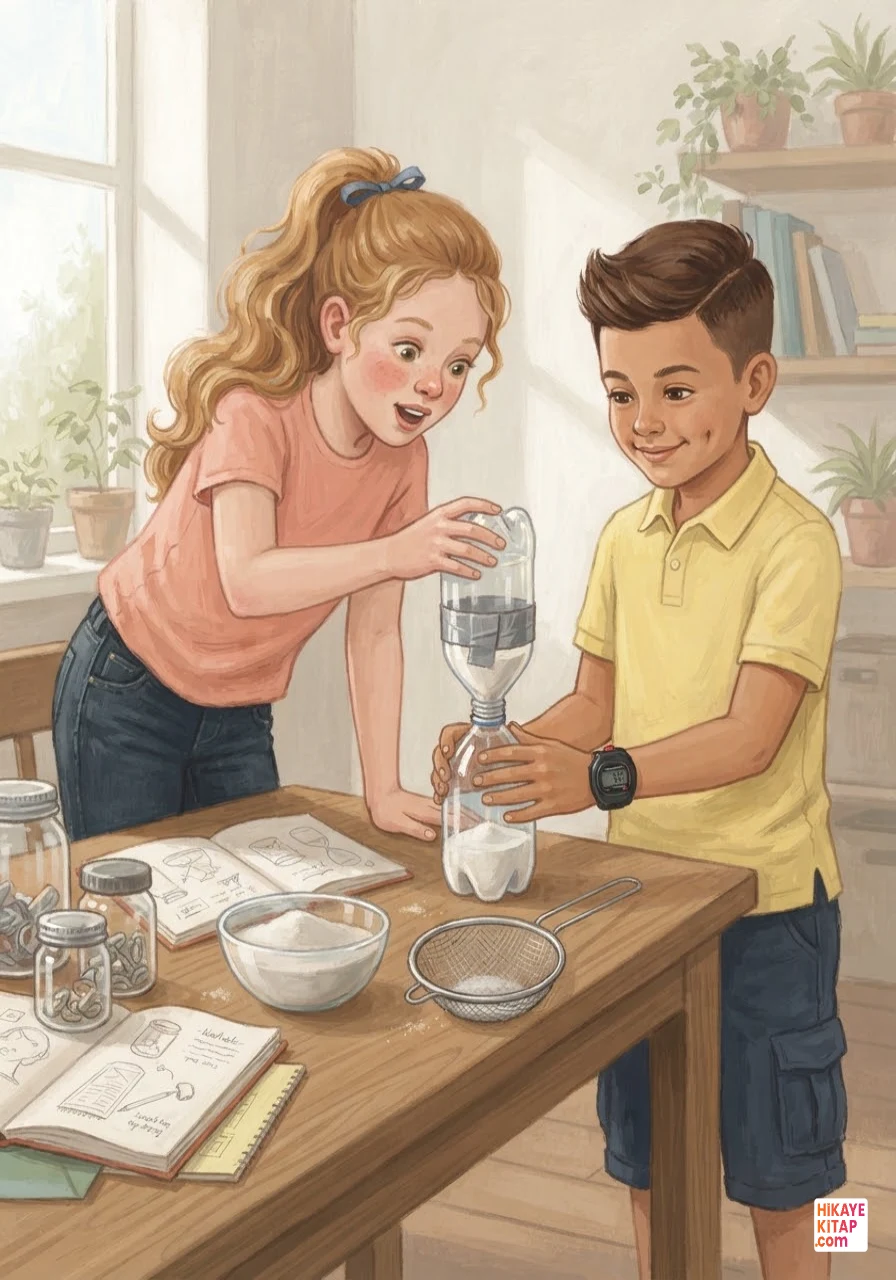
“Let's try making our own simple hourglass!” Danny shouted. They gathered two empty plastic bottles and some very fine, dry sand. They used a sieve to make sure all the grains were the same size. They were determined to create a clock that was perfectly balanced.
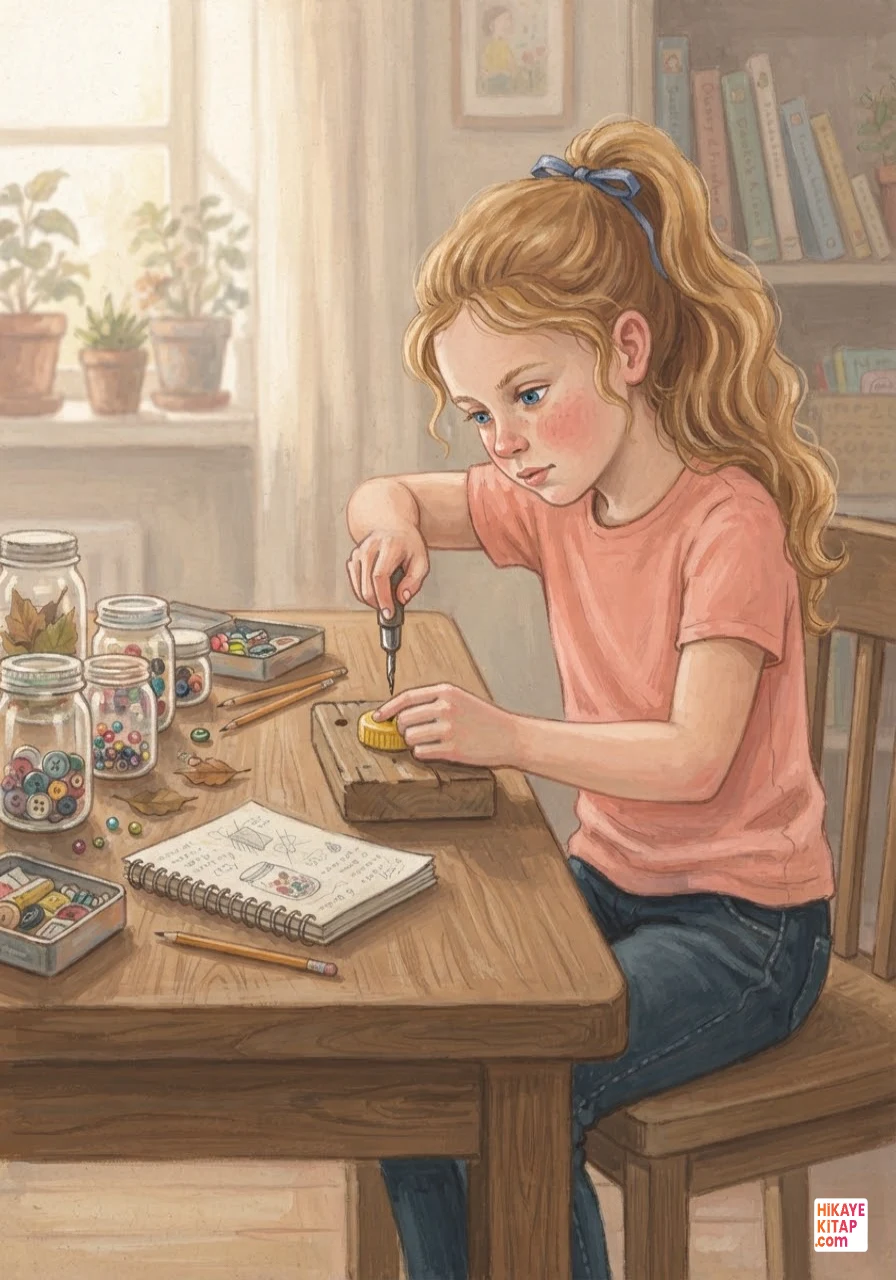
Their attempts failed several times. At first, the hole in the bottle cap was too small and the sand got stuck. Then, the tape wasn't strong enough and sand leaked everywhere. Danny didn't give up; he carefully used a small tool to adjust the opening, focusing on every tiny detail.

Finally, they made a more balanced model. They connected the bottles tightly and tested it. Leo clicked his stopwatch, and the sand flowed perfectly. It finished at exactly sixty seconds, three times in a row! “We did it!” they cheered, high-fiving over their successful invention.

That evening, Danny looked at his two clocks—the old wooden one and the new plastic one. He learned that even measuring time requires careful experimentation and patience. He realized that science wasn't just in books; it was in every falling grain of sand.
During the first week of school, Lily saw a colorful poster hanging on the bulletin board in the hallway: Environment...
Leo had come up with a brilliant idea for his classroom. He placed a bright orange shoebox on his desk and began to p...
It was a warm summer evening. Chloe spread a soft, bright orange blanket over the fresh green grass in the garden. Th...
Use the link and iframe code below to embed the book on your site.