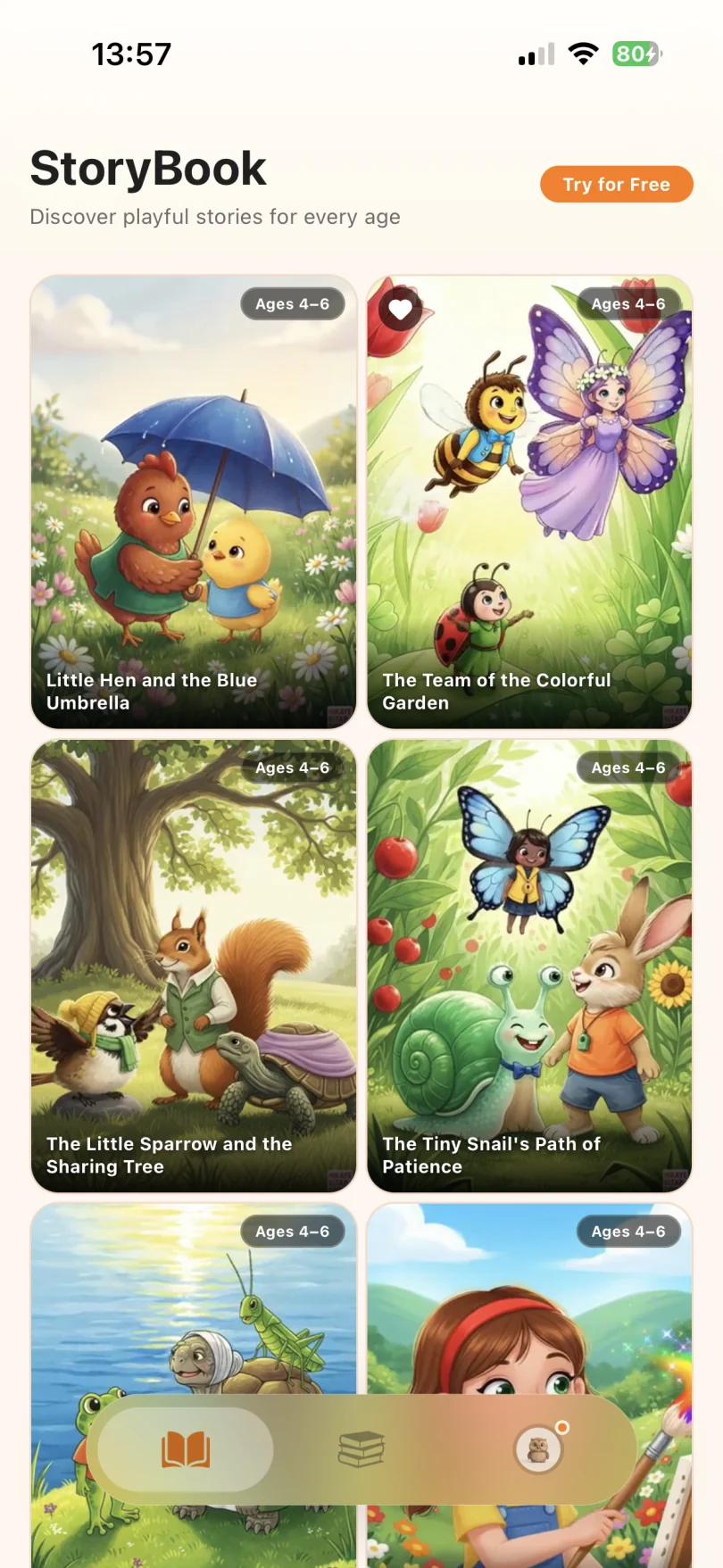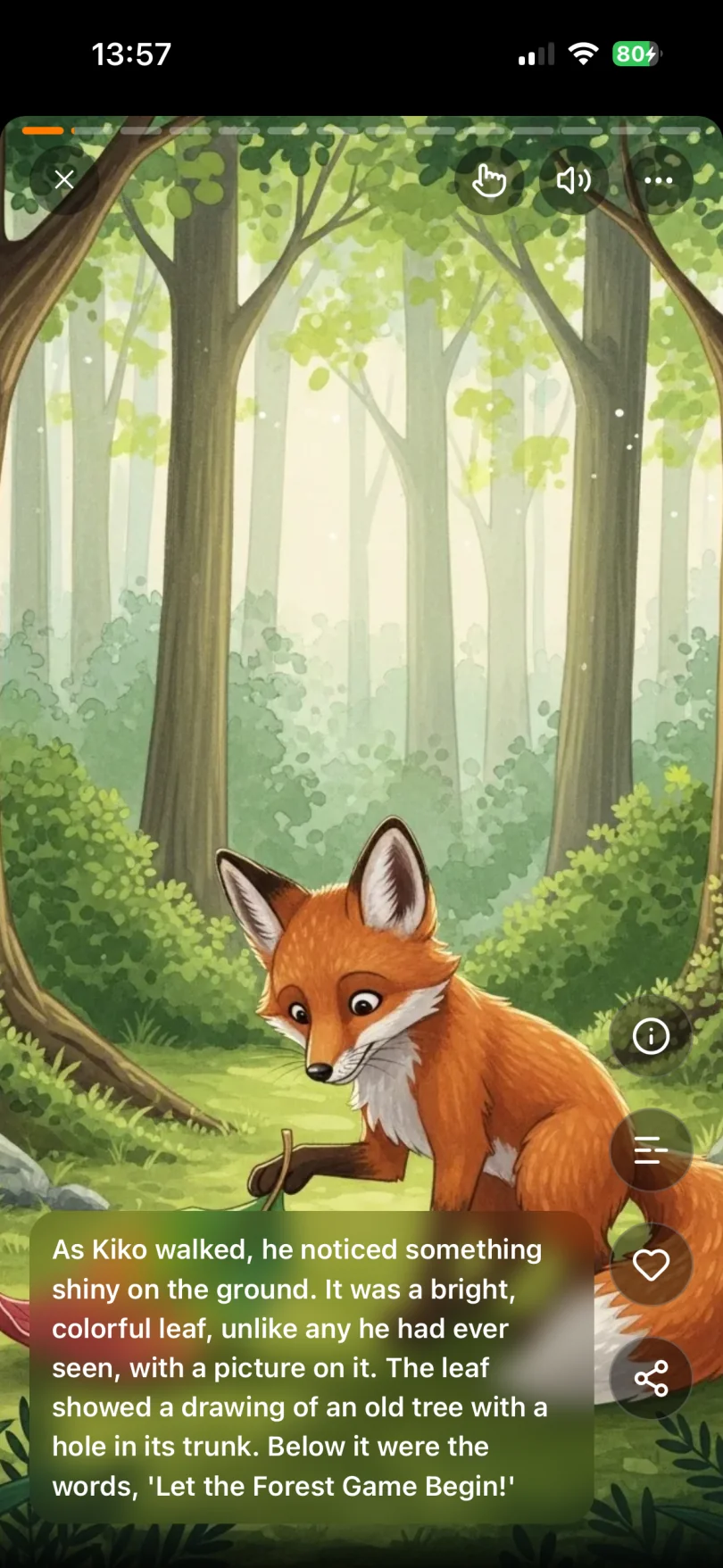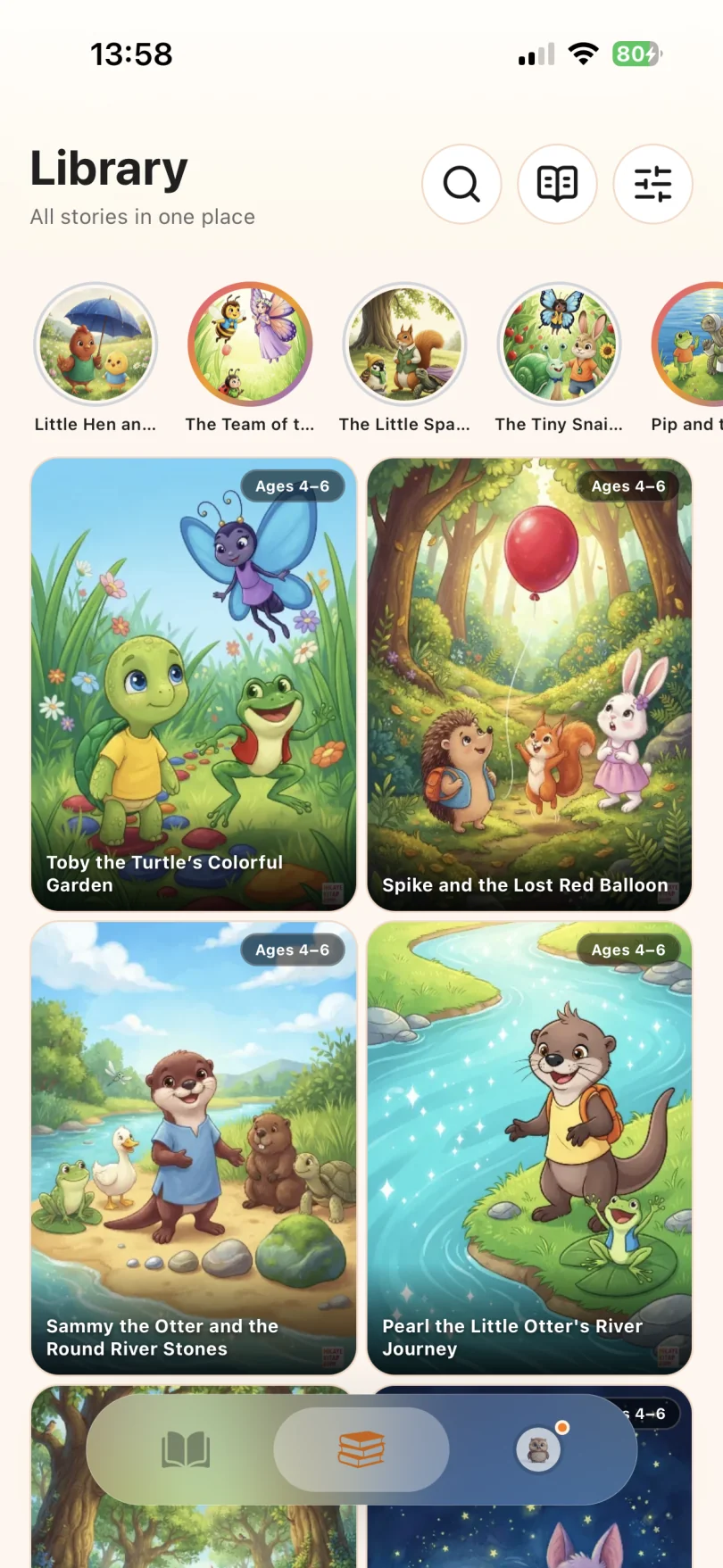
The role of free storybooks in child development is practical: when books cost nothing, families can read more often, reread favorites without limit, and match each story to the skill a child is building right now. Below are 10 free stories for ages 0-12, each linked to a specific area of development, and every one can be read online, listened to with narration, or downloaded as a free PDF.
This guide is not a summary of research. It is about what free access actually changes at home and how to use it with intention, so a child’s reading follows their development instead of the household budget.
What Free Access Changes in Practice
Trying without risk. A printed book is a small bet: you buy it and hope your child likes it. With free stories, you can try three topics in a week, notice which one gets a “read it again,” and follow that interest.
Rereading without limits. Young children often want the same story many times. Every repeat helps them learn the words, predict what comes next, and eventually “read” it back to you. Free access means no one has to say “we already read that one.”
Matching the book to the stage. Children change quickly between ages 0 and 12. A story that was perfect at four can feel babyish at six. Free libraries let you move up a level the week your child is ready, not when the next birthday gift arrives.
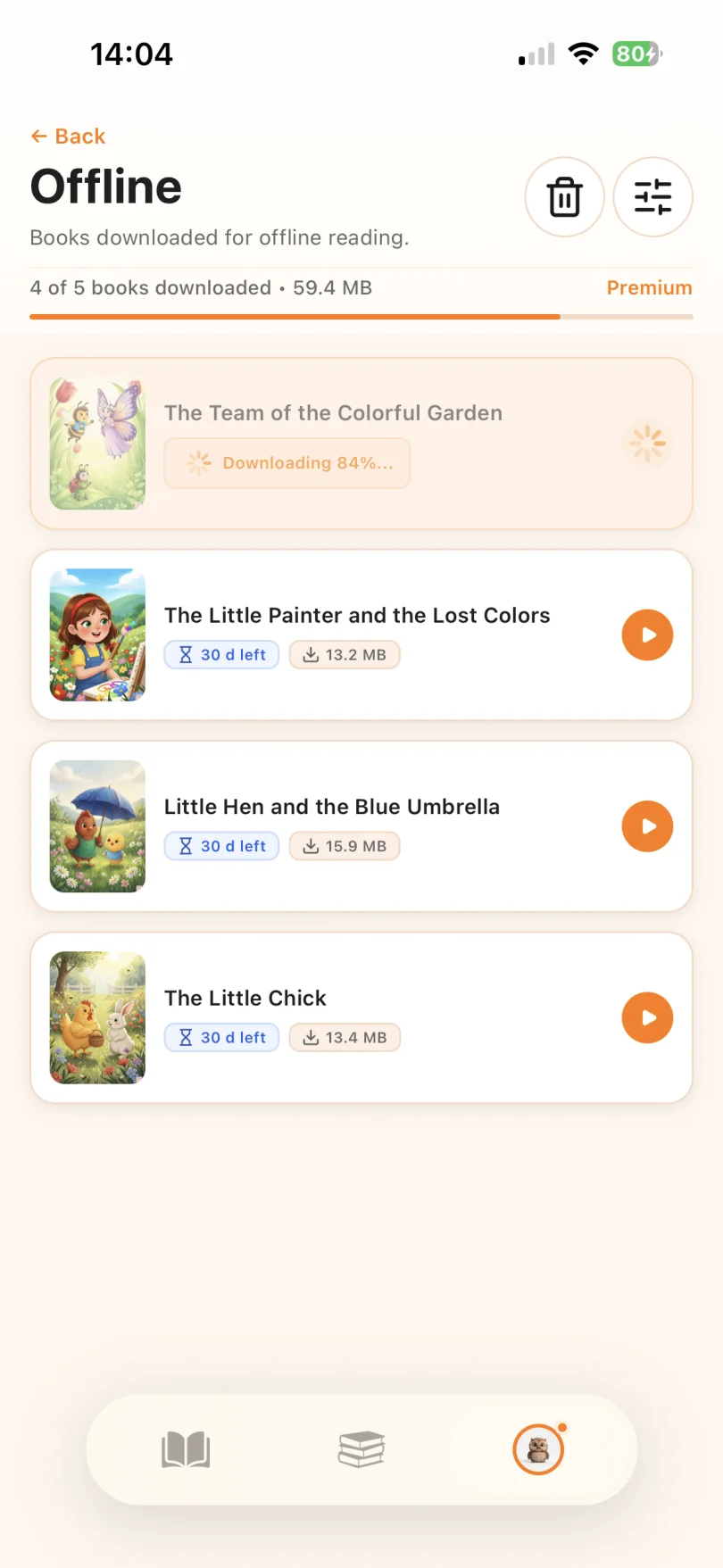
Paper when you want it. Free PDFs let you print a story and take it off the screen. That matters for families who want to keep screen time low, and for children who like to color, underline, or keep their own folder of “my books.”
10 Free Stories Mapped to Development
| Book | Age | Level | Pages | Time |
|---|---|---|---|---|
| What Are We Doing Today? | 0-3 | A1.1 | 12 | 1 min 28 sec |
| The Raindrop’s Journey | 0-3 | A1.1 | 12 | 1 min 34 sec |
| Ada’s Number Adventure | 4-6 | A2.1 | 12 | 2 min 33 sec |
| The Song of the Seasons | 4-6 | A2.1 | 12 | 2 min 26 sec |
| The Color-Changing Bug | 4-6 | A2.1 | 12 | 2 min 22 sec |
| The Little Bird’s First Flight | 4-6 | A2.1 | 12 | 2 min 8 sec |
| The Mystery of the Glowing Stone | 4-6 | A2.1 | 12 | 3 min 5 sec |
| Skye the Sky-Blue Ladybug | 7-9 | A2.2 | 15 | 4 min 28 sec |
| The Time Tree | 7-9 | A2.2 | 15 | 3 min 30 sec |
| The Laboratory of Invisible Numbers | 10-12 | B1 | 12 | 2 min 39 sec |
Language and daily routines (ages 0-3)
What Are We Doing Today? walks through a day from morning to night, which gives toddlers words for their own routine: wake up, eat, play, sleep. The Raindrop’s Journey follows Plip from the clouds to the ground, a simple sequence a two-year-old can start to retell. At this age, the adult’s voice matters most: point at pictures, name things, and pause so your child can fill in a word.
Early math and science ideas (ages 4-6)
Ada’s Number Adventure counts from one to ten using everyday objects, and The Song of the Seasons moves through spring, summer, autumn, and winter. These stories do not teach math or science lessons; they give children a familiar frame they will recognize later in class.
Feelings and courage (ages 4-6)
The Color-Changing Bug is about Spot, who changes color with his feelings, an easy way to start naming emotions (“What color are you right now?”). The Little Bird’s First Flight is about gathering courage, and The Mystery of the Glowing Stone shows Bibi’s light growing brighter when she shares it.
Self-acceptance and imagination (ages 7-9)
Skye the Sky-Blue Ladybug is about a ladybug learning to accept that she is different. The Time Tree lets Aras see the past and future, which opens conversations about change and cause and effect.
Problem solving (ages 10-12)
The Laboratory of Invisible Numbers sends four friends through puzzles and secret codes in a hidden math lab, a good fit for older children who like logic games more than fairy tales.
Using Free Stories With Intention
Short and often. About 5-10 minutes a day for ages 0-6 and 15-20 minutes for ages 7-12 is plenty to start. Consistency does more than length.
Narration plus paper. For pre-readers, play the narration and turn the pages together. For early readers, listen first, then read the printed PDF aloud the next day. For older children, read first and use narration to check pronunciation.
Check the fit. If your child reads, try the five-finger rule: one finger for each unknown word on a page. Four or five fingers means the story is better listened to for now. If your child is restless, the story is probably too long or too simple; try the next level up or down.
Keep a record. Our free printable reading log turns a month of short stories into something a child can see and be proud of. With an account, the site also saves reading history and awards badges.
A 4-Week Plan by Age
| Week | Ages 0-3 | Ages 4-6 | Ages 7-12 |
|---|---|---|---|
| Week 1 | What Are We Doing Today? | Ada’s Number Adventure | Skye the Sky-Blue Ladybug |
| Week 2 | The Raindrop’s Journey | The Song of the Seasons, The Color-Changing Bug | The Time Tree |
| Week 3 | Reread both; let your child turn the pages | The Little Bird’s First Flight | The Laboratory of Invisible Numbers |
| Week 4 | Print one as a PDF and “read” it together | The Mystery of the Glowing Stone | Child picks a new story from their age page |
How to Download the PDF
- Click a title in the table to open its book page.
- Press Download PDF.
- Print on A4 paper and keep the pages in a folder or binder.
Black-and-white versions of the stories are free in our coloring books section, a good way to keep a story going after the screen is off.
Questions to Ask After Reading
- What Are We Doing Today?: What do we do after we wake up? What is your favorite part of the day?
- The Raindrop’s Journey: Where did Plip go after he left the cloud? Where do you think raindrops go after they land?
- The Color-Changing Bug: How did Spot’s colors change with his feelings? What color would you be right now?
- Skye the Sky-Blue Ladybug: Why did Skye feel different from the other ladybugs? What helped her feel proud of being herself?
- The Laboratory of Invisible Numbers: Which puzzle or code in the lab would you have tried to crack first? Why?
Explore by Age
Every story in our library is free. Browse by age in our ages 0-3, ages 4-6, and ages 7-9 collections, or download in bulk from the free PDF children’s books library. If you are still looking for good sources, our guide on where to find free children’s books compares options.