The best books for 11 year olds are usually full novels, but short illustrated stories still earn a place: they finish in five minutes, spark a real discussion, and can preview a classic before a child commits to 300 pages. The eight free reads below cover science, problem solving and four famous classics retold. All can be read online, played with narration, or downloaded as PDFs.
Setting expectations
Let’s be clear about what these are. Each is an 11- to 15-page picture-book-style story, not a novel. For an 11 year old who reads widely, they are a quick side dish. For one who has stopped reading for fun, they can be the way back in. For any child, the retellings are a low-pressure introduction to books like Robin Hood, Gulliver’s Travels, Black Beauty and Twenty Thousand Leagues Under the Sea.
8 free short reads for 11 year olds
| Book | Age | Level | Pages | Time | Why this one |
|---|---|---|---|---|---|
| The Stardust Journal | 10-12 | B1 | 12 | 3 min 41 sec | Testing a black rock for meteorite clues |
| The Secret of the Lost Map | 10-12 | B1 | 15 | 5 min 52 sec | Sundial, pipes and a mosaic panel |
| The City’s Invisible Melody | 10-12 | B1 | 12 | 5 min 25 sec | Measuring noise to pitch fixes to the mayor |
| The Last Station of the Railway | 10-12 | B1 | 11 | 6 min 8 sec | A handcar trip and a group decision |
| The Brave Heart of Sherwood Forest | 10-12 | B1 | 15 | 5 min 18 sec | Robin Hood against unfair taxes |
| Midnight Mane | 10-12 | B1 | 15 | 4 min 20 sec | Black Beauty-style story in a horse’s voice |
| The Curious Doctor’s Wonderful Travels | 10-12 | B1 | 15 | 4 min 43 sec | Gulliver among tiny people and giants |
| The Secret of the Blue Horizon | 10-12 | B1 | 12 | 3 min 28 sec | The “monster” is a submarine |
Science and problem solving
The Stardust Journal
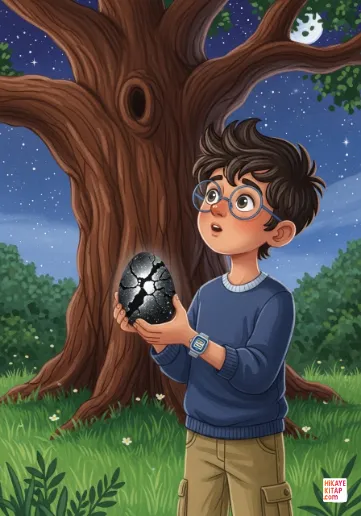
Arthur digs up a heavy, shiny black stone under an old oak. When he asks whether it’s magic, his dad suggests he think like a scientist instead. With his teacher, Ms. Selene, he reads about meteorites, studies melted marks under a magnifying glass and tests it with a magnet. His journal makes the case that it came from space, and he presents it at the Science Fair. After the magnet scene, gather a few objects and let your child predict which ones a magnet will pick up before testing.
The City’s Invisible Melody
Mark and Melody build a sound map of their neighborhood. Echo records audio and Sarah measures decibels, which reveals a very loud intersection during class time. They take plant walls, quieter asphalt and a sign to the mayor, and their ideas are put into action. It is a strong model for a civic science project: measure the problem first, then propose solutions.
The Secret of the Lost Map
A torn half map falls out of a library book. Aras calculates, İdil sketches and Mete spots small clues. They find the missing half inside a sundial, follow a voice through the forgotten Whispering Pipes and open a mosaic panel. The box holds no gold, only a note from the school’s first science club.
The Last Station of the Railway
Oliver wonders where the rusty rails lead. Emily researches, Victor repairs a handcar and Lucas spots details. They haul a fallen tree off the tracks with rope and, at a fork, weigh the tunnel against the bridge before choosing together. The last station turns out to be a Memory Center full of letters and diaries. The fork scene is a good prompt for how groups make decisions.
Four classics, retold short
The Brave Heart of Sherwood Forest opens with the Sheriff’s men taking the last vegetables from Agnes’s garden. Robin Hood and William take back the unfair taxes, villagers join to rebuild a fallen bridge, and the Sheriff’s archery contest, set as a trap, backfires.
Midnight Mane is told by the horse himself. He leaves a shrinking farm for a riding school, learns patience with wobbly young riders, befriends a gentle girl named Elara, and after being sold again finds her family waiting for him. His mother’s words, that every creature has a seed of goodness, guide him.
The Curious Doctor’s Wonderful Travels follows Doctor Levent from Tinyvale, where finger-sized people tie him down until he rescues a stuck kite, to Giantreach, where a farmer’s daughter gives him a dollhouse home. The same man is a giant in one land and a toy in the next, a neat way into a conversation about perspective.
The Secret of the Blue Horizon retells Twenty Thousand Leagues Under the Sea: a harpoon clangs off metal, the “monster” is a submarine, and Captain Ruzgar shows coral reefs, a whale shark and a sunken city before an ice-tunnel escape.
From short retelling to full novel
Read the retelling first, then borrow the full book from the library. Ask your child to keep a running list: “What’s in the novel that the short version left out?” Comparing two versions is a real literacy skill, and it gives a reluctant reader a reason to keep going.
Narration, reading online and PDFs
- Read online on a phone or tablet. The pages are short enough that small screens work fine.
- Use narration for the longest stories (The Last Station, The Lost Map) or on tired evenings.
- Download the PDF to annotate: margin notes, underlined key sentences, a question written at the bottom of each page. All printable titles are on the free PDF children’s books page.
Curious about reading speed? The reading speed test gives a words-per-minute result in a few minutes. Speeds vary a lot by child and text, so it is most useful when repeated every few weeks.
Is it the right fit?
At 11, the risk is rarely “too hard.” It’s “too babyish.” If your child rolls their eyes at pictures, lead with the question instead of the book: “A group of kids measured street noise and convinced the mayor to change things. Could you do that here?” Let the story answer it. If they finish a retelling and want more, that is the moment to hand over the full novel.
A 4-week plan
- Week 1, science: The Stardust Journal and The City’s Invisible Melody. Try a simple magnet test or count sounds on your street.
- Week 2, puzzles: The Secret of the Lost Map and The Last Station of the Railway. Talk about how each group divided the work.
- Week 3, classics part one: Sherwood Forest and Midnight Mane, then start one full novel.
- Week 4, classics part two: The Curious Doctor’s Wonderful Travels and The Secret of the Blue Horizon. Compare a retelling with the original’s opening chapter.
Track stories and novel chapters on the free reading log.
Discussion questions
- What evidence did Arthur collect to show his rock came from space?
- In The City’s Invisible Melody, why did the team measure decibels before going to the mayor?
- At the railway fork, how did the friends decide between the tunnel and the bridge?
- Why did the Sheriff’s archery contest fail as a trap?
- Doctor Levent is a giant in one land and tiny in another. What does that tell you about how people judge size or importance?
Keep reading
For more on this age group, see 10-12 year old children’s books and free story books for 6th graders. Explore the ages 10-12 page, classics-inspired stories and science and discovery.