Lily and the Little Protectors of the World
During the first week of school, Lily saw a colorful poster hanging on the bulletin board in the hallway: Environment...
12 pages · 3 min
Type into the box above to start searching
Features and shortcuts to enhance your reading experience
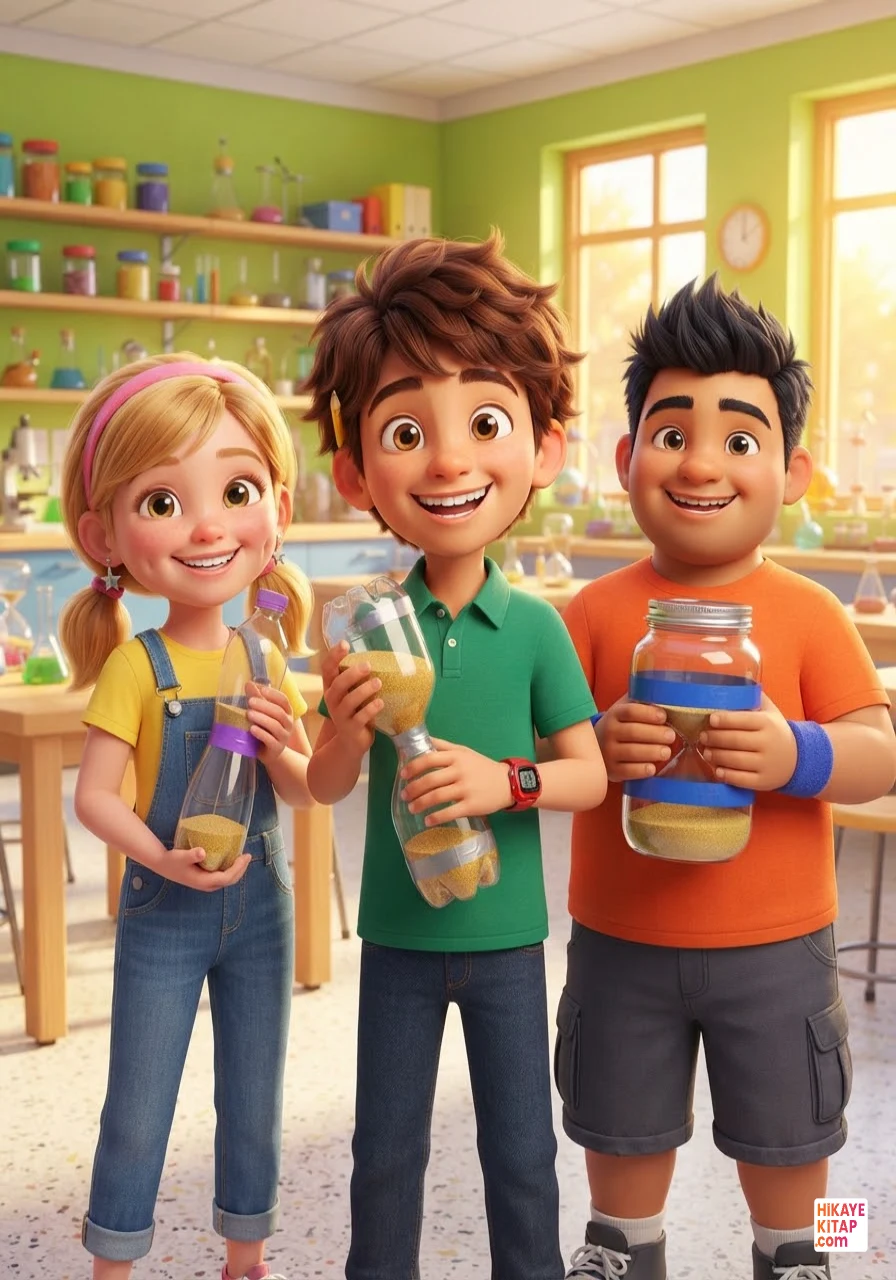
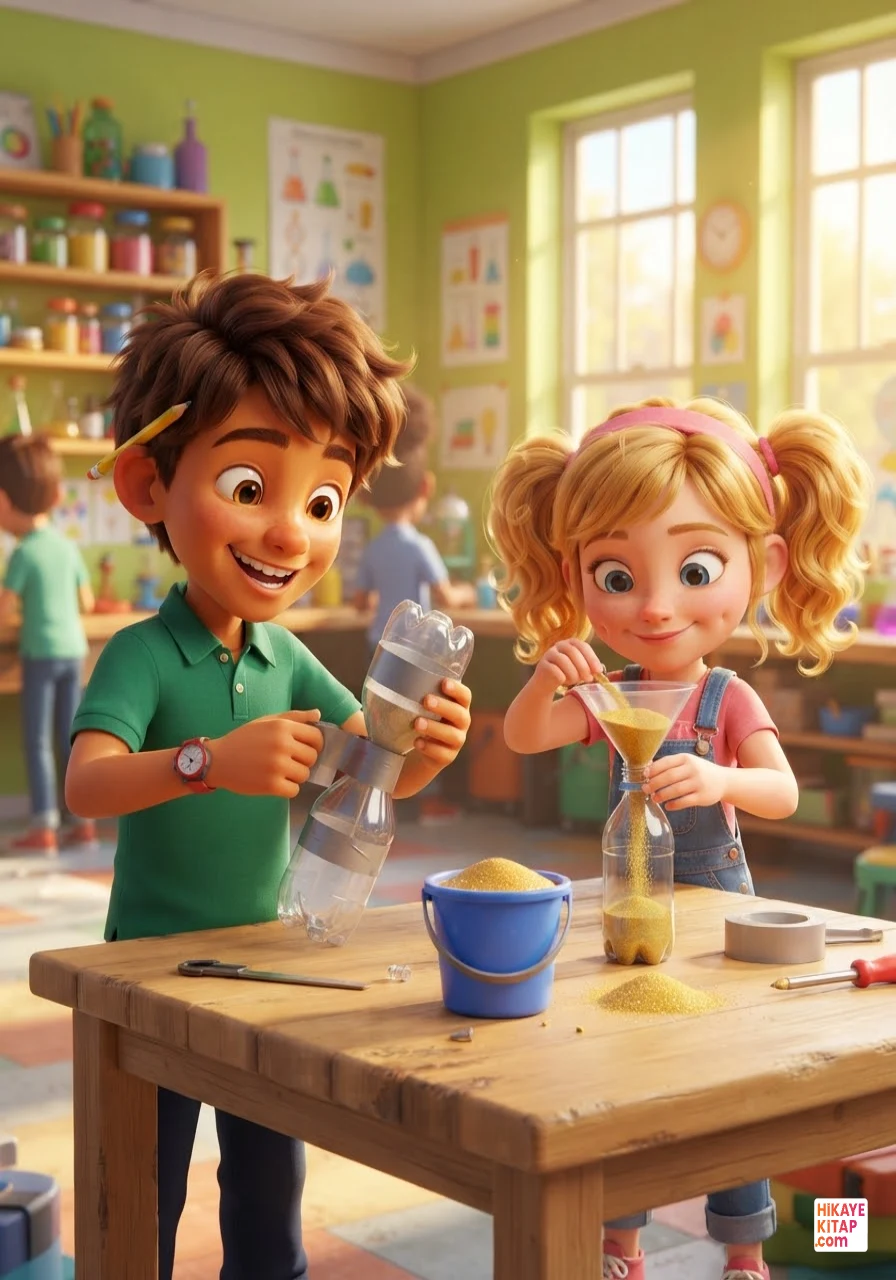
It was a sunny Tuesday morning. Leo and his classmate Elara sat at a table in the school's colorful science workshop. Today, they were going to make their own sand timers. In front of them were empty plastic bottles, tape, and buckets full of shimmering sand. Leo excitedly taped the bottles together and asked, “Let’s see whose sand timer will be the fastest!” Elara carefully poured the sand into her bottle.
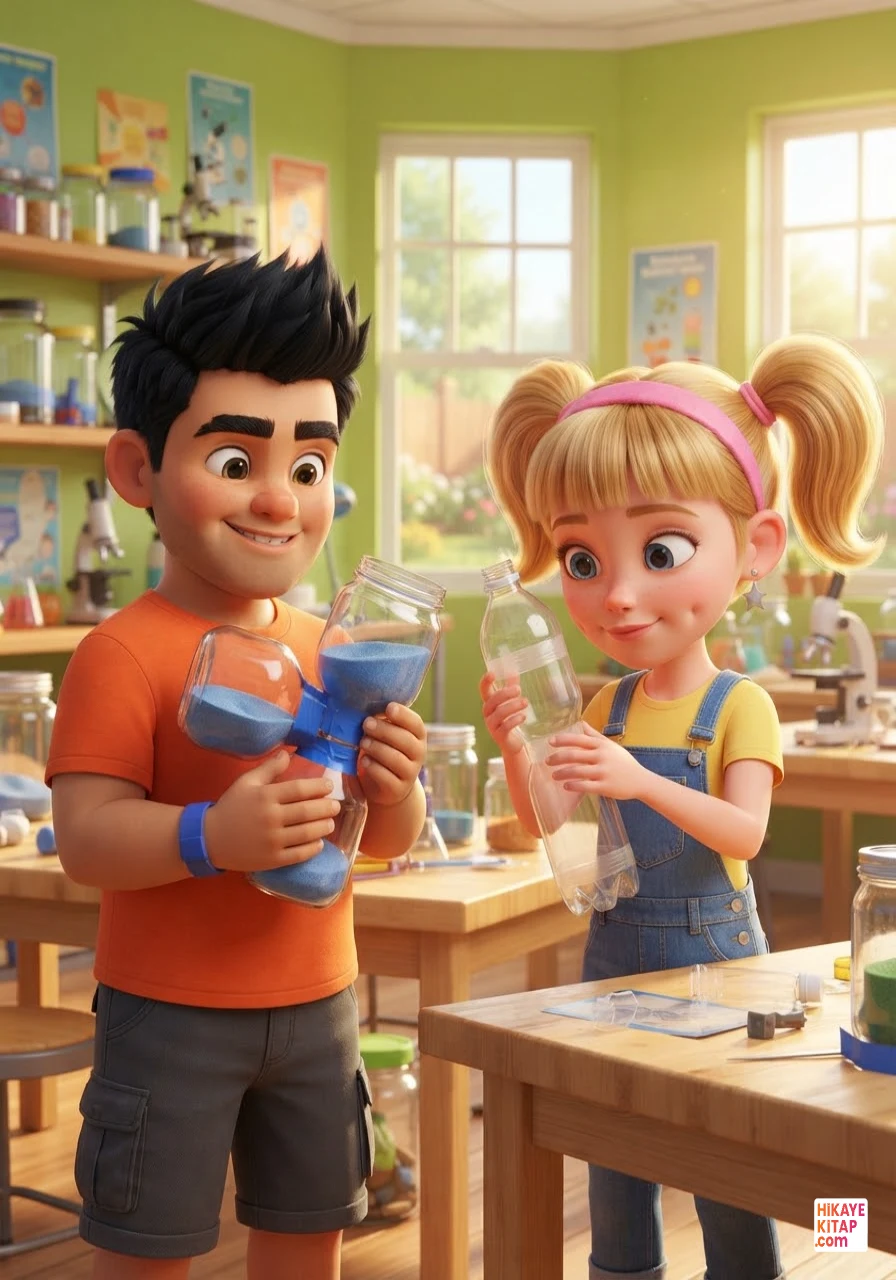
Jasper and Elara began to choose the best containers for themselves from the workshop shelves. Jasper picked a huge, wide jar, while Elara preferred a thinner, more elegant bottle. Jasper said, “Mine is very big; it will hold so much sand!” Elara checked the hole in the cap of her own bottle. Everyone’s sand timer was starting to look different.
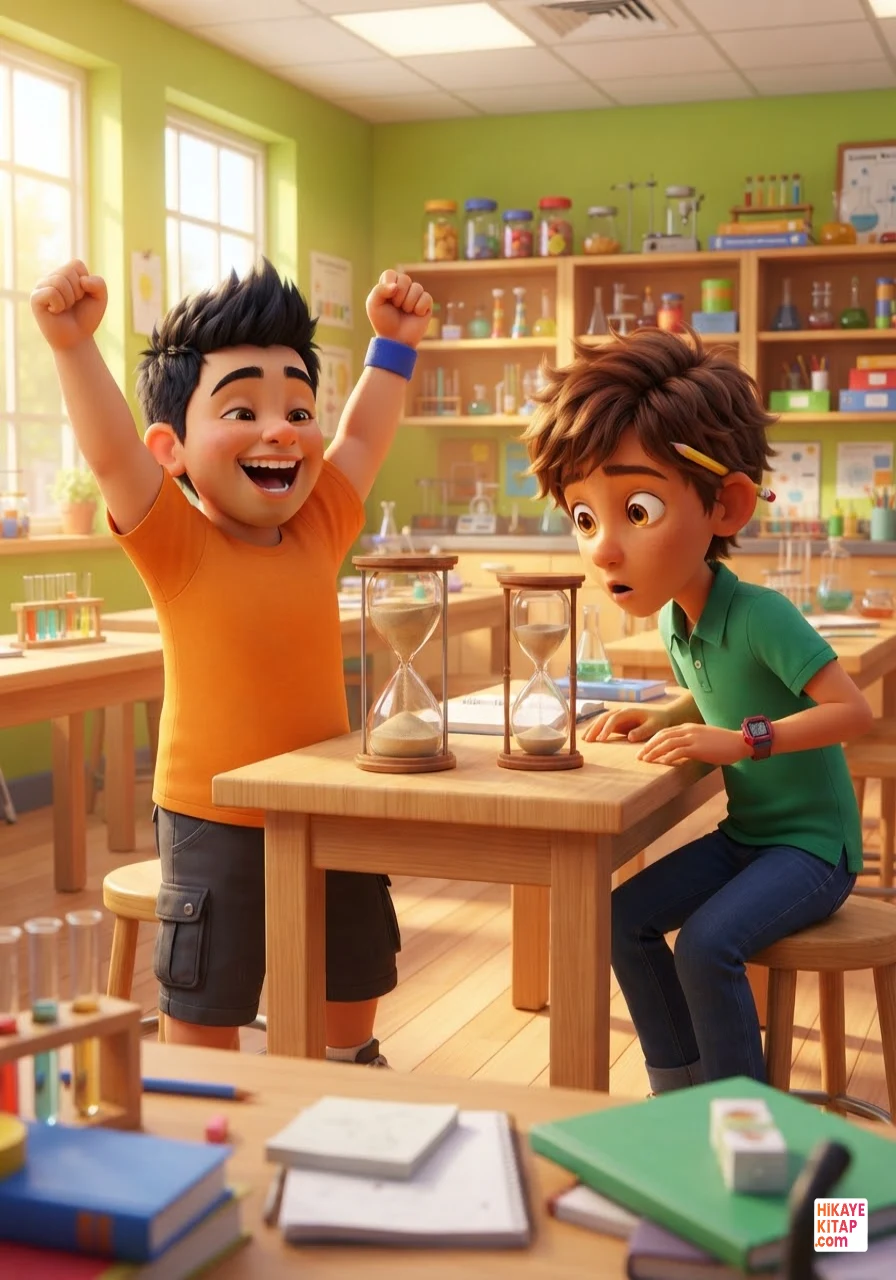
When the preparations were finished, the race began. Leo and Jasper turned their sand timers over at the same time. But something was strange. Jasper’s sand flowed quickly like a waterfall, while Leo’s dripped down slowly. Jasper shouted, “I won!” Leo looked at his bottle in surprise and wondered, “Why is it flowing so slowly?”
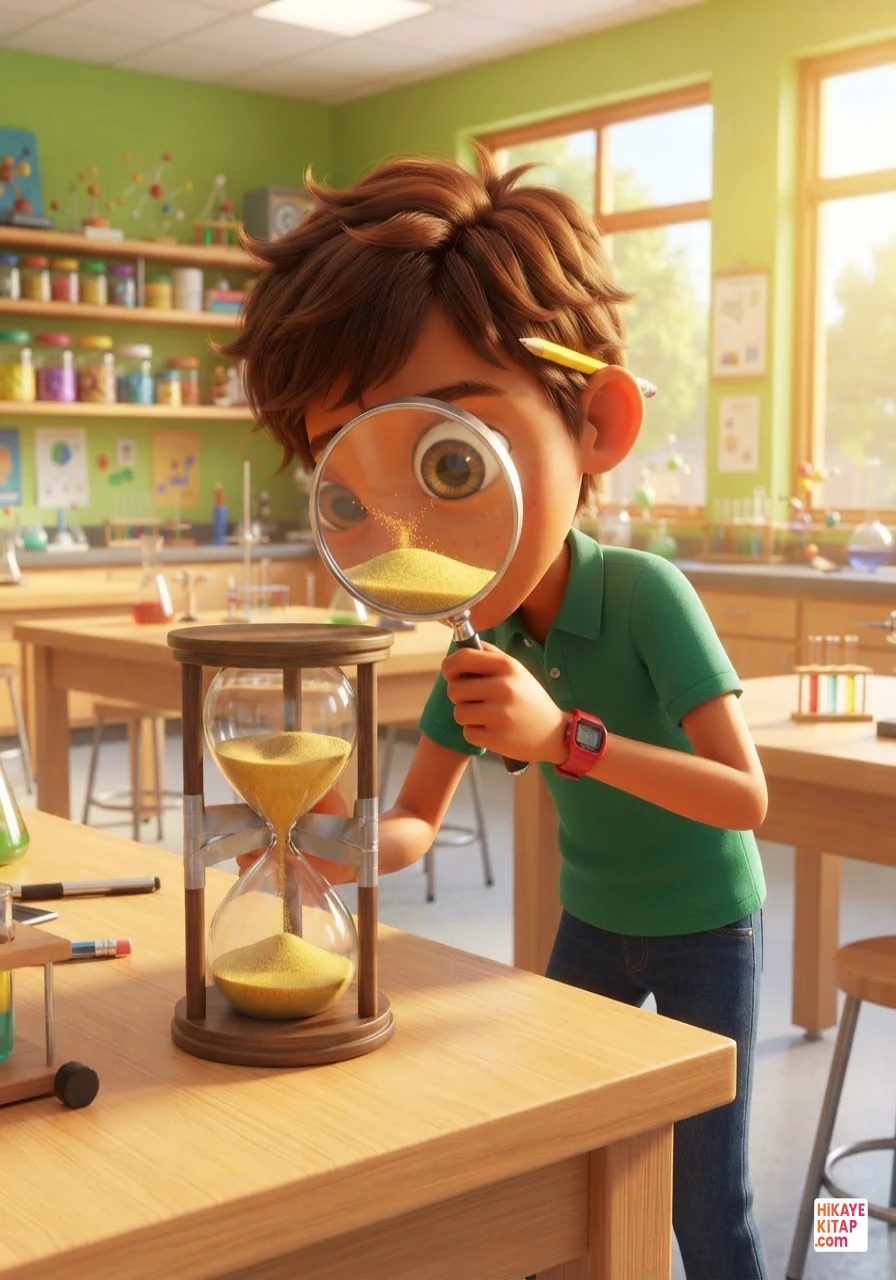
Leo took a magnifying glass from the table and began to examine the junction of the sand timer. He could have watched the flow of the sand for hours. “It shouldn't just be about the amount of sand; the path it takes must be important too,” he said to himself. He fixed his eyes on the narrow neck of the bottle, following the sand grains as they slid down one by one.
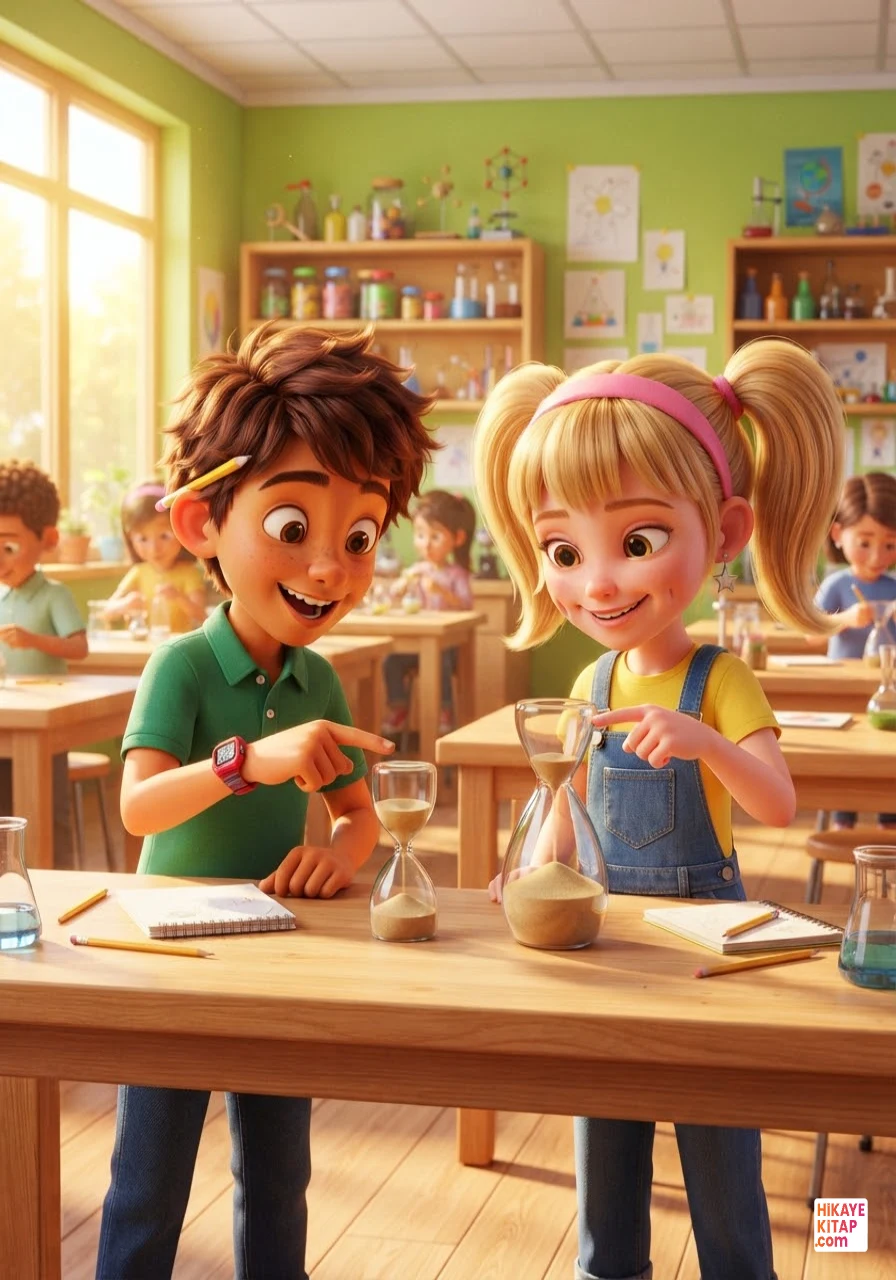
Leo and Elara placed their sand timers side by side to compare the neck sections. Leo said, “Look Elara, the opening of your bottle is wider than mine.” Elara pointed to the hole and agreed, “Yes, that must be why the sand passes through there more easily.” They both looked at each other, excited by this discovery. The issue wasn't just the amount of sand.
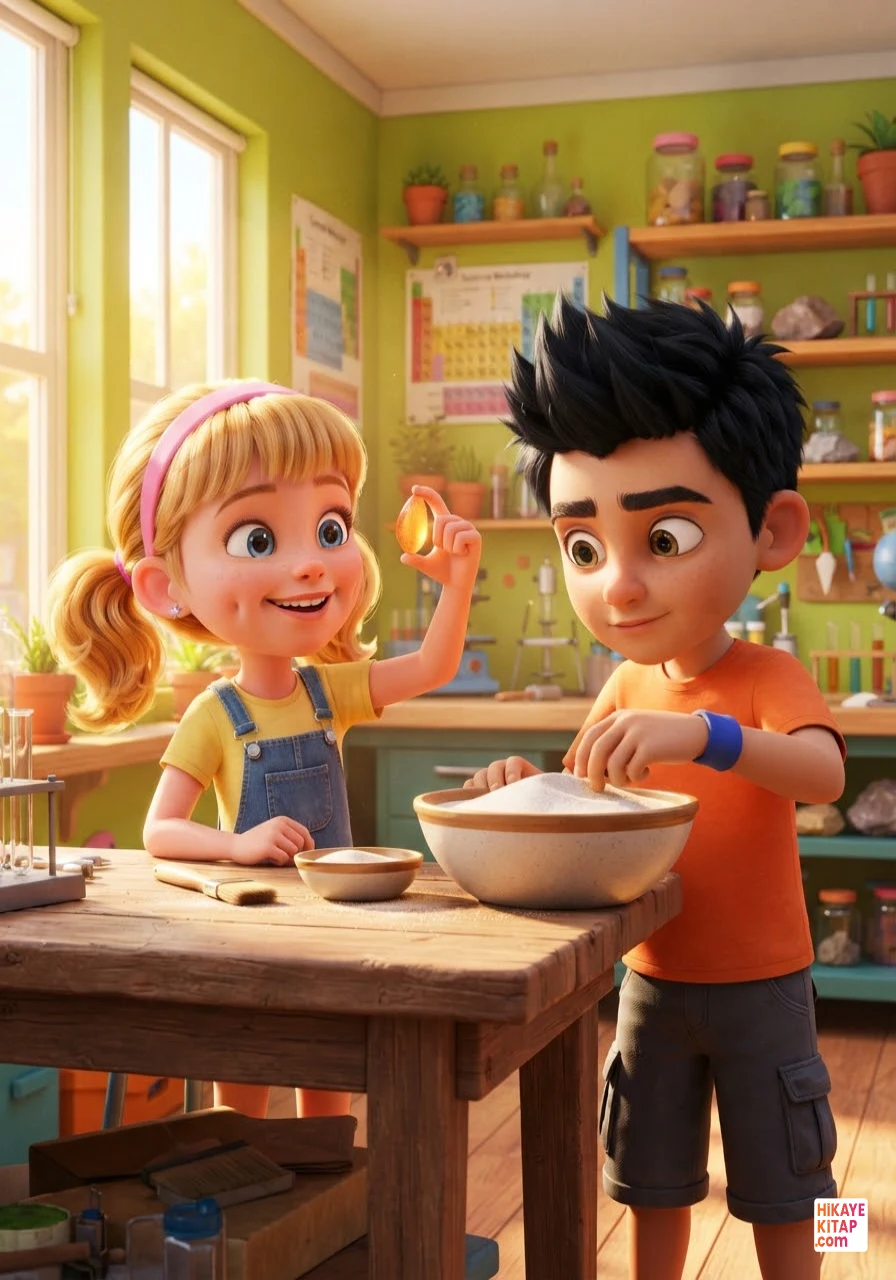
This time, Elara and Jasper focused on the grains of sand. They examined the two different sand buckets on the table. In one, the sand was very fine, while in the other, the grains were large like small pebbles. Jasper asked, “I wonder if the size of the sand grains also affects the speed?” Elara picked up one of the large grains and held it up; it sparkled in the sunlight.
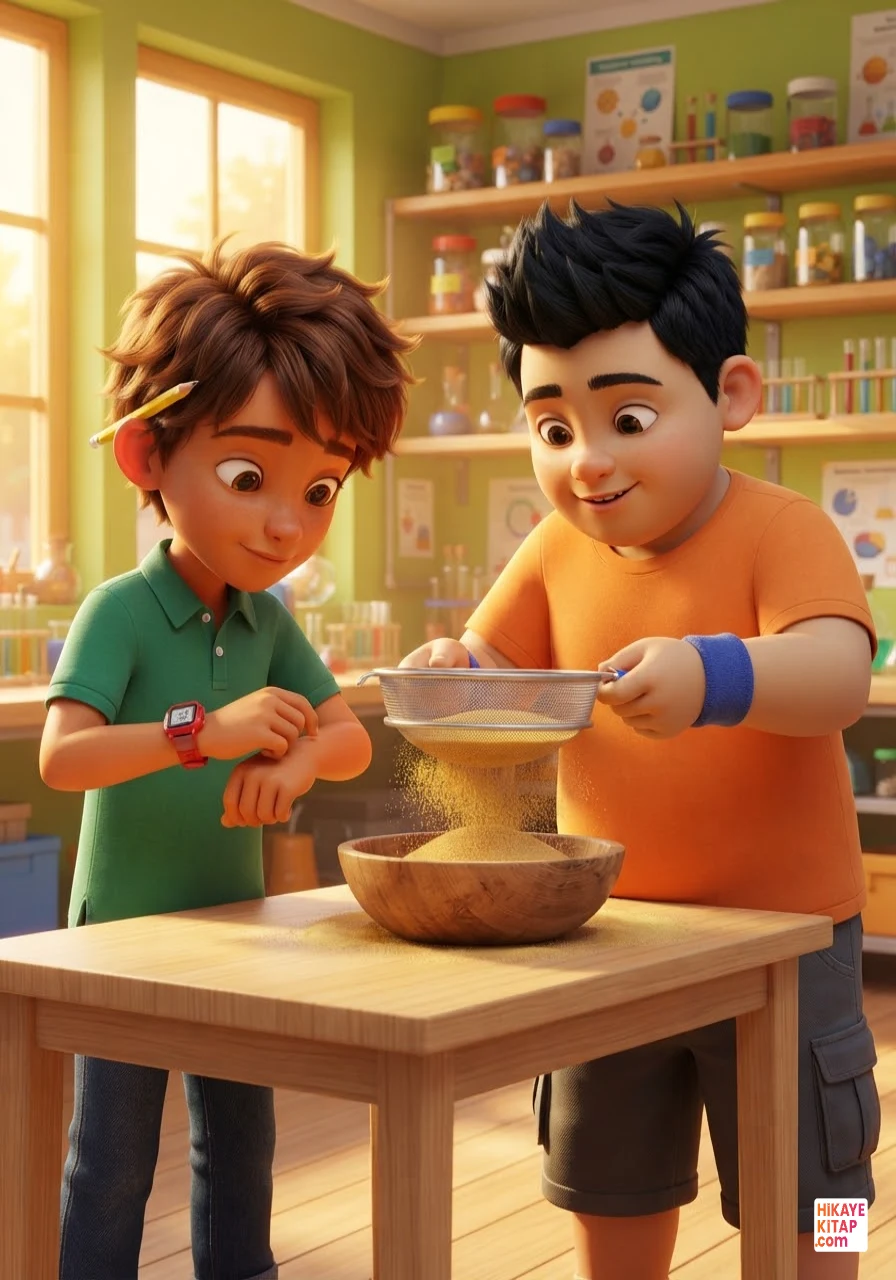
The children decided to make the experiment fairer. Leo and Jasper used a sieve to filter the sand, separating only the finest, most equal-sized grains. Now, both sand timers contained the same type of sand. Leo said, “Let's try again and see what changes,” as he filled his bottle with the new sand.
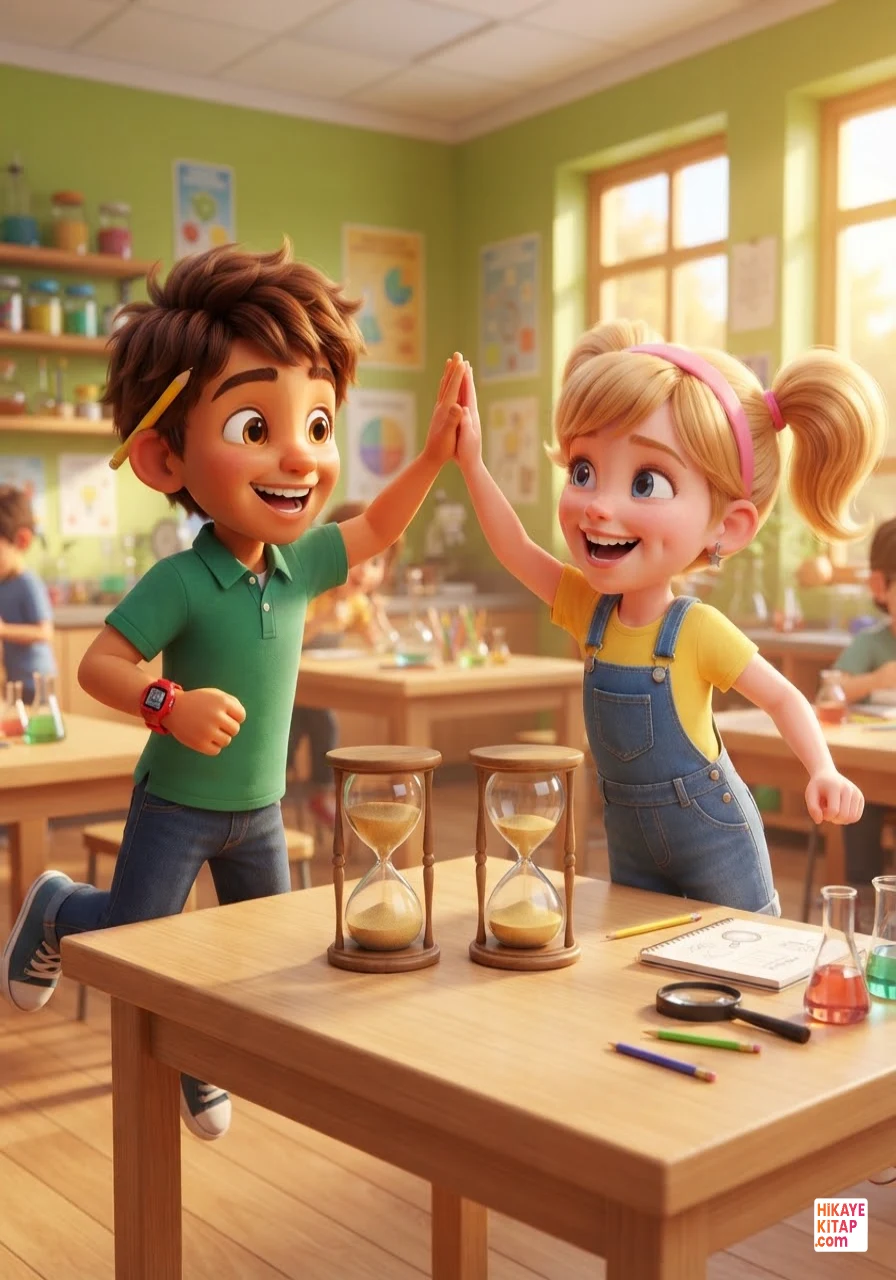
When they repeated the experiment with the new sand, the results were much more consistent. Leo and Elara’s sand timers finished at almost the exact same time. Elara jumped with joy, saying, “Great! Everything changed when we made the sand equal!” Leo and Elara happily gave each other a high-five. They weren't just racing anymore; they were solving the mystery.
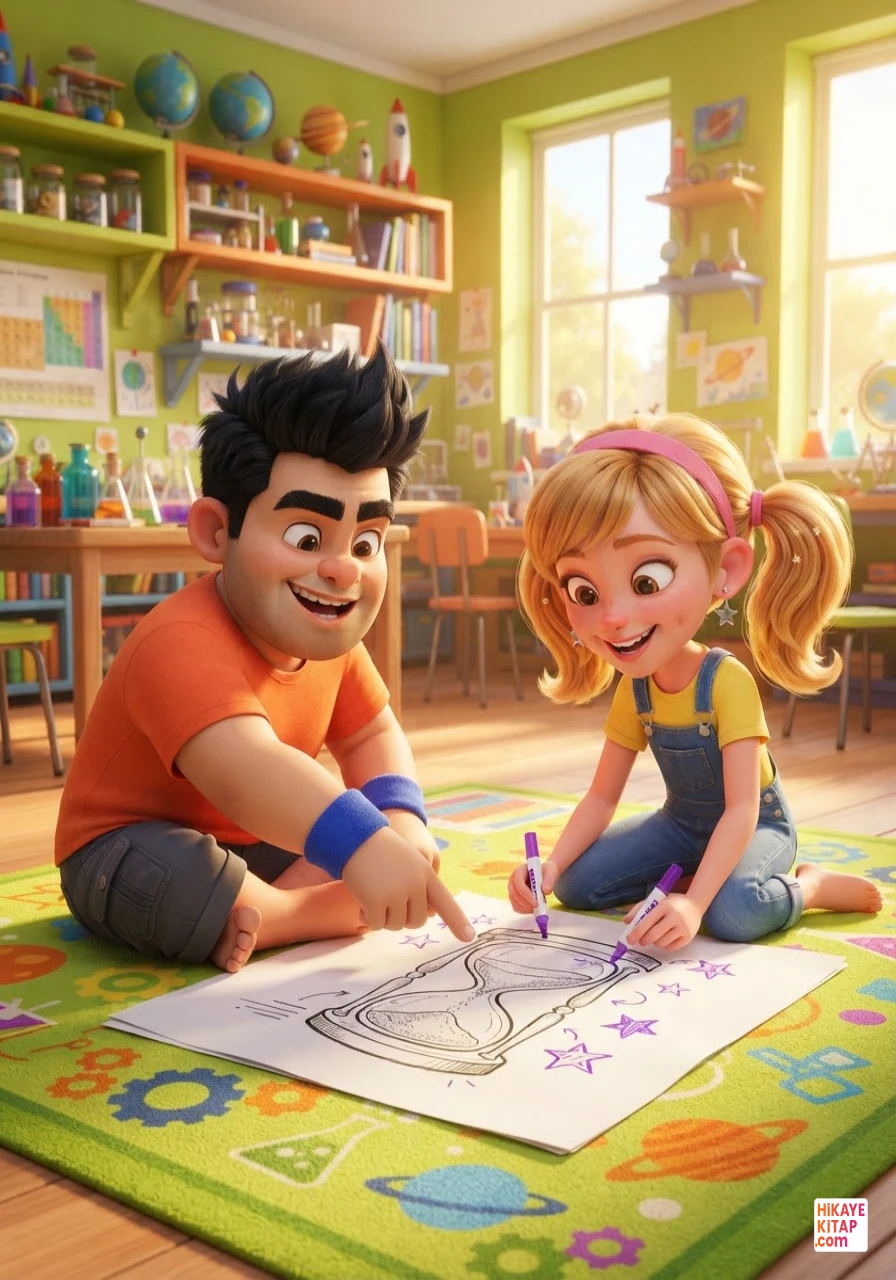
Instead of racing their sand timers, Jasper and Elara were now discussing why the sand sometimes got stuck and sometimes flowed fast. They drew pictures of bottle openings and sand grains on a large piece of paper. Jasper said, “Actually, understanding why is more fun than winning the race.” Elara added colorful stars to the drawings.
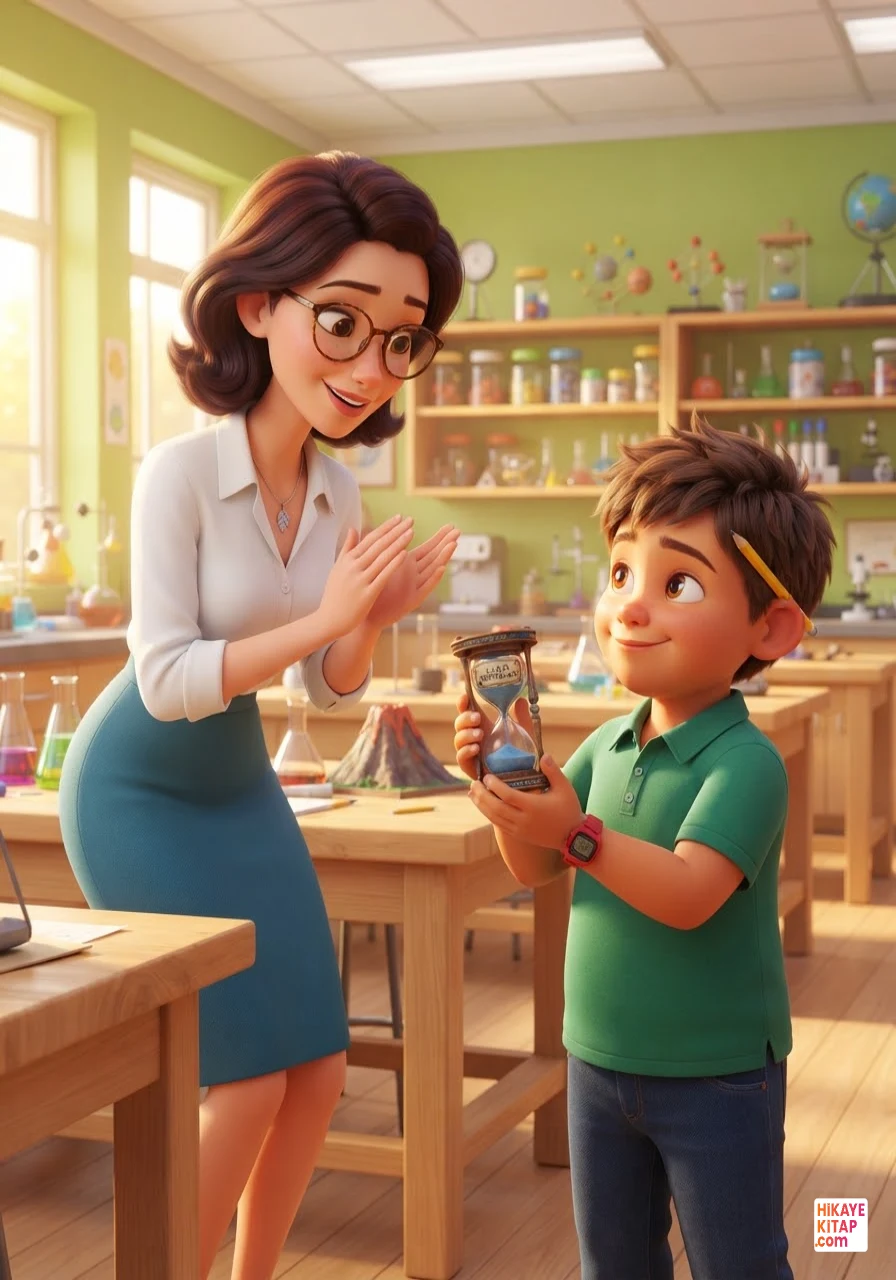
Just then, their teacher, Ms. Vega, came over and watched their work with admiration. “Children, you’ve done a wonderful job,” she said with a smile. Leo explained the measurements they had taken and the details they had discovered. Ms. Vega said, “This is exactly what scientific thinking is. It is very valuable that you are interested in the 'why' and 'how' rather than just the result.”
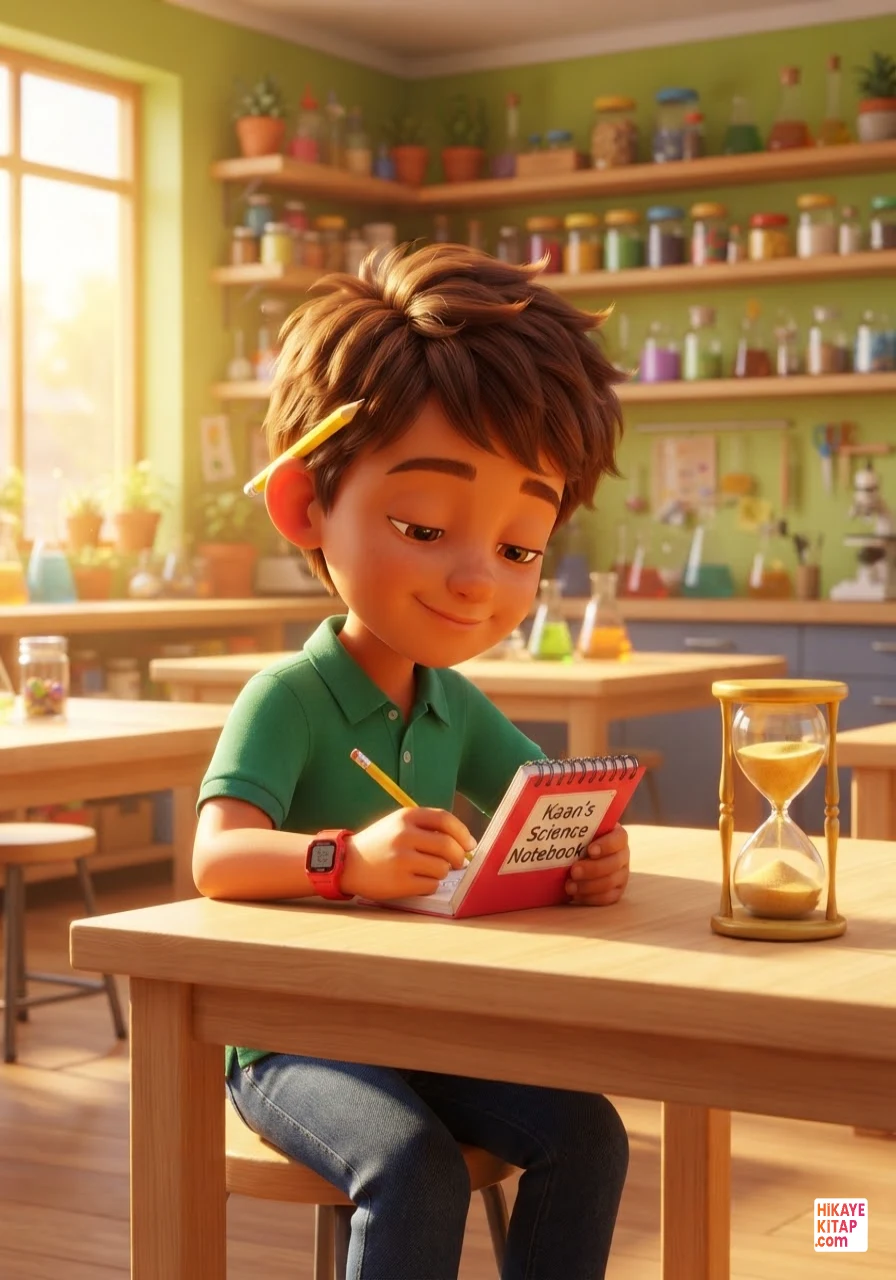
Leo learned something very important that day. Sometimes, what was more interesting than finding the answer to a question was discovering the path to that answer. He drew the working principle of the sand timers in his small notebook. Now, he looked at everything with more curious eyes. Science had become a great adventure for him.
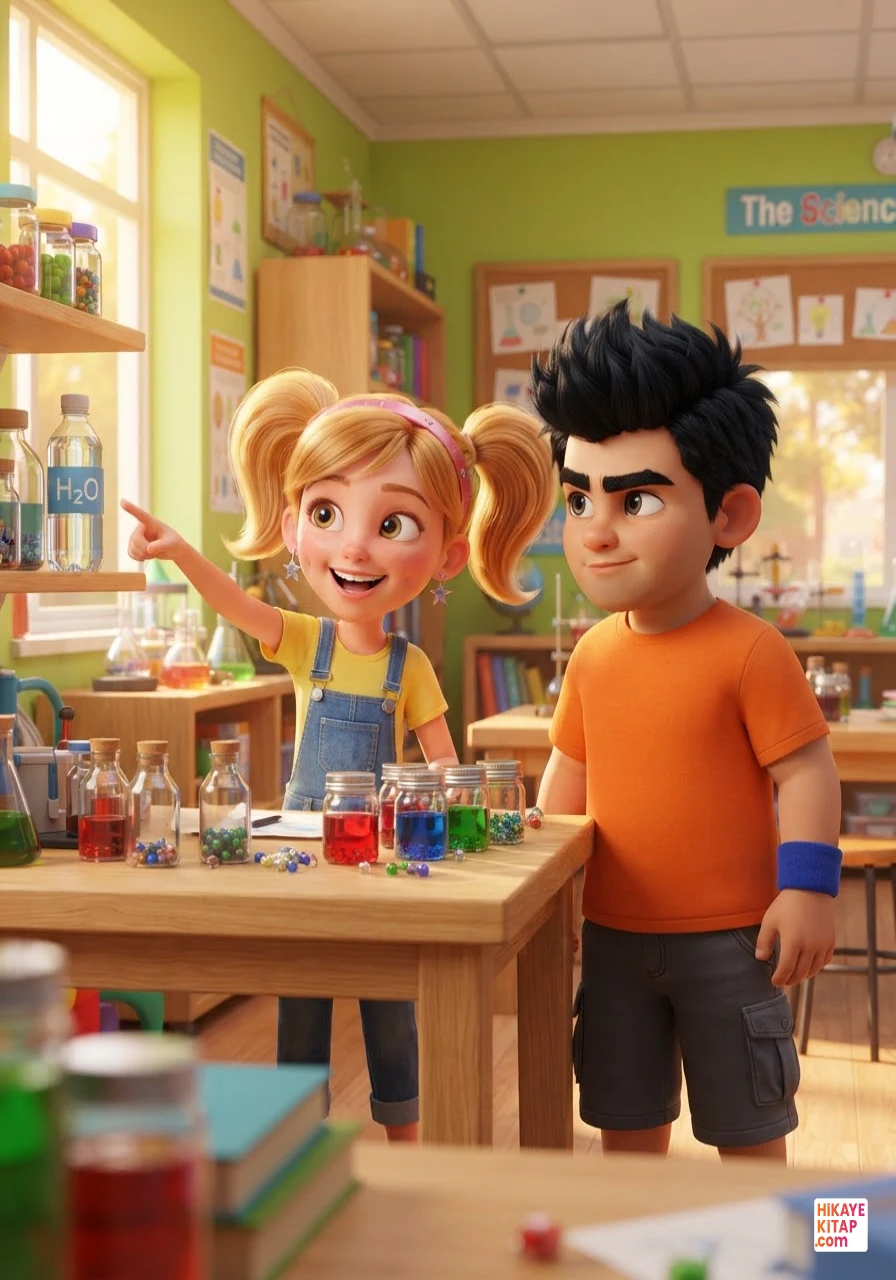
As the sand continued to flow peacefully inside the bottles, Elara and Jasper were already planning new experiments. “I wonder if we can make a clock with water too?” asked Elara. Jasper was looking at the oil bottles and colored beads on the shelf. The adventure in the workshop continued with new questions and glowing, bright colors.
During the first week of school, Lily saw a colorful poster hanging on the bulletin board in the hallway: Environment...
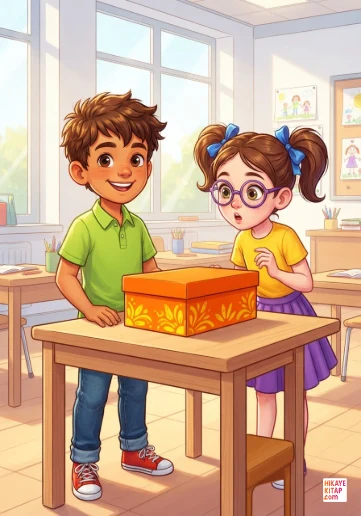
Leo had come up with a brilliant idea for his classroom. He placed a bright orange shoebox on his desk and began to p...
It was a warm summer evening. Chloe spread a soft, bright orange blanket over the fresh green grass in the garden. Th...
Use the link and iframe code below to embed the book on your site.