The Color Experiment in the Time Garden
Mete, Arda, Derin, and Nil transform an abandoned greenhouse into a nature laboratory and discover how different colo...
Read more 12 pages
Type into the box above to start searching
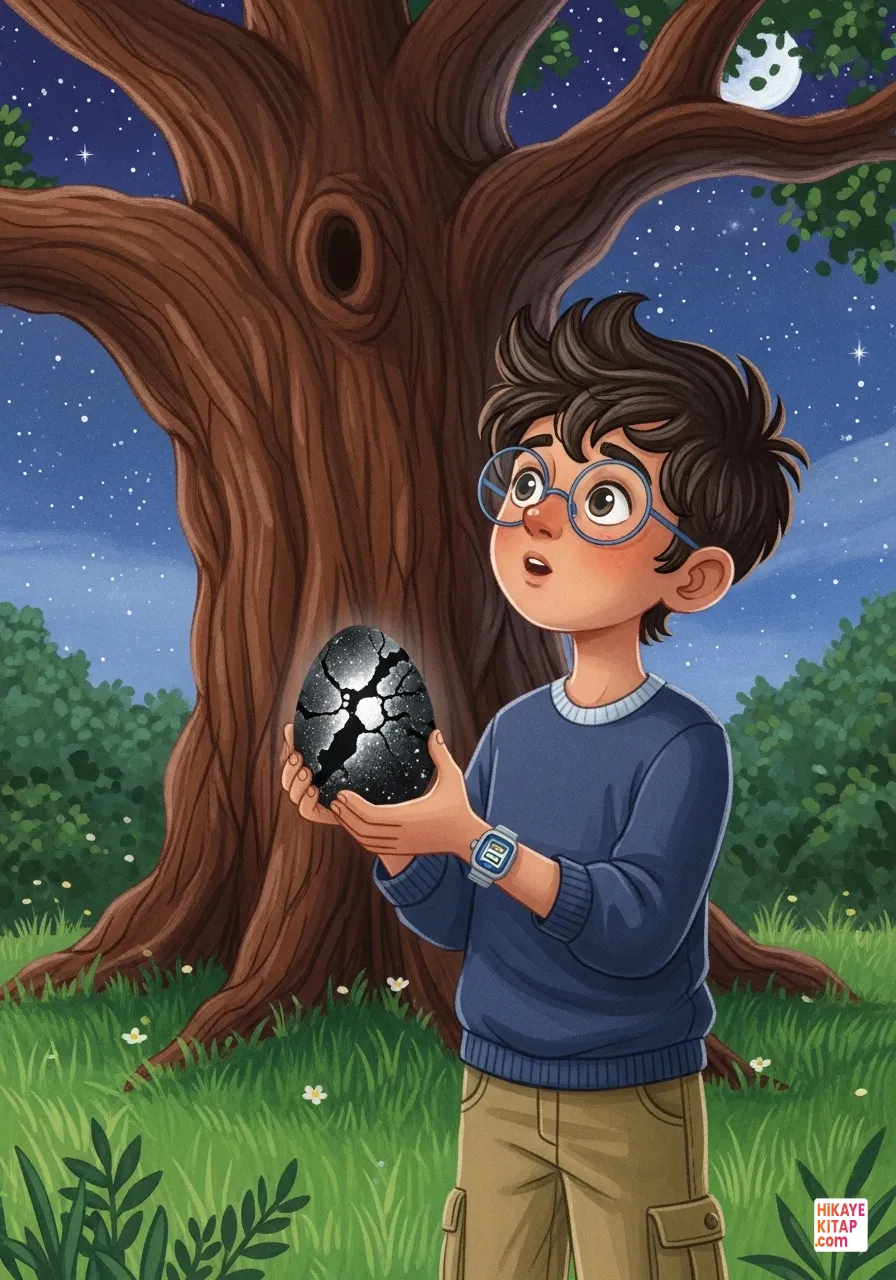
On a crisp Saturday morning, Aras was exploring beneath the ancient oak tree in his backyard, gently digging into the damp earth. Suddenly, his shovel struck something hard. He brushed away the soil to reveal a peculiar object that didn't belong among the garden pebbles. It was a stone, but unlike any he had seen before. Its surface was charred a deep, midnight black, and it felt surprisingly heavy for its size.
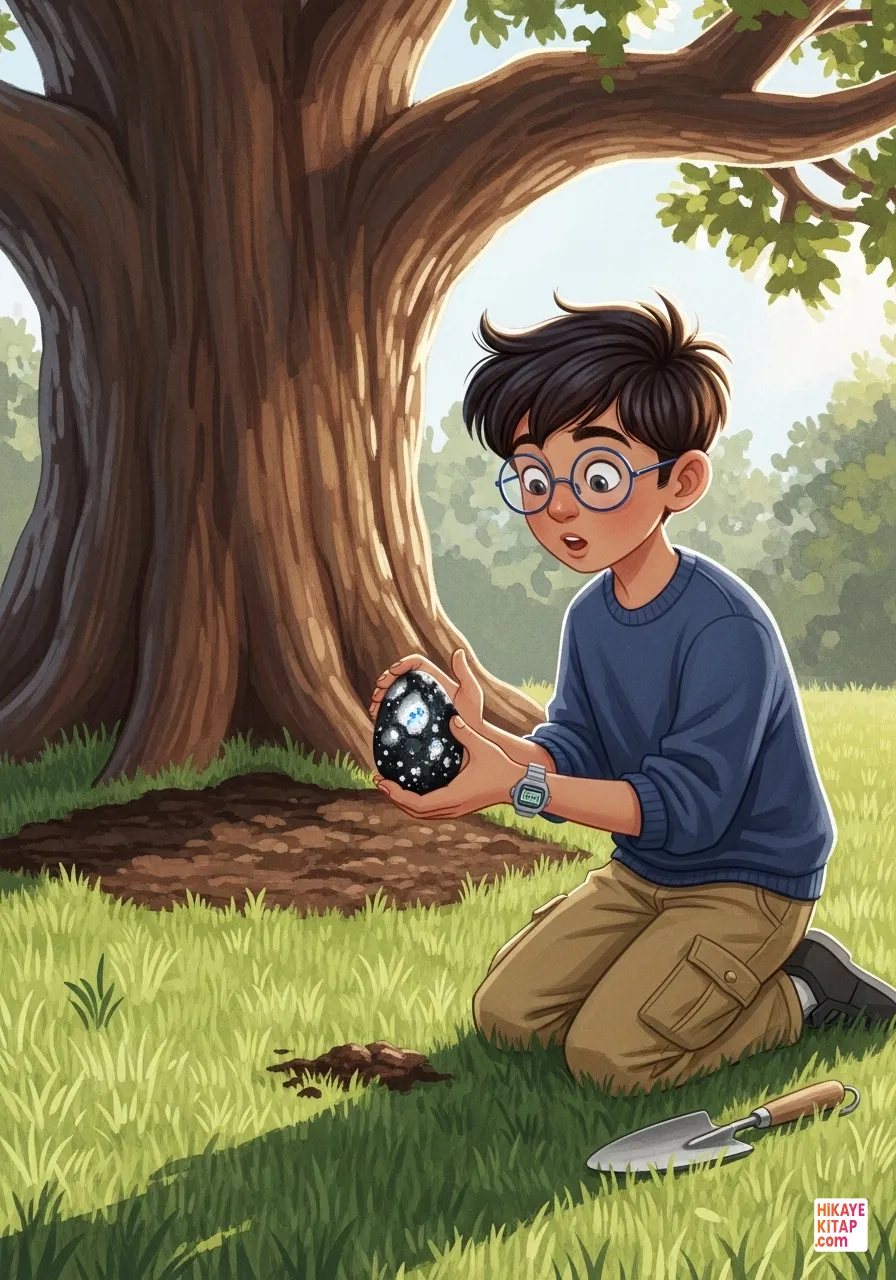
As the sunlight hit the object, Aras noticed a subtle, metallic shimmer beneath the scorched exterior. It felt dense and cold, carrying a weight that seemed to hold the secrets of a thousand miles. His heart began to race with a rhythmic thrum of excitement. Could this be a visitor from the celestial heights? He carefully placed the specimen in his pocket, feeling as though he were carrying a fragment of the cosmos itself.
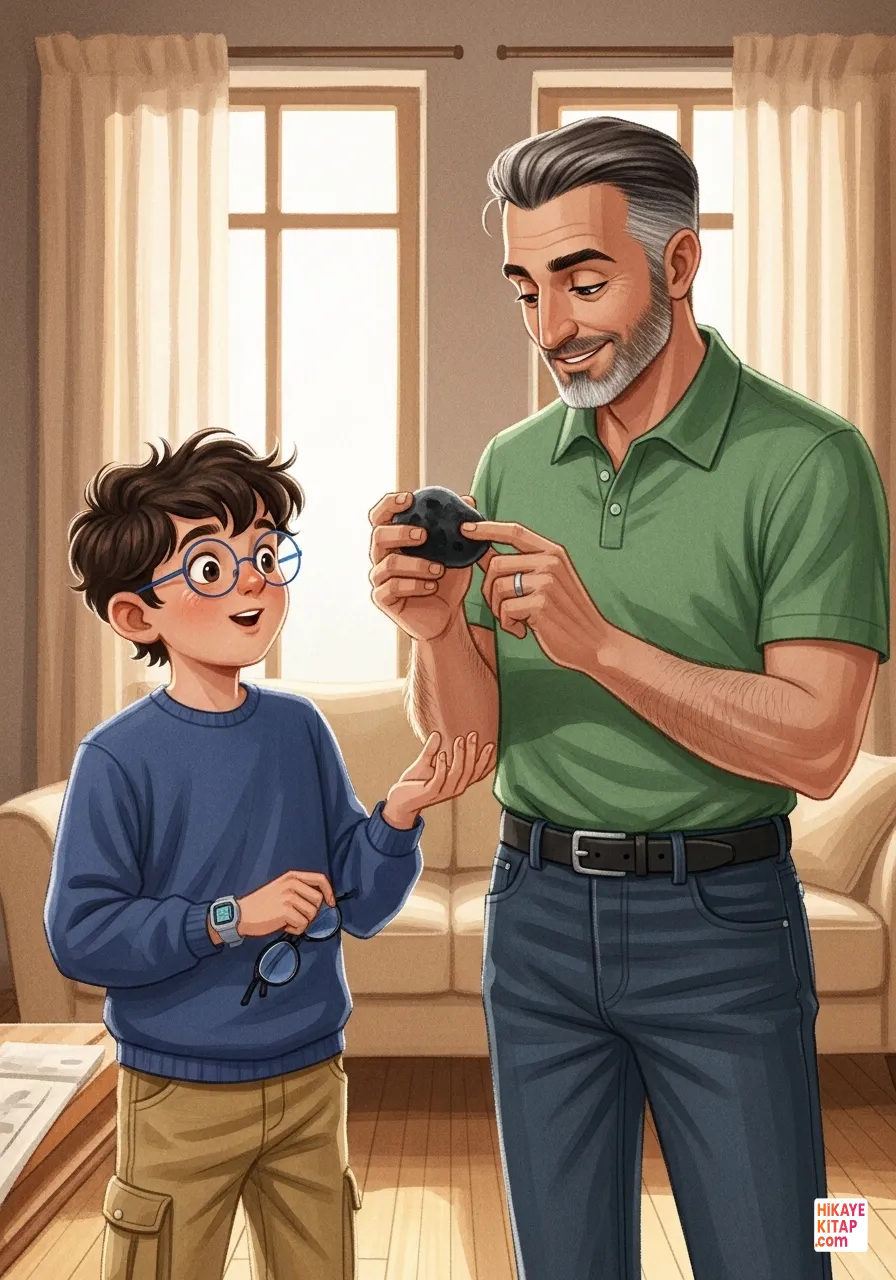
Aras sprinted into the house to find his father, Mert, who was reading in the living room. "Dad, look at this! Do you think it’s a piece of magic?" he asked, breathless. Mert set his book aside and took the stone, weighing it thoughtfully in his hand. He felt the unusual density and smiled at his son's infectious enthusiasm.
"I’m not sure about magic, Aras," Mert said gently, "but sometimes reality is far more extraordinary than any fairy tale. If you want to know the truth about this traveler, you must think like a scientist. We don't guess; we investigate. Why don't we start a formal inquiry together?" Aras nodded vigorously, the spark of a true researcher igniting in his eyes.
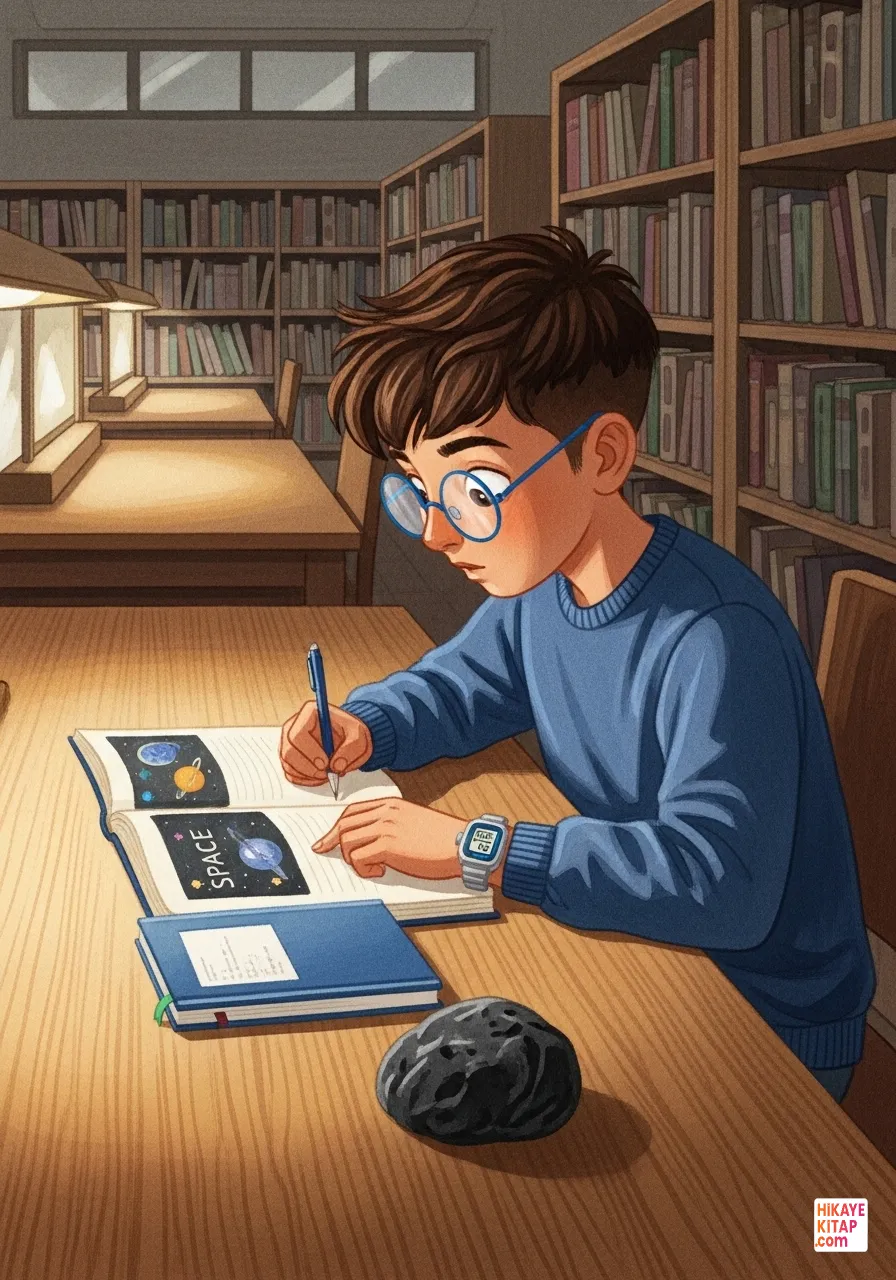
Aras spent the rest of the afternoon in the quiet sanctuary of the library. He opened a fresh page in his diary and wrote a bold heading: "Meteorites vs. Earth Rocks: A Comparative Analysis." He surrounded himself with heavy volumes on mineralogy and astronomy, learning that space rocks often possessed a 'fusion crust'—a thin, melted skin formed during their fiery descent through the atmosphere.
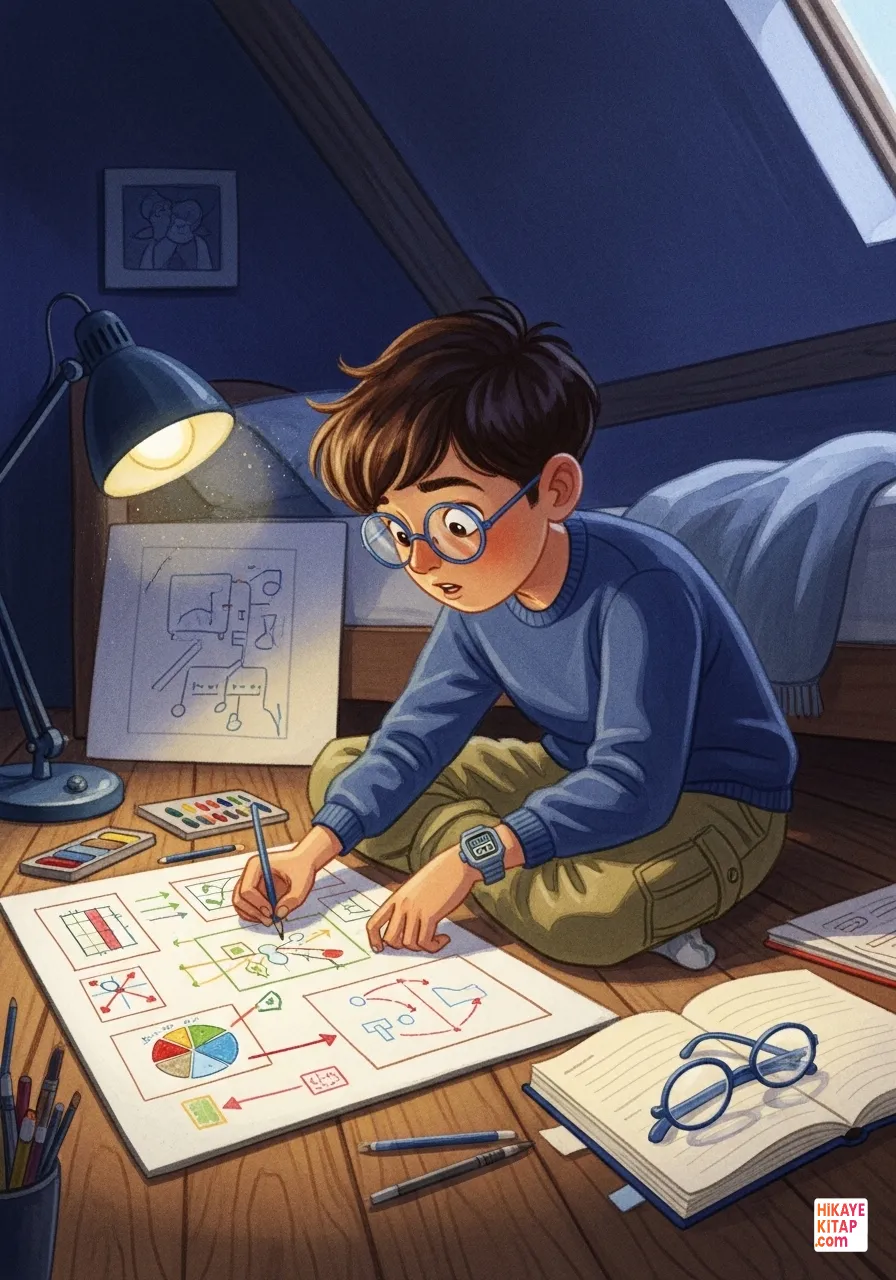
He meticulously noted every detail: the stone's mass, its irregular shape, and the way it didn't resemble the limestone common in their garden. He learned that most meteorites are magnetic because they contain iron and nickel. Aras felt like a scientific detective, piecing together clues that spanned the distance between the Earth and the stars. Every sentence he wrote was a step closer to the truth.

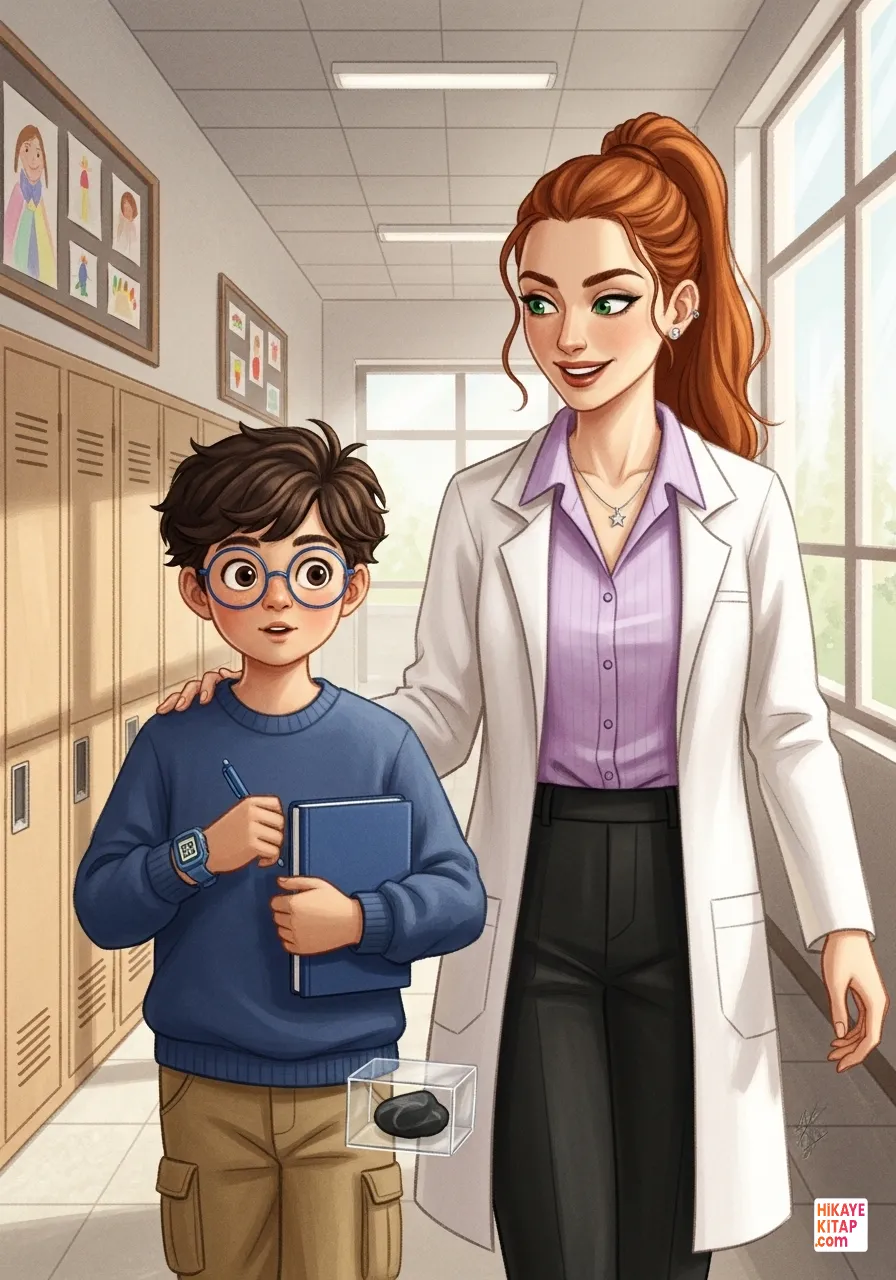
On Monday morning, Aras carried his discovery and his diary to school. He approached his science teacher, Ms. Selin, after class. When she saw the detailed notes and the organized data in his diary, she was deeply impressed. "This is a remarkable start, Aras," she said, her eyes twinkling. "Science begins with a question, but it survives on evidence. Let’s take this to the lab."
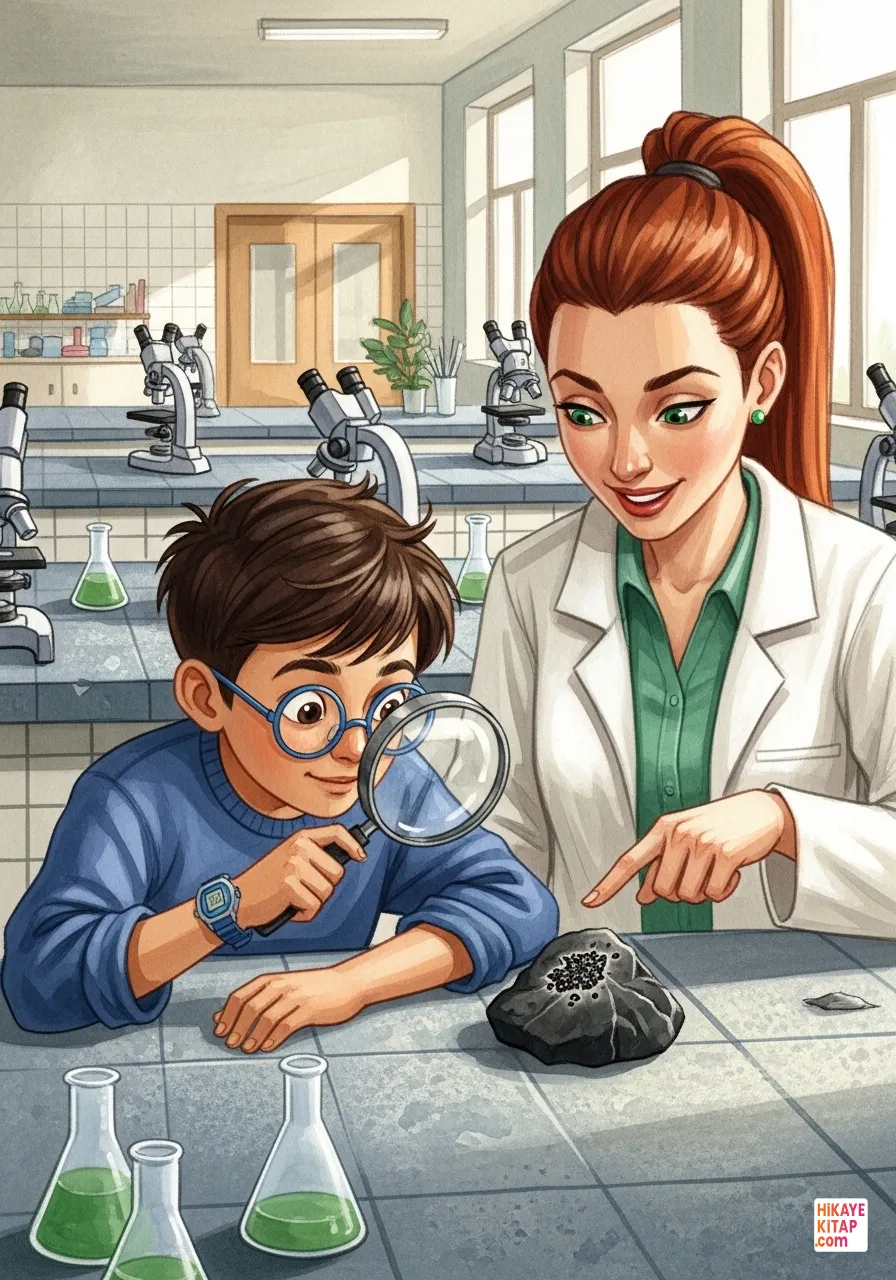
Ms. Selin led the way to the science laboratory, a room filled with the scent of pine cleaner and the promise of discovery. She began gathering specialized tools—magnifying lenses, streak plates, and scales. "To be a scientist is to be responsible for the truth," she explained. "We must test our hypothesis until no doubt remains."
Under a powerful magnifying glass, the stone revealed its secrets. Ms. Selin pointed to tiny, aerodynamic pits on the surface. "These are regmaglypts, Aras. They are like fingerprints left by the heat of the atmosphere." Aras peered through the lens, gasping as he saw the scorched landscape of the stone in high definition. He immediately began sketching the microscopic patterns into his diary.
That evening, Aras and his father, Mert, conducted one final, crucial test. Aras held a powerful magnet near the stone. With a sharp "click," the magnet leaped from his fingers and snapped firmly onto the black rock. Aras jumped for joy, his laughter echoing through the kitchen. "It's iron! It's definitely a meteorite!" Mert watched his son with immense pride, realizing the boy had found much more than a rock; he had found his passion.
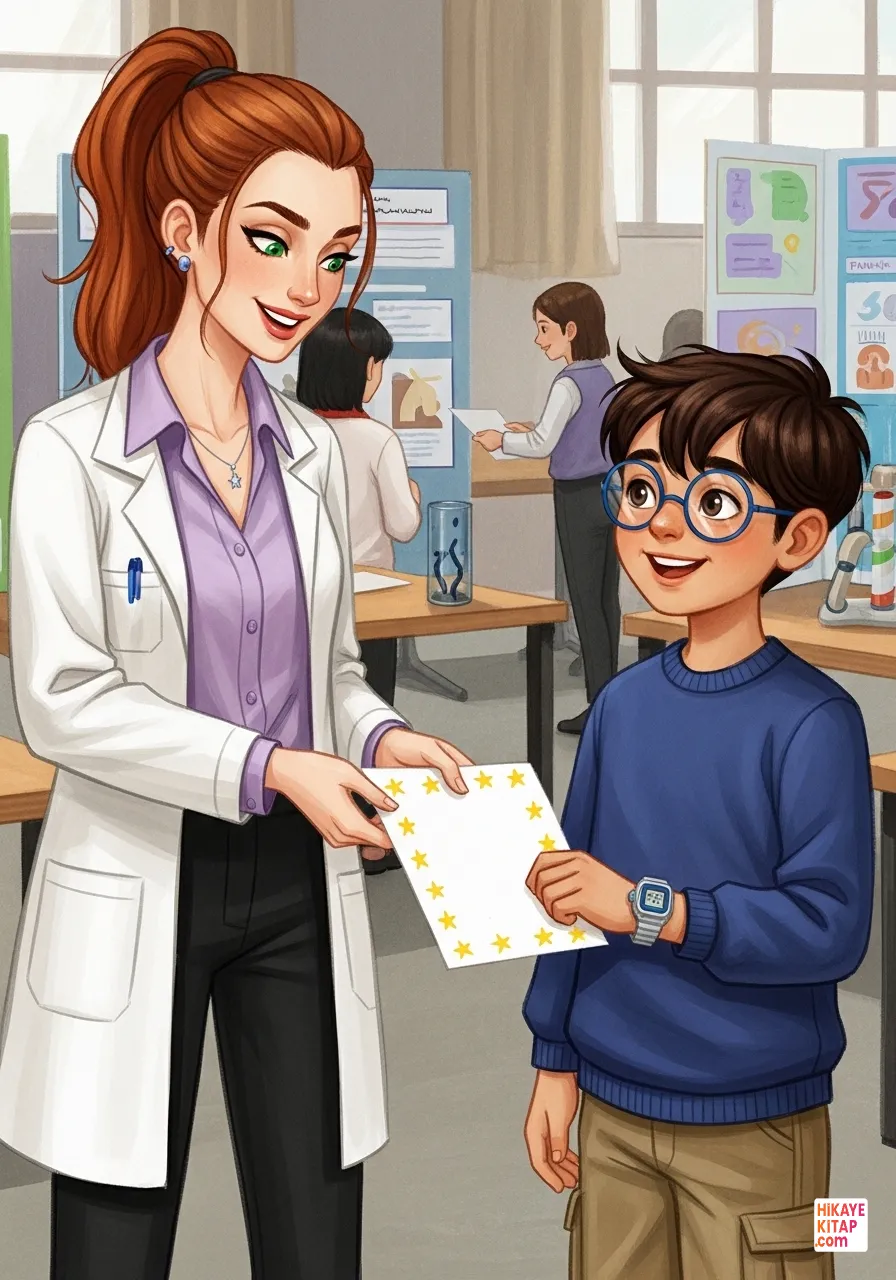
For the next two weeks, Aras was a whirlwind of productivity. He spent every evening preparing for the upcoming School Science Fair. He transferred his data onto large display boards, creating colorful charts that explained the stone's journey from the asteroid belt to his garden. He understood that his responsibility was to tell the stone's story accurately and clearly.
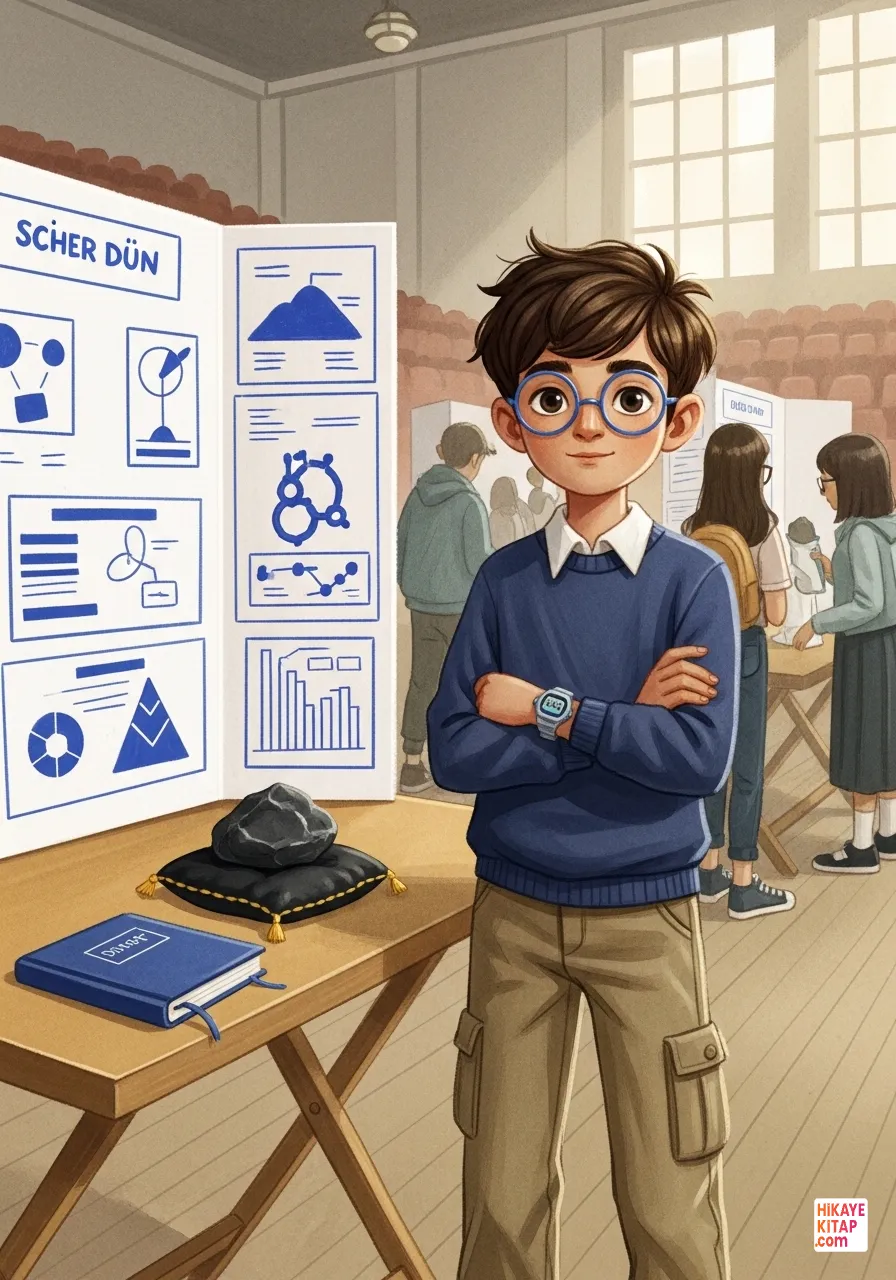
When the day of the Science Fair arrived, the gymnasium was buzzing with energy. Aras stood proudly behind his booth, which was titled "The Star Dust Diary: A Journey from the Void." On the table sat the meteorite on a velvet cushion, the magnet, and his well-worn diary. He felt a sense of calm confidence; he knew his facts, and he had done the work.
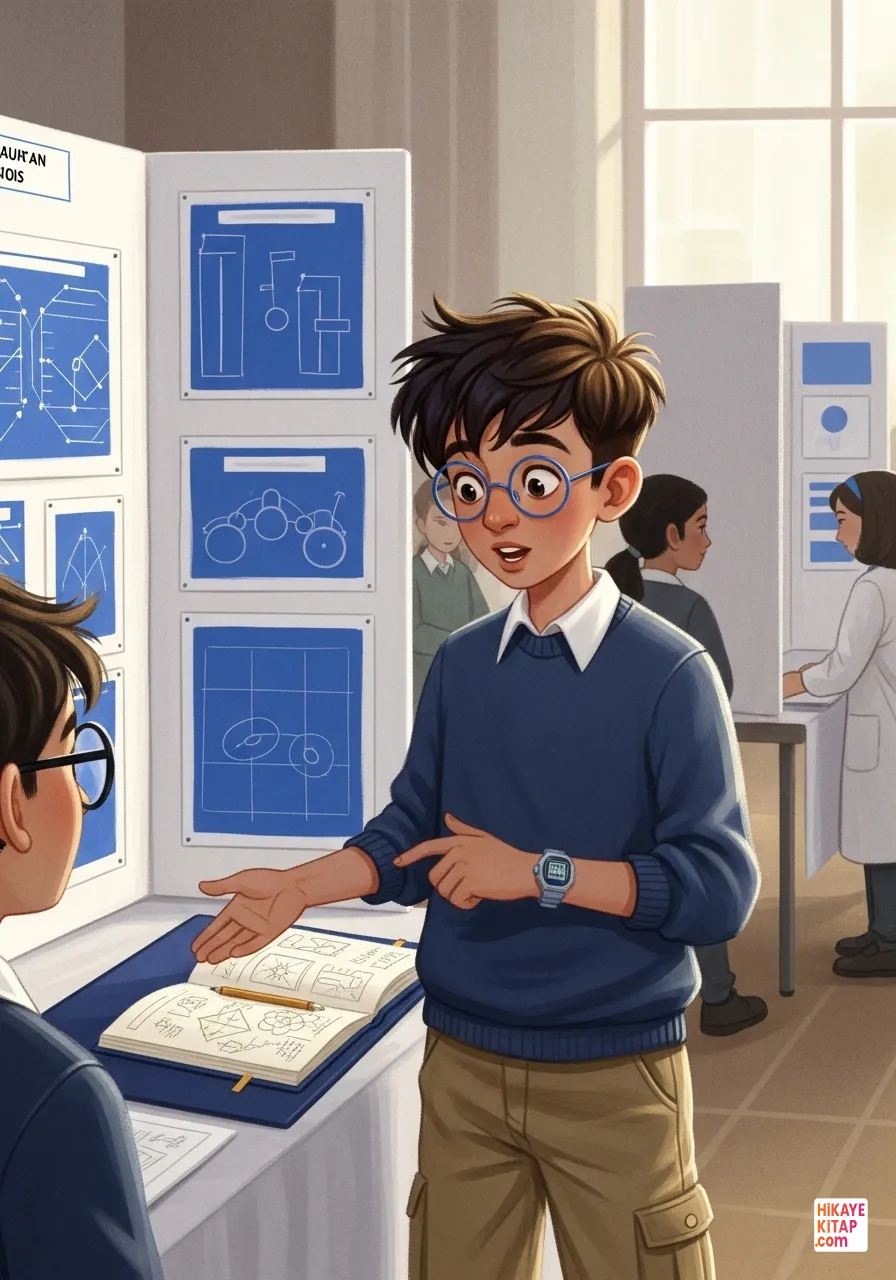
A skeptical classmate walked up and crossed his arms. "How do you actually know it’s from space? It just looks like a burnt rock to me." Aras didn't hesitate. He opened his diary to the lab results. "Science isn't about how things look; it's about what they prove," Aras explained, pointing to his density calculations and the magnetic test results. The classmate’s skepticism turned into genuine awe as he listened.
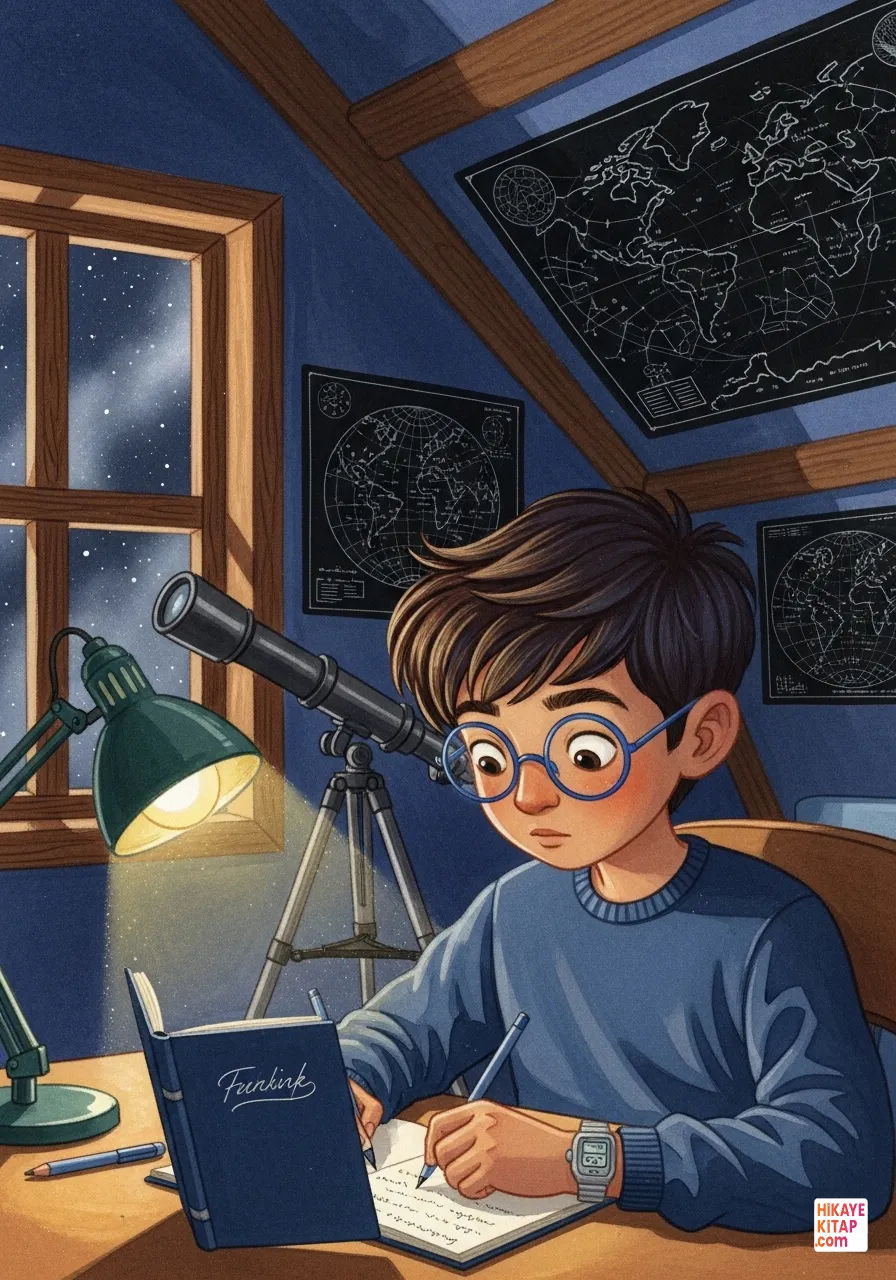
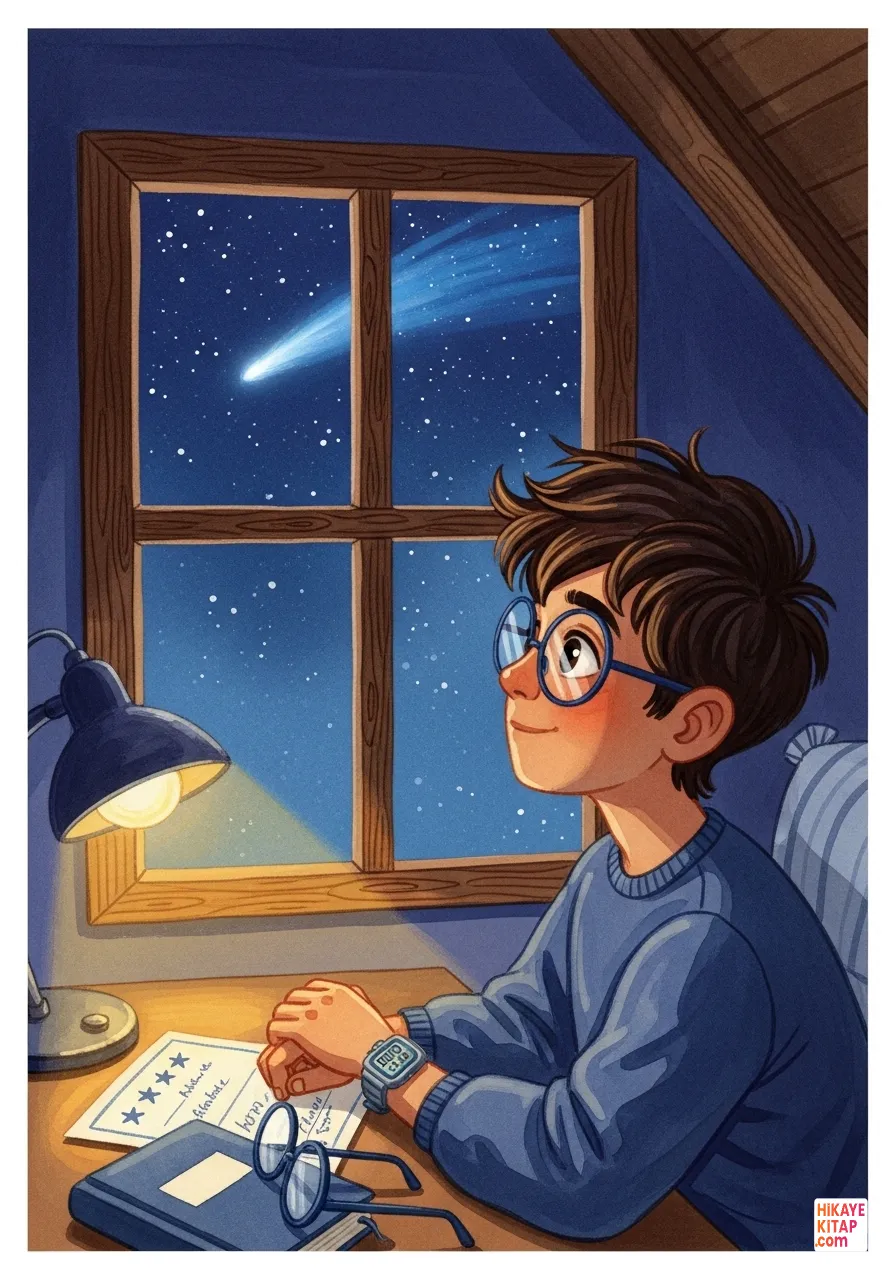
That night, Aras sat once more by his window, but the success of the fair wasn't what stayed in his mind. He opened his diary and wrote a final thought: "I learned today that those who wonder and research are always closer to the stars." As he looked out at the infinite sky, he realized he wasn't just a boy in a room; he was a voyager in a vast, beautiful universe, and his journey of discovery had only just begun.
Use the link and iframe code below to embed the book on your site.