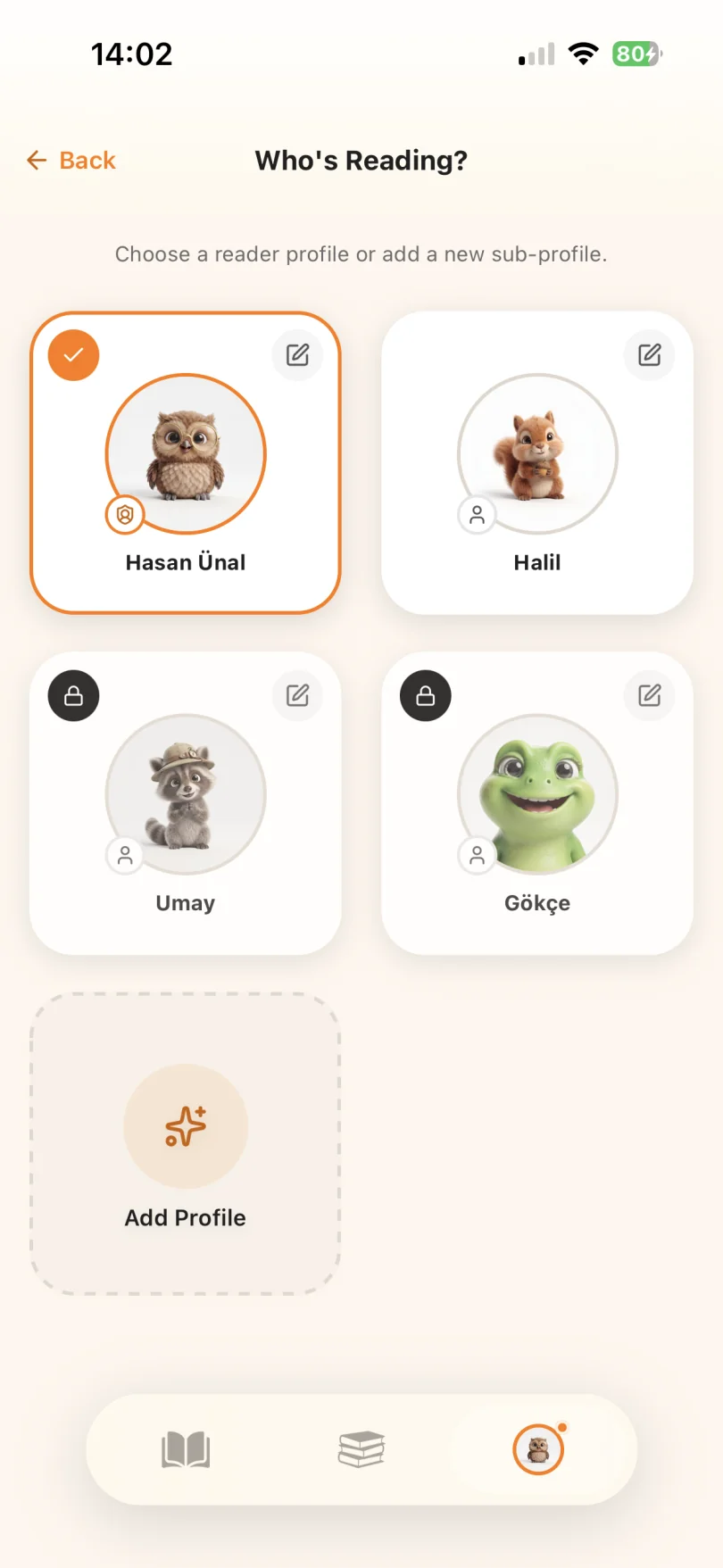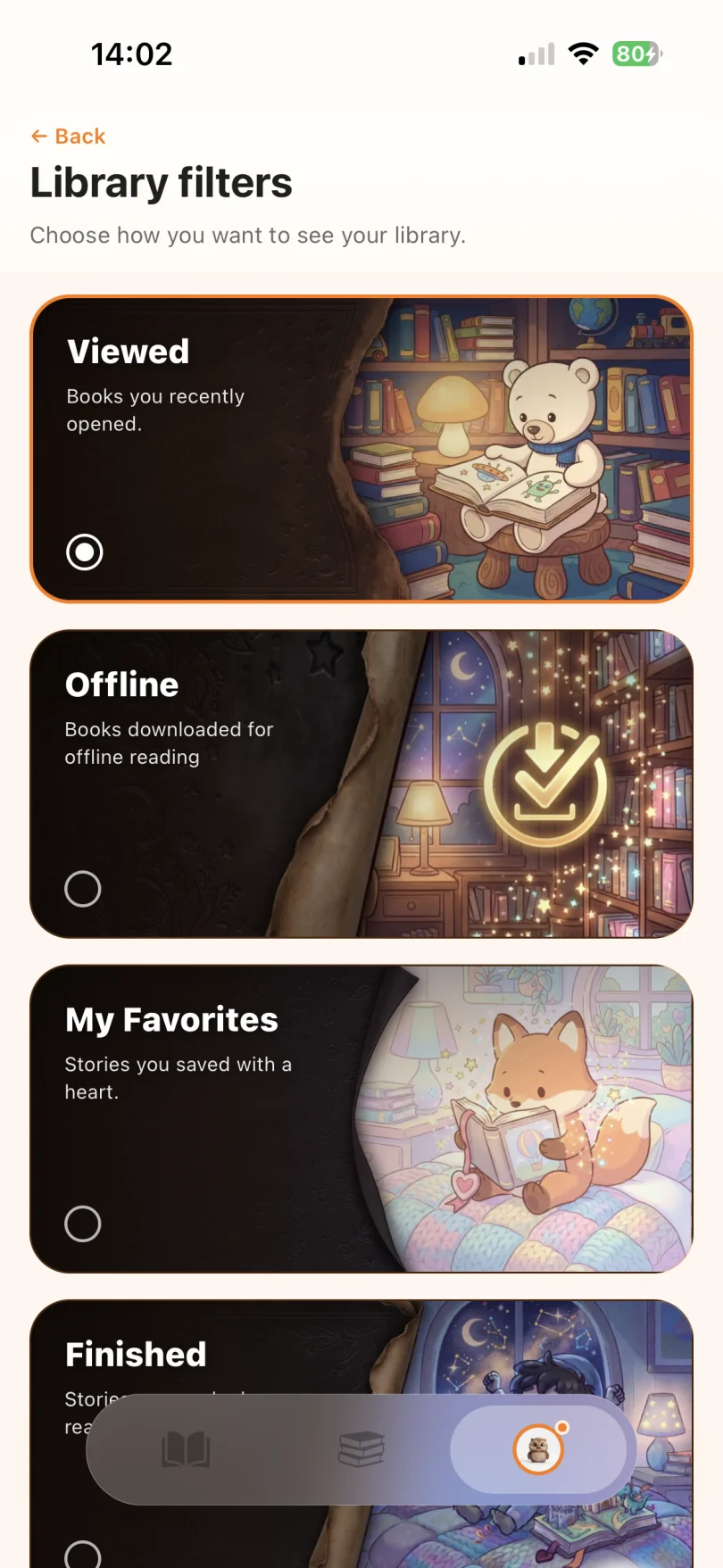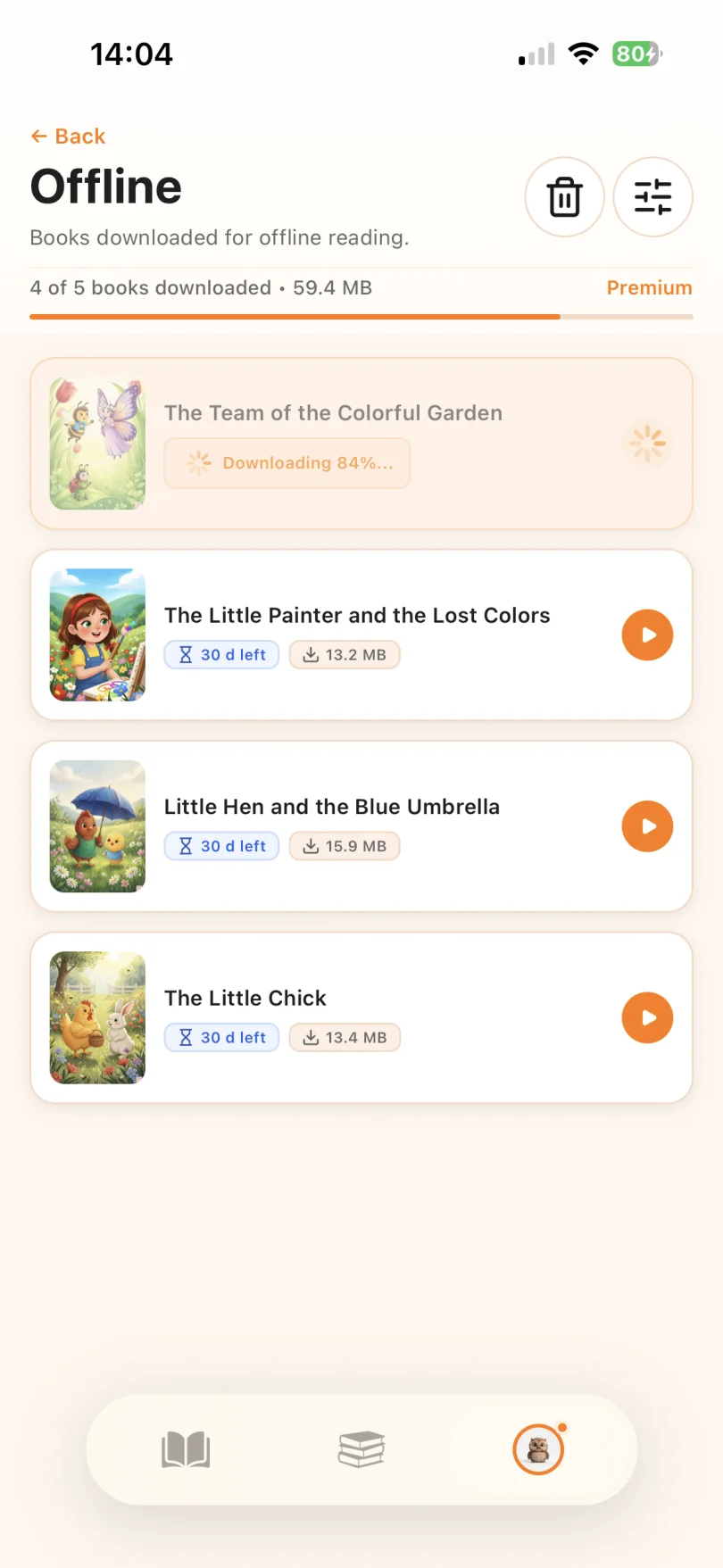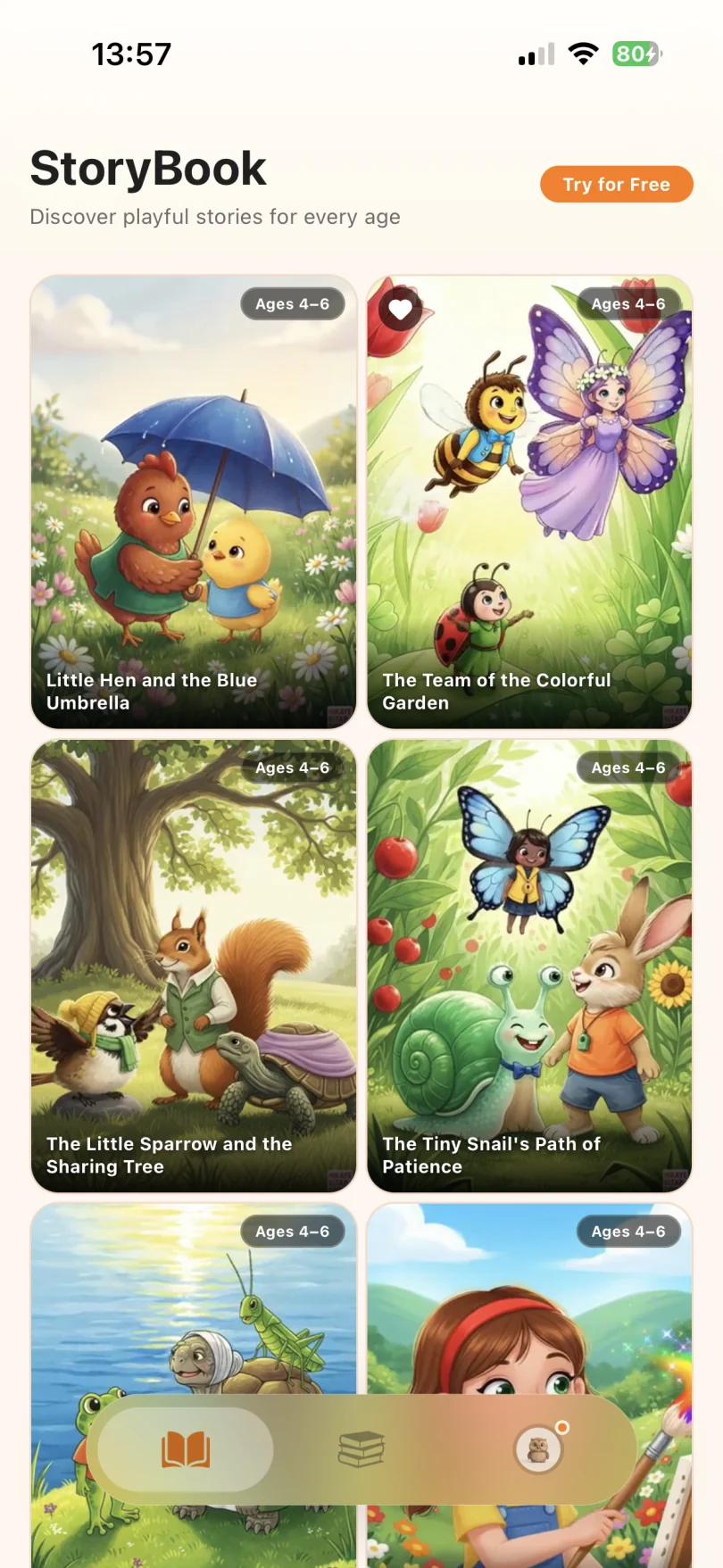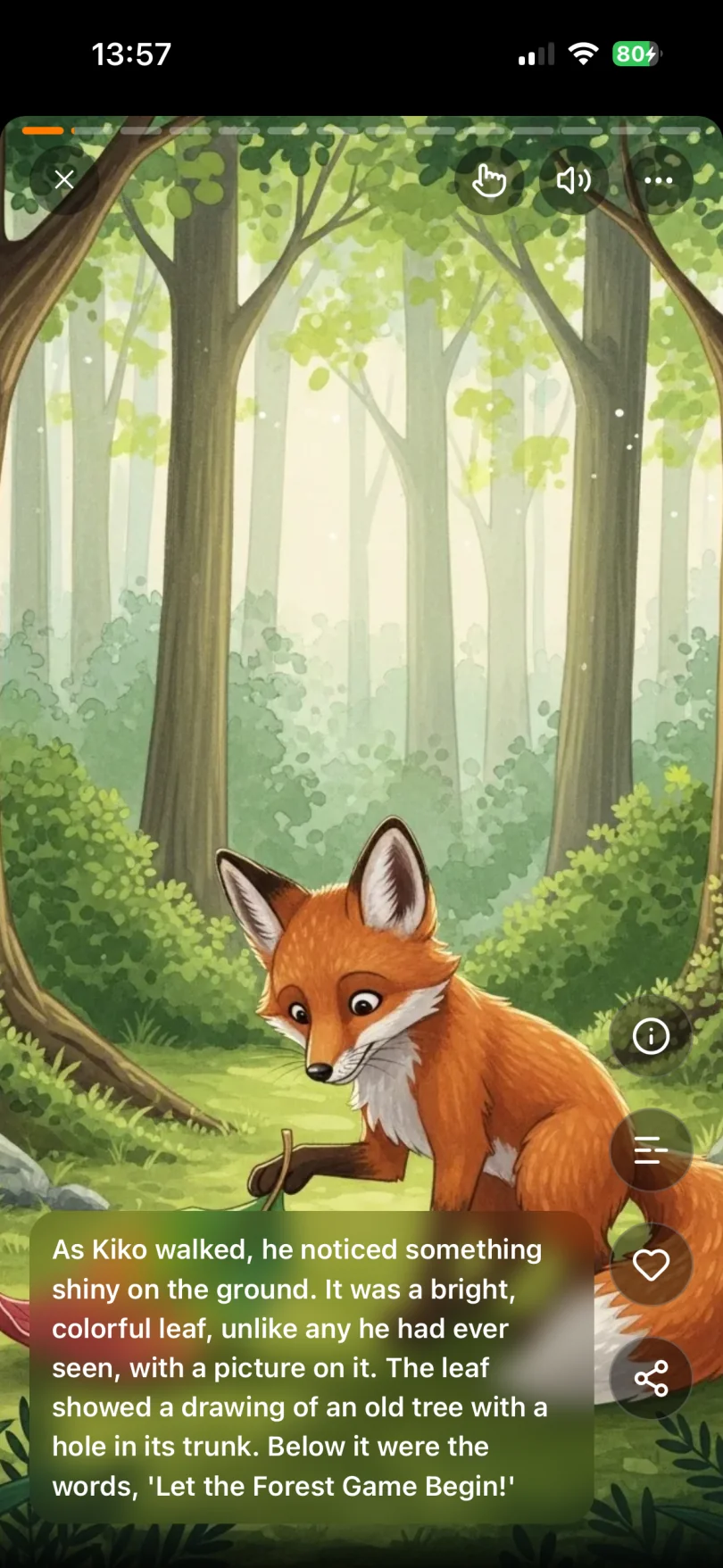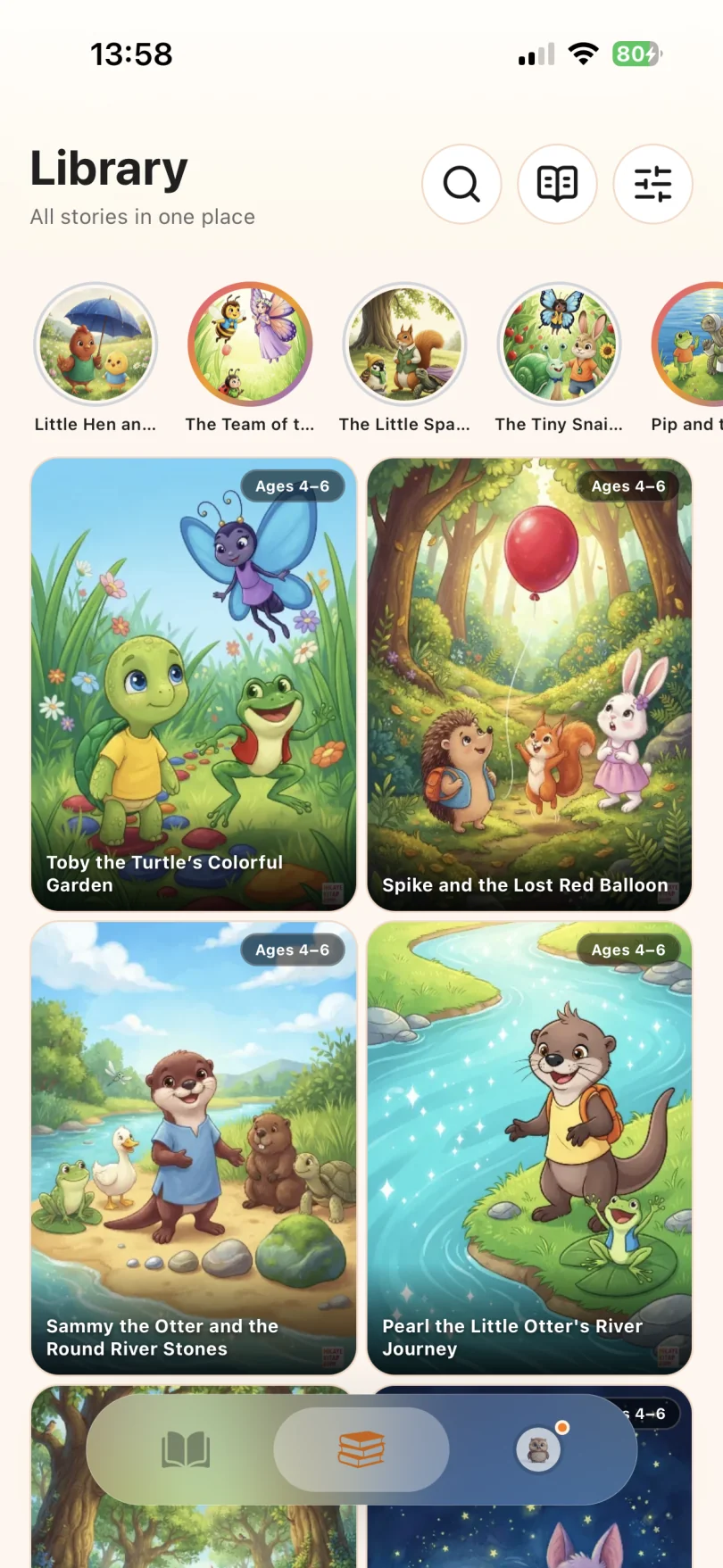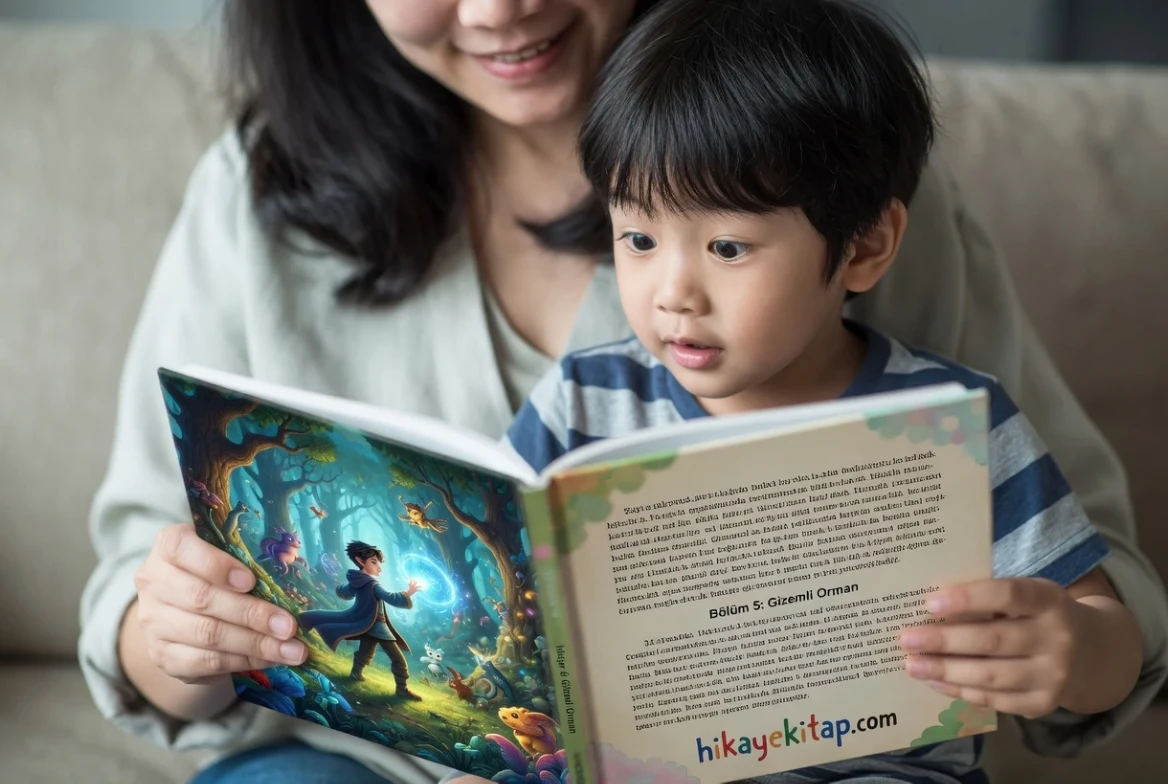
For 12-year-olds, HikayeKitap offers short B1-level picture stories of 11-12 pages that take 2-7 minutes with audio narration. They’re best used as quick reading or listening practice alongside a full-length novel. Every book can be read online, listened to with narration, or downloaded as a free PDF and printed.
This post answers a narrower question than “what should my 12-year-old read?”: when does a screen help, when does a printed PDF help, and how do you combine them so digital reading builds a habit instead of competing with one. If you’re looking for adventure picks or a 7th-grade list, see the related guides at the end.
PDF Book Reading vs. Screen vs. Audio: A Practical Split
Each format has a job it does well. At 12, kids can understand why you pick one over another, so explain the reasoning instead of just setting rules.
- Screen (online reader): Great for short, fun texts, for browsing to find something they want to read, and for reading on the go. The downside is the device itself: one notification can end a reading session.
- Printed PDF: Better for anything they need to understand closely, remember, or discuss. Paper makes it easy to underline, write in the margins, and flip back to check a detail. It also takes the phone out of the picture.
- Audio narration: Useful for English learners, for kids who read slowly and get discouraged, and for a first pass through a harder text. Listening while following the text is different from just listening, so encourage eyes on the page.
A simple rule many families use: light reading on screen, serious reading on paper, audio as a warm-up.
10 Short B1 Stories for 12-Year-Olds
These are the most advanced books on the site. They’re short, so a 12-year-old will finish each in one sitting. Pick the ones whose themes match your child’s interests: technology, ethics, mystery, or adventure.
| Book | Age | Level | Pages | Time |
|---|---|---|---|---|
| Code Name: Atlas | 10-12 | B1 | 12 | 5 min 18 sec |
| Leo and the Light of Conscience | 10-12 | B1 | 12 | 4 min 30 sec |
| The Slow Turtle and the Fast Bird | 10-12 | B1 | 12 | 3 min 48 sec |
| The Coding Forest Library | 10-12 | B1 | 12 | 5 min 33 sec |
| The Lost Lantern Forest | 10-12 | B1 | 12 | 3 min 11 sec |
| The Moonlight Train | 10-12 | B1 | 12 | 2 min 24 sec |
| The Cartographer of the Misty Bay | 10-12 | B1 | 12 | 5 min 13 sec |
| The Last Station of the Railway | 10-12 | B1 | 11 | 6 min 8 sec |
| The Last Keeper of Lighthouse Point | 10-12 | B1 | 12 | 6 min 19 sec |
| The Wind Workshop on the Northern Slopes | 10-12 | B1 | 12 | 7 min 19 sec |
Pair Them With Full-Length Books
A 12-year-old needs longer reading, too: books that take a week or more and ask them to keep track of characters and plot over many chapters. These aren’t on HikayeKitap, but they’re widely read at this age and easy to find at a school or public library: Wonder by R. J. Palacio, Hatchet by Gary Paulsen, Holes by Louis Sachar, The Hobbit by J. R. R. Tolkien, and Percy Jackson and the Lightning Thief by Rick Riordan.
If your child loved Code Name: Atlas, a book about kids, technology, and responsibility might be the next step; if The Cartographer of the Misty Bay hooked them, try an adventure with maps and journeys. Using a short story to discover a taste and then finding a longer book in that direction is one of the easiest ways to keep a reluctant reader going.
Building Digital Reading Habits at 12
- Same time, same place: 20-30 minutes, for example after homework or before bed. A predictable slot beats “whenever there’s time.”
- One device, one job: During reading time, turn notifications off and close other apps. If that’s hard, print the PDF.
- Check the level: Use the five-finger rule on any new book: read one page and count unfamiliar words. Five or more on a page means the book is better as a listen-along or a “later” book.
- Track progress: A printable reading log works at this age too, especially if your child sets the goal. When the log is full, they can earn a reading certificate. With a free account, badges and reading history are saved automatically.
- Talk about it: Ask one real question about what they read, not a quiz. “Would you have made the same choice?” opens more conversation than “What happened?”
A 4-Week Plan: One Short Story, One Novel
Each week, read short stories on weekdays and keep a novel going on the side. Weekends are for the novel only.
| Week | Short stories (weekdays) | Format to try | Novel |
|---|---|---|---|
| Week 1 | The Moonlight Train, The Lost Lantern Forest, The Slow Turtle and the Fast Bird | Screen, with narration | Choose and start |
| Week 2 | Code Name: Atlas, Leo and the Light of Conscience | Printed PDF, with margin notes | Keep going |
| Week 3 | The Coding Forest Library, The Cartographer of the Misty Bay, The Last Station of the Railway | Read alone on screen, then retell | Keep going |
| Week 4 | The Last Keeper of Lighthouse Point, The Wind Workshop on the Northern Slopes | Printed PDF, write a one-paragraph review | Finish and compare |
At the end of week 4, ask your child which format they preferred for which kind of text. Their answer is a useful guide for the next month.
How to Download the PDF
- Click a title in the table above.
- On the book page, tap the PDF download button.
- Print on A4 or US Letter; single-sided is easier for notes.
Younger siblings might enjoy the printable coloring pages, and the full collection of free downloads is in the free PDF children’s books library. There’s also an iOS and Android app for reading on a phone or tablet.
Questions to Discuss After Reading
- Code Name: Atlas: Umay, Berkan, and Turan’s robot starts making ethical choices beyond its commands. Should a machine ever decide what’s “right”? Give two reasons for your answer.
- Leo and the Light of Conscience: Leo’s compass seems to point toward honest, kind decisions. If you had a compass like that, when would you want it, and when would you rather decide on your own?
- The Slow Turtle and the Fast Bird: Shelly and Dash find the Sun Fruit by combining different strengths. Think of a team you’ve been on: what was your strength?
- The Cartographer of the Misty Bay: Kerem’s discovery starts a journey with friends. Draw a quick map of the places in the story, then check it against the book.
Related Guides
Find more books at this level on the ages 10-12 shelf. For longer adventure picks, read books for 12-year-olds: PDF and adventure guide, and for school-year advice, see 7th grade and middle school reading tips.